What's inside
As an Amazon Associate I earn from qualifying purchases. This post may contain affiliate links at no extra cost to you.
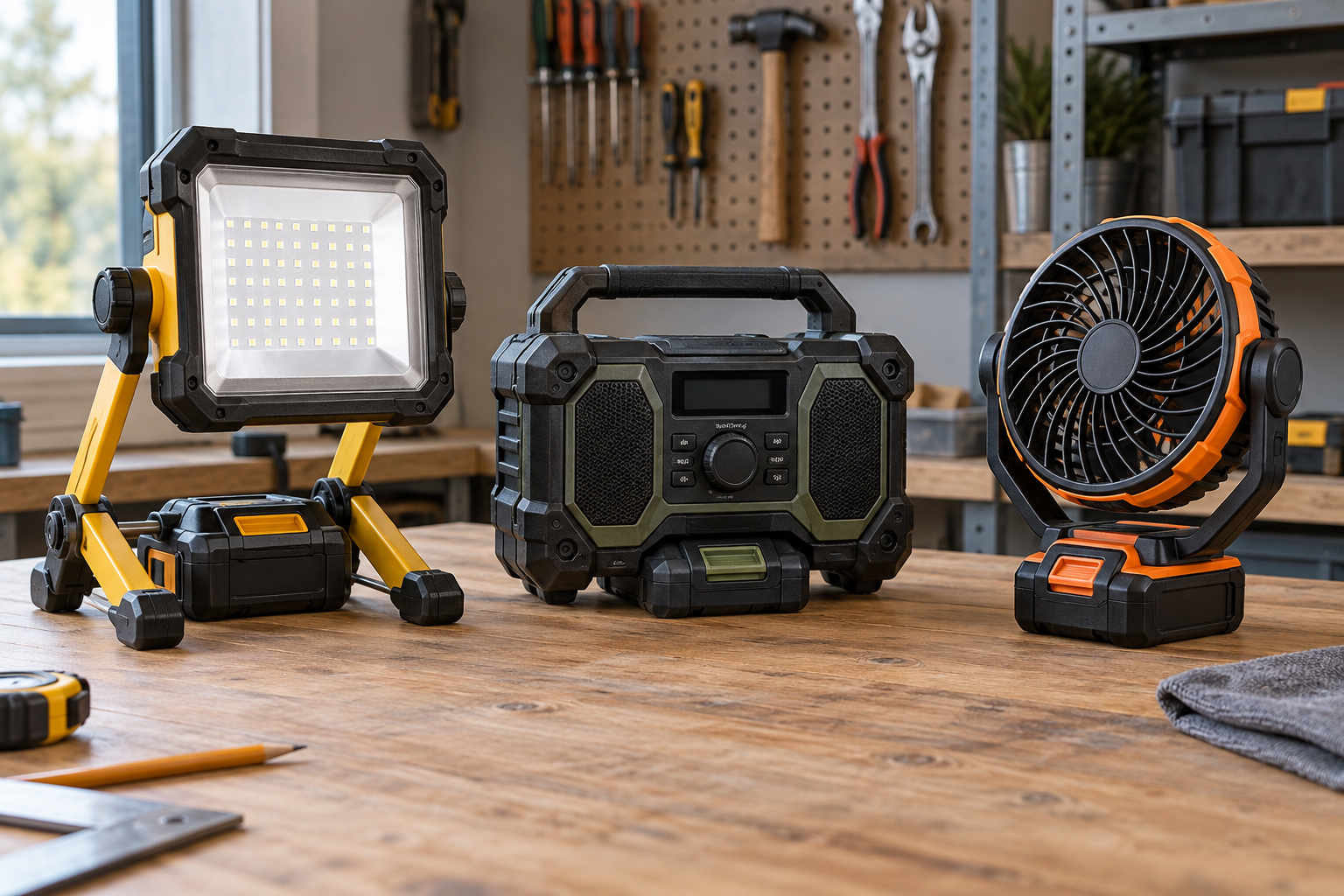
A cordless jobsite radio makes the most sense when it runs on batteries you already own. You can leave the charger and battery system you use for drills and saws in the truck, then swap a pack into the radio when you arrive. The trade-off is that “jobsite radio” covers everything from compact speakers to heavy, weather-resistant units, and not every model includes a battery or charger.
As an Amazon Associate we earn from qualifying purchases at no extra cost to you.


Start with your battery platform
Match the radio to the battery family you already use, not just the voltage printed on the tool. A 20V MAX radio, for example, generally uses the same brand’s 20V MAX packs; compatibility still depends on the specific product and battery design, so check the manufacturer’s fit list before buying. Voltage labels are not interchangeable across brands.
Also check whether the radio can run from AC power. A plug-in option is useful in a garage or overnight, while battery power is better for a site without an outlet. Some radios charge batteries; others only use them. Do not assume a USB port charges a tool pack—it usually charges small devices, if it supplies power at all.
What to compare
| Type | Best for | Trade-off |
|---|---|---|
| Compact battery speaker | Small crews, short tasks, carrying between rooms | Less bass and usually fewer controls; may lack a radio tuner |
| Jobsite radio | AM/FM listening and general site use | More bulk; reception and sound vary by location |
| Large Bluetooth radio | Open sites and louder playback | Heavier and more expensive; can consume a small pack quickly |
| Radio with AC input | Shops, garages, or sites with reliable mains power | Needs an outlet for unlimited runtime; cord can be inconvenient |
Plan for battery runtime
Battery capacity is measured in amp-hours (Ah), but runtime depends on volume, speaker load, and features such as Bluetooth or USB charging. A 5Ah pack at a nominal 18V or 20V class represents roughly 90–100 watt-hours before losses. That does not mean a radio will play for a fixed number of hours: high volume and bass draw more power, and cold weather can reduce usable capacity.
If you need music through a full shift, look for manufacturer runtime figures and note the test conditions. Treat them as estimates, not guarantees. A spare pack is sensible for long days; for occasional background listening, a smaller pack you already own may be enough. Avoid leaving a battery in a hot vehicle or charging it where dust and moisture can reach the contacts.
Check the details that affect site use
Look for a stable base, protected controls, and a handle that is comfortable with a battery installed. A roll cage or impact-resistant housing helps with knocks, but it does not make a radio waterproof. An IP rating is more informative: check what its dust and water protection actually covers. If no rating is listed, keep the unit out of rain and away from wet cutting areas.
Reception is another practical failure point. Metal buildings, basements, and distant stations can make AM/FM frustrating even on a well-built radio. Bluetooth avoids tuner reception problems when a phone is nearby, but the phone adds another battery to manage. Check whether the radio remembers paired devices and whether controls remain usable with gloves.
Choose by the way you work
For a crew already invested in one battery system, buying a radio from that platform is usually the simplest choice. Compare the cordless jobsite radios for your battery platform, and confirm the exact battery compatibility in the listing or manufacturer documentation. Bare-tool pricing can be a good deal if you already have packs and a charger; paying for a bundled battery you do not need is wasted money.
If you mainly want music in a small work area, a compact cordless Bluetooth jobsite speaker may be cheaper and easier to carry than a full radio. It is fine to choose the cheaper option when you do not need AM/FM, battery charging, or sound across a large open site. Compare controls and protection, not just advertised speaker wattage.
For a fixed workshop, a radio with both AC input and battery operation offers flexibility. Browse jobsite radios with AC and battery power if you want to plug in at the bench and carry the same unit outside. Check whether the cord is included, whether the unit works from AC without a battery installed, and whether it can charge a pack or merely play audio.
Before you place the order
Confirm three things: the radio accepts your exact battery family, the price is for the version you want (bare tool or kit), and the listed features match your needs. A photo showing a battery does not prove one is included. Read the included-items section, inspect the return terms, and verify whether a charger is supplied if you are buying a kit.
Finally, consider where the radio will sit. A large unit with strong sound is a poor choice if it has to ride in a crowded tool bag, while a compact speaker may disappear under saw noise outdoors. Buy for the space and shift you actually have, then use a battery size that leaves enough capacity for the tools that earn their keep.
Related guides
- Longest Lasting Lawn Mower Battery: AGM vs Lithium vs Flooded Lifespan and Cost per Season
- Duralast Gold Lawn Mower Battery Review: U1 Fit, CCA and When to Pay for AGM
- Greenworks Pro 80V 21-Inch Mower Review: Runtime Math, Push vs Self-Propelled and Yard Fit
- Bosch High Pressure Washer Gun Replacement: Fittings, Adapters and What Fits Your Model