What's inside
As an Amazon Associate I earn from qualifying purchases. This post may contain affiliate links at no extra cost to you.
Securing electrical cable and stretching fabric are two jobs that look similar but demand different staplers. Cable needs controlled penetration and a staple that holds the wire without crushing its insulation. Fabric needs a wide crown, modest driving force, and easy access around corners and frames. One cordless stapler rarely does both jobs well.
As an Amazon Associate we earn from qualifying purchases at no extra cost to you.


Choose the stapler by the job
For electrical cable, start with a dedicated cable stapler or a tool approved for insulated cable staples. These tools use shaped staples or a guide that keeps the fastener centered over the cable. For fabric, use a standard upholstery stapler with a narrow or medium crown, depending on the material and frame.
Do not substitute ordinary construction staples for cable staples. A narrow crown can cut into insulation, and a staple driven too deeply can deform the conductor inside. Cable staples also have a larger saddle or plastic body that spreads pressure across the jacket. Look for staples specifically marked for the cable type and size you are installing.
| Use | Best tool type | Typical staple size | Main risk |
|---|---|---|---|
| Low-voltage cable | Dedicated cable stapler | Manufacturer-specific insulated staples | Crushing or nicking insulation |
| NM-B electrical cable | Listed cable stapler or approved staple system | Matched to cable width | Overdriving or loose support |
| Upholstery fabric | Cordless upholstery stapler | 1/4 to 3/8 inch commonly | Blow-through or fabric tearing |
| Heavy canvas or outdoor fabric | Higher-power upholstery stapler | 3/8 to 1/2 inch, if the frame allows | Insufficient penetration or wrinkles |
Best cordless options for cable
A dedicated cordless cable stapler is the right choice when you are running a substantial amount of cable. It is faster and more consistent than hammering plastic staples by hand, especially overhead or in cramped framing bays. The better designs hold the cable in a channel before firing and limit how far the staple can enter.
These tools are usually sold as bare tools, so battery cost matters. A compact 12V platform is easier to carry through an attic and is normally sufficient for cable work. An 18V or 20V tool may cycle faster and offer more shots per charge, but its extra weight is noticeable when fastening above shoulder height.
Check the fastener system before buying. Some cable staplers accept only proprietary staples, while others support a limited range of cable widths. Confirm that replacement staples are easy to find and that the tool is approved for the cable you plan to install. A tool that costs less but leaves you hunting for incompatible staples is not a bargain.
For occasional low-voltage wiring, a manual cable stapler may be the cheaper and better answer. It avoids buying into another battery platform and gives useful feedback as the staple seats. A cordless tool earns its keep when you have dozens or hundreds of attachment points.
Best cordless options for fabric
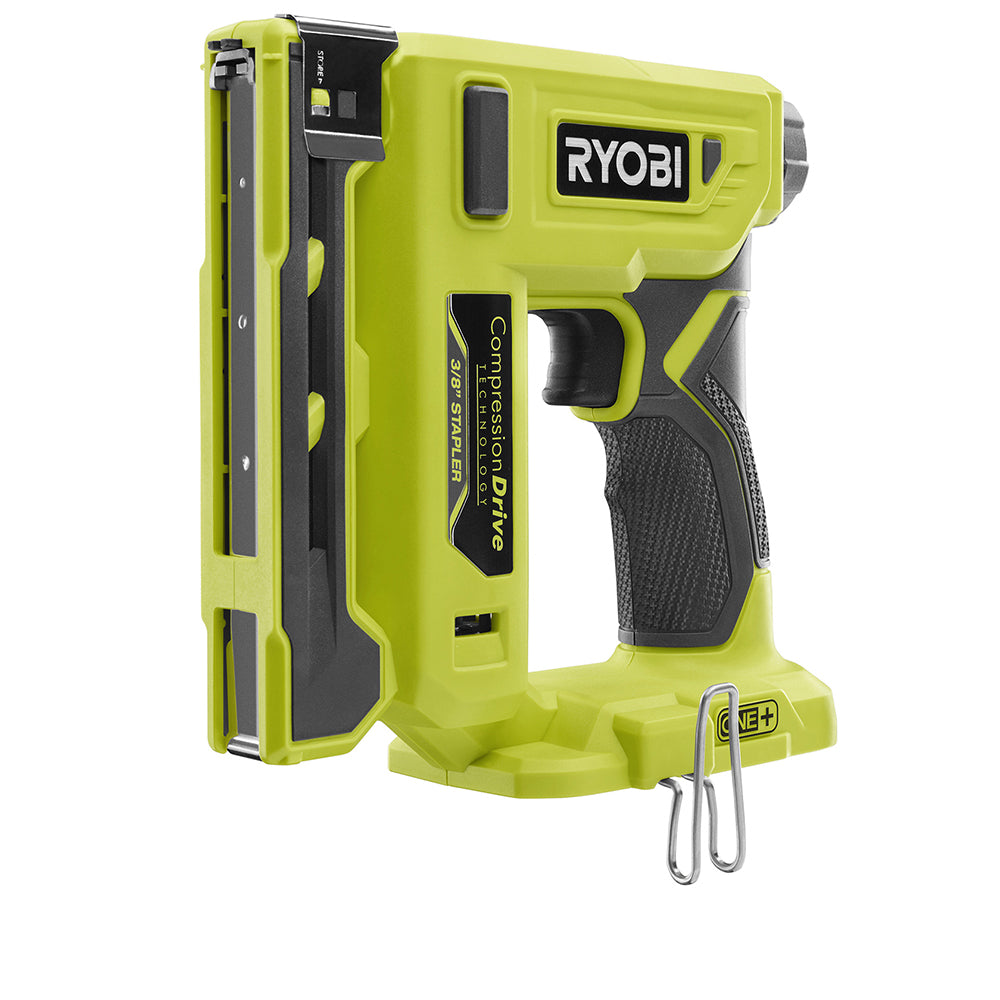
For upholstery, shop a cordless upholstery stapler that accepts standard fine-wire or narrow-crown staples. The important specifications are staple length, crown width, nose clearance, and depth adjustment. A tool that only drives 1/4-inch staples may work on thin fabric over plywood but fail on dense foam, webbing, or hardwood trim.
Depth adjustment is more useful than maximum power. Start with a short staple and a low setting on scrap material. The crown should sit flat without cutting through the fabric. If the staple sinks below the surface, increase depth only enough to hold the material. Overdriving creates visible dimples and can tear vinyl or thin upholstery cloth when the material is stretched.
A cordless 18V cordless upholstery stapler makes sense if you already own that battery system. For a single dining-chair project, a manual upholstery stapler is often adequate and costs less. Battery tools become worthwhile for sofas, vehicle interiors, repeated cushion work, or hard materials that make a hand tool tiring.
Battery platform and ergonomics
Buy the bare tool when you already own compatible batteries, but compare kit pricing if you are entering a new platform. A battery and charger can cost as much as a basic stapler. The advantage is not just one tool: the same pack may run a drill, impact driver, light, or compact saw.
For overhead cable work, balance matters more than raw voltage. A smaller battery reduces wrist strain and makes it easier to keep the tool square to the cable. For fabric, a larger pack is less troublesome because most work happens at a bench. Look for a narrow nose, a comfortable trigger, and a contact mechanism that does not require excessive force.
Expect roughly several hundred fasteners from a compact battery, depending on material and staple length, but treat manufacturer shot counts as best-case figures. Cold batteries, dense hardwood, and repeated maximum-power shots reduce runtime. Keep a second charged pack available for a full installation day.
Safe use and common failures
De-energize electrical circuits before fastening cable, and follow local rules for spacing, protection, and support. Never staple directly over a cable where a future screw or nail could hit it. At boxes, corners, and penetrations, leave the clearance required by the electrical code and use protective plates where needed.
Common cable failures include loose staples, crushed insulation, and staples driven at an angle. Keep the tool perpendicular, seat the cable in its guide, and inspect every fastener. If the staple bridges uneven framing, move the attachment point rather than forcing it.
With fabric, the usual failures are wrinkles, exposed staples, and staples that pull out of weak backing. Work from the center of each edge toward the corners, alternating sides to keep tension even. Leave corners until the straight sections are secure. Test the staple length on the actual frame; a staple that exits the back can damage the finished surface or create a sharp hazard.
What to buy
Choose a dedicated cordless cable stapler for repetitive electrical work, and choose a depth-adjustable upholstery stapler for fabric. If you only have a few cable runs or one chair to recover, manual tools are usually the economical choice. If you already own a compatible battery platform, the cordless upgrade is easier to justify—but verify staple availability and suitability before comparing trigger speed or voltage.
Related guides
- Longest Lasting Lawn Mower Battery: AGM vs Lithium vs Flooded Lifespan and Cost per Season
- Duralast Gold Lawn Mower Battery Review: U1 Fit, CCA and When to Pay for AGM
- Greenworks Pro 80V 21-Inch Mower Review: Runtime Math, Push vs Self-Propelled and Yard Fit
- Bosch High Pressure Washer Gun Replacement: Fittings, Adapters and What Fits Your Model