What's inside
- Quick comparison: the picks at a glance
- Best overall under $100: Anker Soundcore Space One
- Best for commuting: Sony WH-CH720N
- Best for office and calls: JBL Tune 770NC
- Best value over-ear: Soundcore Life Q30
- Best budget and gym pick: JLab Go Air Pop
- Decision matrix: match the headphone to your situation
- What “under $100” actually buys — and what it does not
- Cost per hour: a worked example
- Durability and ownership: what wears out first
- How to shop the Cyber Monday window without getting burned
- Frequently Asked Questions
As an Amazon Associate I earn from qualifying purchases. This post may contain affiliate links at no extra cost to you.
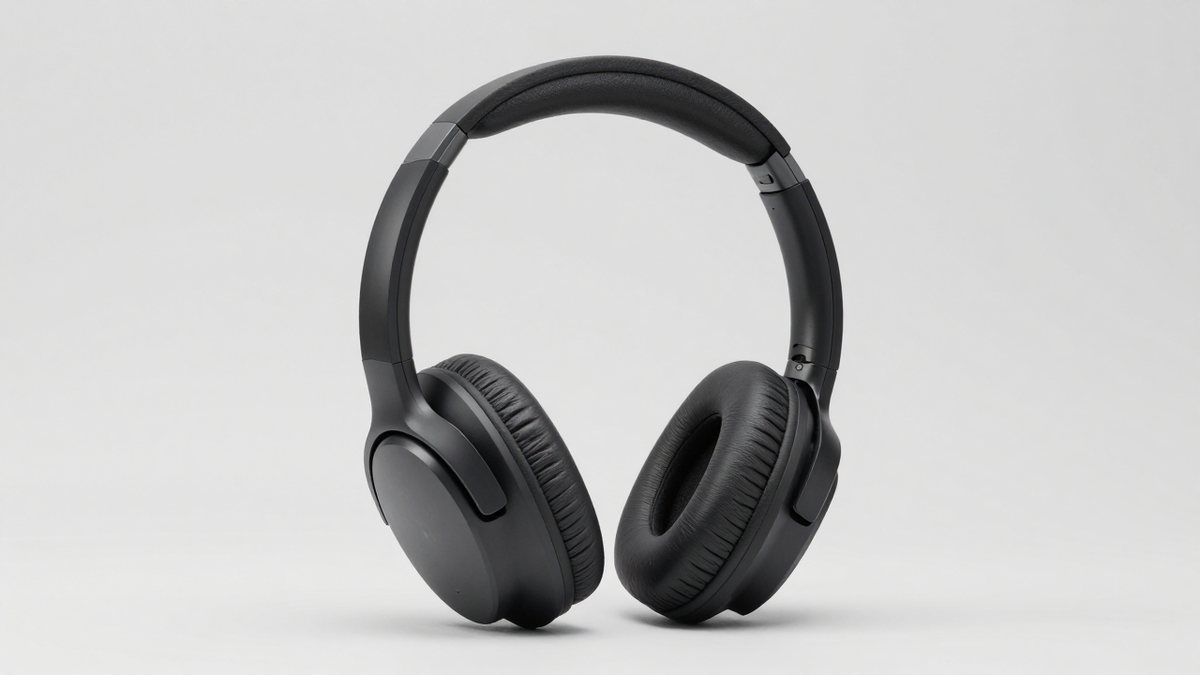
The best Cyber Monday headphone deals under $100 in 2026 land in three bands: the $20–35 true-wireless earbuds that survive the gym, the $50–70 over-ears that give you real active noise cancellation for a commute, and the $80–100 multipoint headsets that double as a work-from-anywhere tool. If you only want one recommendation, the Anker Soundcore Space One is the strongest all-round package under $100 on paper — 40 mm drivers, roughly 40 hours with ANC on, and Bluetooth multipoint — while the Sony WH-CH720N remains the pick if weight and isolation matter more than battery life. Everything below is matched to a specific situation, because the trade-offs change completely between a train carriage, a shared office, and a squat rack.
As an Amazon Associate we earn from qualifying purchases at no extra cost to you.


Quick comparison: the picks at a glance
Prices are general Cyber Monday market ranges, not fixed figures — model years refresh and stock moves fast during the sale window. Specs are as listed on each manufacturer’s spec sheet; real-world numbers vary with volume, codec, and ANC mode.
| Pick | Best for | Key specs | Typical range |
|---|---|---|---|
| Anker Soundcore Space One | Best overall under $100 | 40 mm drivers, ~40 h ANC on / ~55 h off, multipoint, ~263 g, foldable | $70–100 |
| Sony WH-CH720N | Best for commuting | ~192 g, ~35 h ANC on / ~50 h off, multipoint, no hard case included | $80–100 |
| JBL Tune 770NC | Best for office and calls | Up to ~70 h total with ANC off, multipoint, foldable, wired 3.5 mm option | $70–100 |
| Soundcore Life Q30 | Best value over-ear | 40 mm drivers, ~40 h ANC on / ~60 h off, hybrid ANC, ~260 g | $50–70 |
| JLab Go Air Pop | Best budget / gym | ~8 h per bud, ~32 h total with case, IP44 splash resistance | $20–30 |
Best overall under $100: Anker Soundcore Space One
This is the pick that does the most jobs acceptably. The spec sheet lists adaptive ANC, Bluetooth 5.3 with multipoint pairing, and LDAC support for higher-bitrate streaming on compatible Android devices — a combination that was a $250 feature set a few generations ago. Battery life is the headline: roughly 40 hours with ANC engaged, and a short top-up charge that the manufacturer claims returns several hours of playback.
Who it suits: someone who wants one pair for a train commute, a home desk, and occasional flights, and does not want to think about charging twice a week. Main trade-off: at around 263 g it is noticeably heavier than the Sony option, and the clamping force is firmer, so people who wear glasses or have a larger head may feel pressure behind the ears after two hours. If you wear headphones for six-hour stretches, that matters more than the extra battery.
Best for commuting: Sony WH-CH720N
At roughly 192 g per the manufacturer’s spec sheet, this is one of the lightest over-ear ANC models in the sub-$100 bracket, and light is exactly what you want when you are wearing something on a crowded platform for 45 minutes twice a day. Sony’s processing handles low-frequency drone — engine noise, air conditioning, rail rumble — well for the price, though it will not silence a bus full of conversation.
Trade-off: battery life is the shortest of the over-ears here at about 35 hours with ANC on, and there is no hard travel case in the box. The plastic build flexes under pressure, so it is a desk-and-commute headphone rather than a throw-it-in-a-backpack one.
Best for office and calls: JBL Tune 770NC
Multipoint is the feature that matters most if you take calls: it lets the headset hold a connection to a laptop and a phone at once, so a call on one device does not require unpairing the other. The Tune 770NC pairs to two devices simultaneously, folds flat for a bag, and accepts a 3.5 mm cable, which means you can keep using it on a flight seat-back or a depleted battery.
Trade-off: ANC performance is a step behind the Sony and Soundcore units for deep low-frequency noise, and the microphone array is fine for video calls but not for recording anything you intend to publish. Battery life, though, is the longest in this group — the manufacturer advertises up to about 70 hours of total playback with ANC switched off.
Best value over-ear: Soundcore Life Q30
This is the model to watch if Cyber Monday pushes the older generation down into the $50–70 window. It carries 40 mm drivers, hybrid ANC, and roughly 40 hours with cancellation active — genuinely close to the Space One on the specs that matter, minus the newer Bluetooth version and codec support. If the price gap between the two is more than about $25, the Q30 is the better buy.
Trade-off: the app-based EQ is limited compared with newer models, and the earcups use a pleather covering that starts flaking sooner than fabric alternatives — see the ownership section below.
Best budget and gym pick: JLab Go Air Pop
For under $35 you get roughly 8 hours per bud, about 32 hours total with the charging case, and an IP44 rating, which covers sweat and splashes but not submersion. The case is small enough to live in a pocket, and the whole package costs less than a single replacement earpad set on a premium headphone.
Trade-off: there is no meaningful active noise cancellation — isolation comes purely from the silicone tip seal, which means you hear the gym’s music over yours. If you want ANC in a true-wireless shape, expect to spend $80–100 during the sale window on something like the Nothing Ear (a) class of product.
Decision matrix: match the headphone to your situation
| Your situation | Priority spec | Threshold to look for | Form factor |
|---|---|---|---|
| Daily train or bus commute, 1–2 h/day | ANC depth on low frequencies + low weight | Under 220 g, 30 h+ with ANC on | Over-ear |
| Shared office, calls all day | Multipoint + microphone clarity | 2-device pairing, 25 h+ with ANC on | Over-ear with boom-free mic array |
| Gym, running, cycling | IP rating + secure fit | IPX4 or better, 6 h+ per charge | True wireless with ear fins or hooks |
| Flights 4+ hours, twice a year | ANC + wired fallback | 3.5 mm input or USB-C audio, 35 h+ | Over-ear with hard case |
| Open-plan home desk, all-day wear | Comfort + transparency mode | Under 250 g, replaceable pads | Over-ear, low clamp force |
What “under $100” actually buys — and what it does not
Price bands under $100 are not arbitrary. They map to specific hardware decisions:
- $20–35: true wireless, no real ANC, IPX4 sweat protection, plastic build, 6–8 hours per charge. You are buying convenience and disposability.
- $50–70: the first band where hybrid ANC appears in over-ears, along with 40 mm drivers and 40+ hour batteries. Expect older Bluetooth versions and limited codec support.
- $80–100: multipoint, newer Bluetooth, sometimes LDAC or equivalent high-bitrate codecs, and better microphone arrays. This is where the best value usually sits on Cyber Monday.
What you do not get at any price under $100: the top-tier adaptive cancellation of flagship models, premium materials like metal yokes and memory-foam fabric pads, or multi-device switching across three or more devices at once. If a listing claims flagship-level isolation at $60, it is marketing copy.
Cost per hour: a worked example
Cheap is not the same as economical. Take two realistic scenarios:
- Budget buds, $30. Used 1.5 hours a day, 250 days a year = 375 hours annually. Replaced every two years = 750 hours of use. Cost: about $0.04 per hour.
- Over-ear, $85. Used 3 hours a day, 250 days a year = 750 hours annually. Kept three years = 2,250 hours. Cost: about $0.038 per hour, or roughly $0.056 once you add one $20 set of replacement earpads.
The two are nearly identical per hour. The over-ear wins on isolation and comfort; the buds win on portability and on not caring if they get lost. Decide which of those you actually need before deciding which is “cheaper”.
Durability and ownership: what wears out first
Across nearly every budget headphone, the failure order is consistent: earpads, then cables and hinges, then the battery. Pleather pads on $50–100 over-ears typically flatten and begin flaking after 12–18 months of daily use, and replacements run $15–25 a pair — a consumable cost worth factoring in before you buy.
Batteries are less of a concern than people assume. Lithium-ion packs generally retain about 80% of original capacity after roughly 500 full charge cycles. A 40-hour over-ear drained 3 hours a day needs a full cycle only every 13 days — about 28 cycles a year — so the cell is rarely the first thing to fail. Small true-wireless buds cycle far more often and are the exception.
Three common mistakes shorten lifespan more than anything else: storing over-ears by the headband (it stretches and cracks), charging overnight in a hot car, and cleaning with alcohol wipes, which dries out pad coatings. A damp cloth and a soft brush on the mesh is enough. On hearing safety: keep volume moderate — a rough general guideline is no more than about 60% of maximum for 60 minutes at a stretch — and if you notice persistent ringing or muffled hearing after listening, speak to an audiologist rather than adjusting your EQ.
How to shop the Cyber Monday window without getting burned
- Check the model generation, not just the name. Manufacturers keep a familiar name and quietly revise the hardware; the newer revision often has better Bluetooth and battery. Verify the spec sheet on the current listing.
- Compare against the non-sale price, not the “list” price. A $99 “was $149” tag on a model that normally sells for $95 is not a deal.
- Decide your one non-negotiable before you browse. Multipoint, IP rating, or ANC depth — pick one. Chasing all three under $100 leads to a compromise on each.
- Budget for a case and pads. Add roughly $25 to any over-ear purchase; those two items do more for lifespan than any warranty.
Frequently Asked Questions
Are Cyber Monday headphone deals actually better than Black Friday?
In most years the two events share the same promotional pricing, and Cyber Monday skews slightly more toward online-only stock clearance. The practical difference is inventory: models that sell out on Black Friday may not restock for Cyber Monday, while a few older generations get a second, deeper cut. If a model you want is at your target price on Black Friday, there is little reason to gamble on a better one days later.
Is active noise cancellation worth paying for under $100?
Yes, if your main noise problem is continuous and low-frequency — engines, air conditioning, rail rumble. That is the range budget ANC handles best. It is much less effective against speech, so for a loud open office it reduces fatigue rather than making the room quiet. If your noise is mostly people talking, a well-sealed earbud with foam tips can isolate just as effectively for less money.
Over-ear or earbuds for commuting?
Over-ear wins on battery life, isolation, and comfort over long stretches, and it does not sit inside your ear canal. Earbuds win on portability, sweat resistance, and price. A reasonable rule: if your commute is longer than 30 minutes each way and you carry a bag, go over-ear. If you commute standing up, in short hops, or you also want to use them at the gym, go true wireless.
Can I use ANC over-ear headphones for the gym?
Generally no. Most over-ear models have no IP rating at all, and sweat plus heat degrades the earpad coating and the internal electronics quickly. A few models are marketed for training, but for the same money you can buy a dedicated IPX4 earbud set and keep the over-ears for everything else. If you sweat heavily, treat any non-rated headphone as unsuitable for training.
How long should a $100 headphone last?
With a case and one earpad replacement, three to four years of daily use is a realistic expectation for over-ears. True-wireless buds typically run 18 months to three years, limited mainly by the small batteries inside each bud. The most common early failure is not the driver or the battery but a cracked hinge or a frayed charging port from being carried loose in a bag.
Do I need multipoint if I only use one device?
No. Multipoint only matters when you want audio from two sources at once — a laptop and a phone, for example. If you listen exclusively from one phone, that money is better spent on better isolation or a lighter build. It becomes near-essential the moment you start taking video calls on a computer while your phone stays connected.