What's inside
As an Amazon Associate I earn from qualifying purchases. This post may contain affiliate links at no extra cost to you.
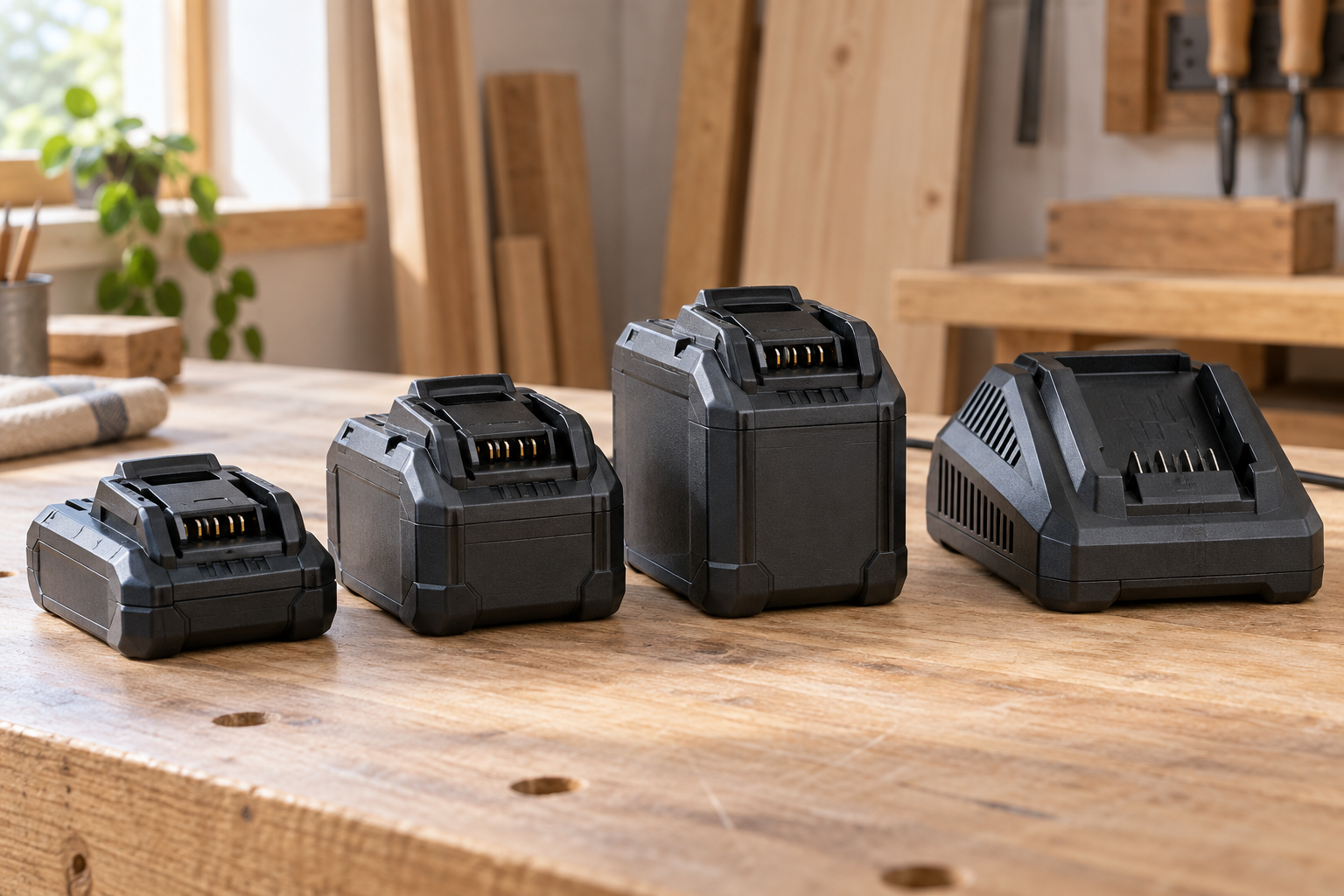
The Skil PWRCore 20 2.0Ah and 5.0Ah batteries use the same 20V platform, so either can power compatible Skil PWRCore 20 tools. The practical difference is runtime, weight, charging time, and price—not tool compatibility or voltage. Choose based on how long you work between charges and how much extra mass you want on the tool.
At a glance
| Factor | 2.0Ah battery | 5.0Ah battery |
|---|---|---|
| Nominal energy | About 40Wh | About 100Wh |
| Runtime per charge | Less; a good fit for short jobs | Roughly 2.5 times the capacity in theory |
| Weight and balance | Lighter and less bulky | Heavier; can make compact tools feel tail-heavy |
| Charging | Usually quicker to recharge | Usually takes longer on the same charger |
| Best suited to | Drills, drivers, light-duty tasks, and spare batteries | Longer cutting, grinding, or repeated high-load work |
What the capacity numbers mean
Amp-hours (Ah) measure how much charge a battery can deliver over time. At the same nominal 20V, a 2.0Ah pack represents roughly 40 watt-hours (Wh), while a 5.0Ah pack represents about 100Wh. That makes the larger battery’s rated energy 2.5 times greater. It does not guarantee 2.5 times the work in every tool or job: load, temperature, battery condition, and pauses all affect runtime.
In practice, a drill making a few pilot holes may use so little energy that the difference hardly matters. A circular saw repeatedly cutting sheet goods, or an angle grinder running under load, can drain a small pack much sooner. Dense lumber, large hole saws, dull blades, and forcing a tool through material increase demand and can also trigger overheating or overload protection.
When the 2.0Ah battery makes sense
The 2.0Ah pack is the sensible choice when low weight matters more than uninterrupted runtime. It suits an impact driver used for occasional screws, a drill for household repairs, or a compact tool carried overhead or at arm’s length. Less battery weight can reduce wrist and shoulder fatigue, and a smaller pack is easier to fit into a tool bag.
It is also useful as a second battery. If one pack is charging while another is in the tool, a pair of smaller batteries can cover stop-and-start work without keeping the tool’s grip heavy. The catch is that frequent battery changes interrupt a long task, and a single 2.0Ah pack may feel inadequate on a demanding job. If you need an inexpensive extra, compare Skil PWRCore 20 2.0Ah batteries with the cost of a kit that includes a charger; bundles can be better value.
When the 5.0Ah battery is worth the weight
A 5.0Ah pack is the better pick if changing batteries is slowing you down or the tool spends long stretches under load. It gives you more stored energy for jobs such as repeated saw cuts, mixing small batches with a compatible tool, or extended fastening. Its larger reserve can help avoid stopping mid-task, though it cannot make an underpowered tool suitable for a job beyond its limits.
The trade-off is mass. On a compact drill held above shoulder height, the larger pack may be more tiring than its extra runtime is worth. On a saw or blower held closer to the body, the balance may be acceptable. Before buying, check the tool’s total weight with the battery installed if you can. Compare Skil PWRCore 20 5.0Ah batteries against a second 2.0Ah pack if you value lighter handling over fewer battery swaps.
Charging and compatibility
Both capacities belong to the PWRCore 20 family, but confirm that a particular tool, charger, and battery are listed as compatible before purchase. Do not assume a battery from another Skil voltage platform will fit just because the brand name matches. Also check what a kit actually includes: some prices are for a bare battery, while others include a charger or tool.
A 5.0Ah battery generally takes longer to refill than a 2.0Ah battery on the same charger because it stores more energy. Exact charge times depend on the charger and the battery’s temperature and condition; check the product manual rather than relying on a single advertised time. For a continuous workday, a spare battery and a charger that can keep pace may matter more than buying the largest pack. Let a hot pack cool before charging, and stop using a battery that is cracked, swollen, or unusually hot.
Getting more work from either pack
If runtime seems poor, first check the job rather than blaming the battery. A dull saw blade, clogged filter, binding bit, or poorly matched accessory can make a tool draw more power. Use the correct bit or blade, keep cutting pressure steady, and clear debris. On a drill, select a suitable speed and gear instead of holding the trigger at low speed against a stalled bit.
Cold weather can temporarily reduce available battery performance. In hot conditions, repeated heavy use can raise pack temperature enough for protection to limit output or stop the tool. Taking a break and allowing the pack to cool is safer than trying to force it through. If a fully charged battery consistently runs down unusually fast in a familiar, light-duty task, its age or condition may be the problem.
Which one should you buy?
For light home maintenance, overhead work, and a compact drill or driver, start with the 2.0Ah battery. It is often enough, costs less in many listings, and keeps the tool easier to handle. For sustained cutting or other repeated high-demand work, choose the 5.0Ah pack if its added weight is acceptable. If your jobs vary, one of each gives you a light option for precise work and a larger reserve for longer sessions.
Compare the total cost of the battery, charger, and any kit bundle—not just the pack’s Ah rating. A larger battery is not automatically the better buy if it spends most of its life unused, and the smaller one is not a bargain if you are constantly stopping to recharge. Match capacity to the tool and the length of the job.
FAQ
Which one should you buy?
Related guides
- Longest Lasting Lawn Mower Battery: AGM vs Lithium vs Flooded Lifespan and Cost per Season
- Duralast Gold Lawn Mower Battery Review: U1 Fit, CCA and When to Pay for AGM
- Greenworks Pro 80V 21-Inch Mower Review: Runtime Math, Push vs Self-Propelled and Yard Fit
- Bosch High Pressure Washer Gun Replacement: Fittings, Adapters and What Fits Your Model