What's inside
As an Amazon Associate I earn from qualifying purchases. This post may contain affiliate links at no extra cost to you.
Cordless tool batteries last longest when they are stored cool, dry, partly charged, and protected from physical damage. A temperature-controlled workshop makes this easier, but it does not remove the need for sensible charging and storage habits. Lithium-ion packs can lose capacity from heat, develop problems after deep discharge, and become unsafe if damaged or charged under the wrong conditions.
Set the Right Temperature and Humidity
For routine storage, aim for roughly 50°F to 77°F (10°C to 25°C). Most manufacturer guidance allows a wider range, but a stable, moderate temperature is better than repeatedly moving batteries between a hot shed and an air-conditioned room. Keep packs away from direct sunlight, heaters, boilers, radiators, and the ceiling of a workshop, where hot air collects.
Short-term exposure to temperatures outside that range is not automatically harmful. The bigger risks are sustained heat and charging a battery while it is very hot or cold. Do not charge a pack straight from a freezing vehicle or a hot work area. Let it return to room temperature first. As a practical rule, wait until the case feels neither cold nor hot and has had at least 30 minutes indoors.
Humidity matters because corrosion can affect terminals, charger contacts, and the battery-management electronics. Keep relative humidity below about 60% if possible. A dehumidifier is useful in a damp basement, while a sealed storage cabinet with a small desiccant container can protect batteries in less controlled spaces. Do not put loose batteries in a refrigerator or freezer; condensation can form when they are removed.
Store Batteries Partly Charged
For storage lasting more than a few weeks, leave lithium-ion tool batteries at about 30% to 60% charge. Around 40% is a good target. This reduces stress on the cells compared with leaving them full, while providing enough reserve to prevent the pack from sitting at an extreme low state of charge.
A fully charged pack is fine when you expect to use it within days. For seasonal storage, however, a full battery kept hot ages faster. Do not deliberately run a pack completely flat before storing it. If the charger or tool indicates a critically low battery, recharge it promptly using the manufacturer’s charger.
Check stored packs every two or three months. Some batteries slowly discharge even when unused. Recharge any pack that has fallen near the tool’s low-battery warning, but do not keep topping off every battery weekly. That adds unnecessary charge cycles and creates more opportunities for a faulty charger or damaged pack to cause trouble.
Prevent Shorts, Drops, and Physical Damage
Store batteries with their original terminal cover installed, if supplied. Otherwise, keep them in a compartment where metal objects cannot bridge the contacts. A loose battery in a drawer with screws, drill bits, or keys can short out. The resulting heat can melt plastic, damage cells, or start a fire.
A sturdy shelf or cabinet is preferable to a high shelf where a pack can fall. Keep batteries upright or in a position that does not put pressure on the housing. Do not use a pack with a cracked case, swollen body, leaking material, burnt smell, loose terminals, or impact damage. Place a suspect battery somewhere noncombustible and isolated from other packs, then follow the manufacturer’s recycling or service instructions. Do not open a battery to replace individual cells.
A lithium-ion tool battery storage case can be worthwhile if you carry packs between a workshop and a job site. Choose one with dividers, ventilation, and enough room that the batteries are not squeezed together. A sealed case is useful for transport, but it should not be used to contain a battery while charging.
Separate Charging From Long-Term Storage
Charge batteries on a hard, stable, noncombustible surface with space around the charger. A metal shelf or clear workbench is better than a pile of cardboard, sawdust, rags, or wood offcuts. Keep the charger where you can see it, and unplug it after charging if the manufacturer does not require it to remain connected.
Use the charger designed for that battery platform. Cross-brand adapters and cheap aftermarket chargers may lack the correct communication and temperature protections. Even within one brand, high-capacity packs can have different charging requirements, so check compatibility before buying a replacement charger.
| Storage situation | Recommended charge level | Best practice |
|---|---|---|
| Use within a few days | 80% to 100% | Charge normally, then store cool and dry |
| Storage for several weeks | 30% to 60% | Keep terminals covered and check monthly |
| Seasonal or long-term storage | About 40% | Inspect every two to three months |
| Pack is hot, cold, damaged, or wet | Do not charge | Isolate it and allow inspection or service |
Organize Different Battery Platforms
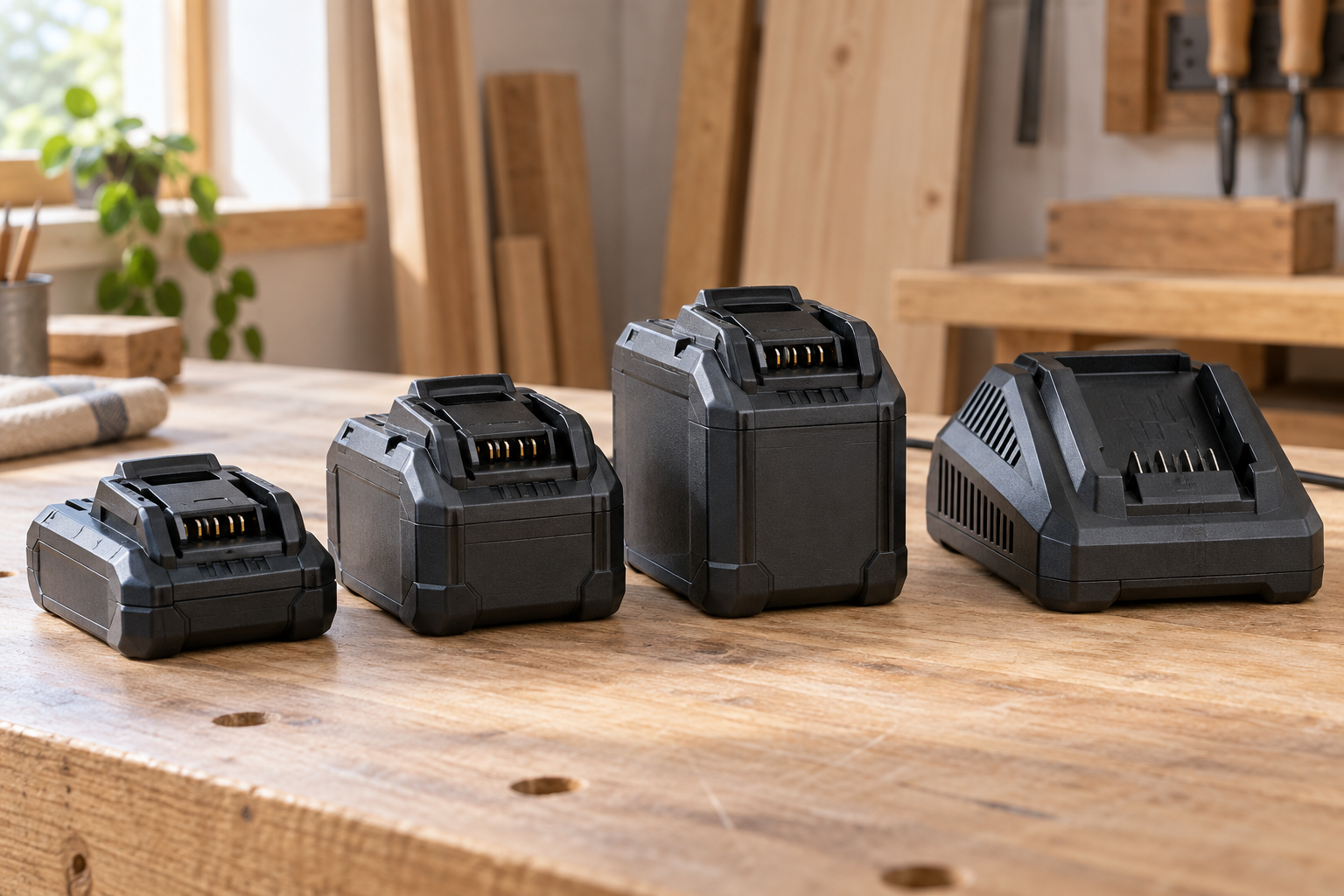
If your workshop uses several ecosystems, label shelves or bins by platform and voltage class. Mixing similar-looking packs is an easy way to grab the wrong battery or charger. Store each platform with its charger, but leave room for airflow around the charger and battery.
For a growing collection, a cordless tool battery wall storage rack keeps packs visible and off the floor. It is a good choice when you want quick access, provided the rack is securely mounted and not above a heater. Enclosed cabinets offer better protection from dust and accidental contact, but they need ventilation and make it easier to forget a battery for months.
Buy into one battery platform when possible. Sharing packs between drills, impact drivers, saws, lights, and other cordless hand tools reduces duplicate chargers and makes charge rotation easier. The cheaper option can be sensible if you only use one or two tools: buy the manufacturer’s standard-capacity pack and charger rather than paying extra for a large high-output battery you rarely need.
Handle Winter Storage and Warning Signs
Even a controlled workshop may lose heat during a power outage. If temperatures could fall below freezing for an extended period, move batteries to a dry indoor location. Do not charge a frozen pack. In summer, use the workshop’s coolest interior area and avoid leaving packs in a vehicle, where temperatures can exceed 120°F.
Watch for unusual heat during charging, rapid capacity loss, error lights, swelling, or a pack that no longer fits the tool normally. Stop using and charging it if any of these symptoms appear. Recycle batteries through an approved collection program, taping exposed terminals before transport. Never put lithium-ion tool batteries in household trash or leave them loose in a metal recycling bin.
A battery terminal protection kit is inexpensive insurance for spare packs and batteries carried in a toolbox. Combined with moderate temperature, partial charge, clean contacts, and regular inspection, it prevents the common storage mistakes that shorten battery life or create avoidable hazards.
Related guides
- Longest Lasting Lawn Mower Battery: AGM vs Lithium vs Flooded Lifespan and Cost per Season
- Duralast Gold Lawn Mower Battery Review: U1 Fit, CCA and When to Pay for AGM
- Greenworks Pro 80V 21-Inch Mower Review: Runtime Math, Push vs Self-Propelled and Yard Fit
- Bosch High Pressure Washer Gun Replacement: Fittings, Adapters and What Fits Your Model