What's inside
As an Amazon Associate I earn from qualifying purchases. This post may contain affiliate links at no extra cost to you.
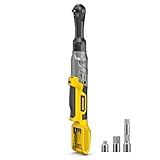
Voltage alone does not tell you how fast a cordless ratchet will turn a fastener or how long its battery will last. For automotive work, the choice is mostly about access, repeated use, and the rest of your battery platform. A 12V ratchet is usually easier to fit around a vehicle; an 18V ratchet can make sense when you already own that battery system or regularly work through long runs of fasteners.
As an Amazon Associate we earn from qualifying purchases at no extra cost to you.

What voltage changes—and what it doesn’t
In general, an 18V tool has more room for power and runtime than a comparable 12V tool, but design matters more than the label. Head thickness, neck length, trigger control, gearing, and the ratchet mechanism all affect how useful a tool is under a car. Compare the specifications for the actual tools you’re considering, especially head dimensions, no-load speed, and weight with battery installed.
A cordless ratchet is not an impact wrench. It turns a fastener; it does not deliver repeated hammering blows. Use it to spin nuts and bolts on or off, then break stubborn fasteners loose by hand with a regular ratchet or breaker bar. Final tightening should be done with a torque wrench where the job calls for a specified torque. Trying to force a stuck bolt with the ratchet can stall the motor, stress the tool, or round the fastener.
12V vs 18V at a glance
| Factor | 12V ratchet | 18V ratchet |
|---|---|---|
| Access | Often smaller and easier to maneuver in crowded engine bays | May be bulkier, particularly with a larger battery |
| Runtime | Good for typical repair jobs; small packs keep weight down | Can suit repeated or extended work, depending on tool and pack |
| Fastener removal | Best after the fastener has been loosened by hand | Same limitation: more voltage does not make it an impact wrench |
| Battery investment | Requires a 12V platform if you don’t already own one | May use packs and chargers you already have for other tools |
| Best fit | DIY repairs, tight spaces, and frequent one-handed use | Longer sessions or a shop already invested in that platform |
When 12V is the better buy
For work in a cramped engine bay, a smaller head and lighter battery can matter more than extra power. A ratchet that fits between a hose and a bracket saves time; a larger tool that cannot reach the fastener does not. This comes up on interior trim, small brackets, accessory work, and many under-hood jobs.
Lower weight also helps when you are holding the tool above shoulder height or working one-handed. A compact pack is typically a sensible choice for a ratchet: you gain maneuverability and avoid carrying a large battery that may make the tool awkward. If you do occasional automotive repairs and do not need to drive fasteners continuously, 12V is often enough. Start with a 12V cordless ratchet if access and handling are your priorities.
When 18V makes sense
An 18V ratchet is worth considering if you already own compatible 18V batteries and chargers, or if you expect long sessions with many fasteners. Avoiding a second battery platform can save money and storage space. On a large job, having spare packs ready can also reduce interruptions—but runtime depends on battery capacity, fastener load, and how often the tool is used, not voltage alone.
The trade-off is bulk. A larger battery can push the tool away from the fastener or make it tiring to hold at an awkward angle. Before buying, check the tool’s total weight and head profile, not just its bare-tool listing. An 18V option is practical for a garage already built around that ecosystem; it is not automatically an upgrade for someone whose main need is a narrow ratchet. Compare 18V cordless ratchets against the platform you already use.
Match the drive to your work
Common ratchet drives are 1/4 inch, 3/8 inch, and 1/2 inch. A 3/8-inch drive is a versatile starting point for many automotive jobs. A 1/4-inch ratchet and socket set can be handier for small fasteners and tight spaces; a 1/2-inch drive is aimed at larger sockets, but it does not turn the tool into a substitute for an impact wrench or breaker bar. Check the sockets you already own before choosing a drive, since adapters add length and can cost you access.
Some ratchets have a manual head that can be used like a regular ratchet when the battery is removed or the motor is off. That is useful if a fastener is too tight to spin under power, but the tool’s instructions govern whether and how manual use is permitted. Keep your fingers clear of pinch points, and don’t use the tool to apply final torque unless its instructions and the job’s requirements specifically allow it.
Count the battery and charger cost
If you already have batteries from a platform you trust, a bare tool may be the economical choice. Confirm exact compatibility: two batteries from the same brand may belong to different voltage lines and not fit one another. If you’re starting fresh, compare kit prices, included pack capacity, charger time, warranty terms, and whether the platform has other tools you will actually use. A low bare-tool price can be misleading when it requires a new charger and battery.
For occasional use, the least expensive compatible option may be perfectly adequate. You do not need a large-capacity pack simply because the tool is 18V. Conversely, a tiny pack on a heavier tool may make a long job inconvenient. If your work involves lots of repeated fastening, consider a kit or spare battery that matches the platform rather than buying packs based on voltage alone.
A practical buying checklist
First, identify the tightest spot where you expect to use the tool, then compare head thickness and overall length. Second, choose the drive that matches your sockets and typical fastener sizes. Third, account for battery weight and ecosystem cost. Finally, treat the ratchet as a speed tool for already-loosened fasteners, not a way to break bolts free.
For most DIY automotive work, a compact 12V model is the sensible choice when fit and comfort come first. Choose 18V when an existing battery platform makes it cheaper or when your workload justifies the added size. Either way, keep a hand ratchet and torque wrench nearby: they handle the jobs a cordless ratchet should not be forced to do.
Related guides
- Longest Lasting Lawn Mower Battery: AGM vs Lithium vs Flooded Lifespan and Cost per Season
- Duralast Gold Lawn Mower Battery Review: U1 Fit, CCA and When to Pay for AGM
- Greenworks Pro 80V 21-Inch Mower Review: Runtime Math, Push vs Self-Propelled and Yard Fit
- Bosch High Pressure Washer Gun Replacement: Fittings, Adapters and What Fits Your Model