What's inside
As an Amazon Associate I earn from qualifying purchases. This post may contain affiliate links at no extra cost to you.
The right industrial pressure washer turns a day of scrubbing concrete, stripping grime from equipment, or blasting a commercial property into a job you finish before lunch. But the category is littered with mismatched components: an engine that can sustain the output, a pump that handles the PSI without failing at the first cold morning, and accessories rated for the actual flow your unit produces. When those elements don’t align, the machine stalls, overheats, or simply doesn’t clean better than a half-decent residential model that costs a third as much.
What separates the genuine workhorses from the overpriced novelties comes down to how published specs compare to real owner experiences over months of use. High PSI alone means nothing if the gallons-per-minute rating is too low to carry away loosened debris. A reputable engine means nothing if paired with a cheap pump that leaks within a season. This roundup evaluates each machine on those combined factors, using manufacturer specifications, pricing data, and verified owner feedback to help you find a unit that earns its price tag.
As an Amazon Associate we earn from qualifying purchases at no extra cost to you. Product prices and availability are accurate as of the date shown and are subject to change.
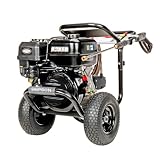
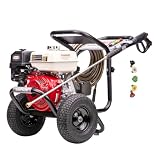


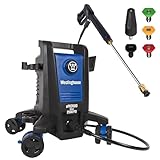
Quick Picks
| Product | Best for | Price |
|---|---|---|
| Simpson PowerShot 4400 PSI | Highest raw output per dollar | $899.99 |
| Simpson PS60869 4000 PSI | Complete bundled package | $999 |
| DeWalt 3300 PSI | Light-duty tasks on a budget | $359 |
| Westinghouse WPX3400 | Best value gas with soap features | $349 |
| Simpson PowerShot 3500 PSI | Proven Honda engine reliability | $639.99 |
| Professional 4200PSI GBlack | Lowest-cost commercial-grade output | $309.99 |
| Simpson Aluminum Series 4200 PSI | Premium build and weight savings | $1399.99 |
| Westinghouse ePX3500 | Electric operation with safety features | $169 |
How We Picked
We evaluated these machines on four criteria: the combined cleaning power of PSI multiplied by GPM (the metric that actually determines how fast dirt gets removed, not just how hard it is struck), engine and pump brand reputation for longevity under repeated use, the quality and completeness of included accessories relative to the price, and consistent owner feedback about reliability after the first year. A machine that scores high on one axis but fails on another—like a powerful engine bolted to a triplex pump that owners report leaking at low hours—ranks lower than a balanced unit.
The 8 Best Industrial Pressure Washer in 2026
Simpson PowerShot 4400 PSI
For contractors who need maximum water power without crossing into six-figure equipment, the PowerShot 4400 delivers 4400 PSI at 4.0 GPM—the highest flow rate on this list. The CRX 420cc engine provides adequate displacement to sustain that output without bogging. Owners praise the straightforward start-up and the sheer force it generates on concrete and heavy equipment. The unit is purpose-built for volume cleaning jobs rather than delicate surfaces. The main drawback is that the included accessory package is lean for the price, meaning you will likely need to budget extra for quality nozzles and a longer hose. Skip this if your work involves mostly vehicles, furniture, or painted surfaces where 4400 PSI risks damage.
Simpson PS60869 PowerShot 4000 PSI
The PS60869 balances output with a comprehensive accessory bundle that justifies its near-$1000 price. The Honda GX270 is one of the most reliable small engines available, and the AAA Triplex Pump is rated for professional hours. The package includes the spray gun, wand, five QC nozzle tips, and a 50-foot monster hose, eliminating the usual “what did I forget to buy” problem. Owners consistently note the engine starts on the first or second pull even after weeks of sitting. The trade-off is weight and footprint—this is not a machine you will be lifting into a truck bed casually. Skip it if you need portability over included accessories, or if your jobs stay under 20 feet of reach.
DeWalt 3300 PSI
The DeWalt 3300 occupies an awkward middle ground: it is marketed as a residential model, making it the least powerful gas unit here at 2.4 GPM, yet its DeWalt branding and compact frame appeal to homeowners who want a step above the smallest machines. For fence cleaning, patio refresh, and vehicle washing, it gets the job done with minimal fuss. Owners appreciate the brand’s parts availability and the manageable noise level. The limitation is that at 3300 PSI and 2.4 GPM, its cleaning power per minute is well below true industrial machines, so larger concrete or commercial jobs will feel slow. Skip this if your primary need is removing heavy grime from large flat surfaces or equipment.
Westinghouse WPX3400
At $349, the WPX3400 offers 3400 PSI and 2.6 GPM with an onboard soap tank—a feature more expensive units often omit from their base packages. The included spray gun, wand, and five-nozzle set make it a ready-to-work machine out of the box for residential and light-commercial tasks. Owners like the versatility it provides across cars, fences, and driveways without needing to upgrade accessories immediately. Its engine is serviceable but does not carry the same long-term reliability reputation as a Honda unit at this price point, so expect a shorter maintenance interval. Skip it if you run the machine more than a few hours weekly, where engine durability becomes the deciding factor.
Simpson PowerShot 3500 PSI
The 3500 PSI PowerShot is the sweet spot for users who want Honda GX200 reliability without paying for accessories they already own. At $639.99, you are purchasing the engine and pump combination that owners describe as virtually indestructible under regular use. The 2.5 GPM flow is adequate for residential cleaning, small commercial jobs, and equipment maintenance. Its value proposition is the long-term ownership cost—fewer breakdowns, easier part sourcing, and consistent performance across seasons. The con is that at this price, you still need to buy a quality hose, wand, and nozzle set separately. Skip this if you are starting from zero accessories, since the bundled PS60869 becomes a better total-cost option.
Professional 4200PSI GBlack
This is the most aggressive price-to-power ratio on the list: $309.99 buys 4200 PSI at 4 GPM from a 212cc engine rated at 7.0HP and 3600RPM. The package includes a 3000ml foam bottle, five nozzles, a 33-foot hose, and a reel, plus 10-inch wheels for mobility. It carries EPA, CARB, and ETL compliance marks, which is unusual at this price tier and suggests some degree of independent verification. Owners report impressive cleaning force for the money, though long-term pump and engine durability at this cost point is the obvious question. Skip it if you need a machine that will survive years of daily commercial use without component failures.
Simpson Aluminum Series 4200 PSI
The Aluminum Series is the premium option at $1399.99, pairing 4200 PSI at 2.5 GPM with a Honda GX390—the largest and most powerful small engine in the residential-to-light-commercial range. The aluminum frame reduces weight significantly compared to steel-framed equivalents, making it practical to load and transport repeatedly. Owners value the combination of high pressure, proven engine, and manageable weight. The 2.5 GPM flow is lower than the PowerShot 4400 above it, meaning it strikes harder but moves less water per minute. Skip it if your jobs prioritize flow over pressure, or if your budget cannot stretch past the $1000 range.
Westinghouse ePX3500 Electric
The ePX3500 is the only electric unit here and the most affordable at $169. With a 2500 max PSI and 1.76 max GPM rating, it sits firmly in the residential category, but it includes anti-tipping technology and a pro-style steel wand that its price tier rarely offers. For homeowners with no gas preference—apartment dwellers, those sensitive to noise, or people cleaning decks and patio furniture—it is a practical choice. Owners note the plug-and-play simplicity. The obvious limitation is power: it cannot handle anything close to true industrial cleaning tasks. Skip it if your need is driven by concrete, heavy equipment, or commercial property maintenance.
Buying Guide
Cleaning Power Is PSI Times GPM, Not PSI Alone
A machine rated at 4400 PSI and 2.5 GPM has less total cleaning capability than one rated at 3500 PSI and 4.0 GPM, because the second moves more water per second to carry away debris. Manufacturers often advertise the highest single number they can claim, which misleads buyers into chasing PSI. When comparing units, multiply the two figures and use that as your baseline for speed of cleaning. Flow rate also determines which nozzle tips and wands you can use effectively, so low-GPM machines limit your accessory choices.
Engine Brand and Pump Type Determine Lifespan
Small engine quality separates machines that last five years from those that need rebuilding by year two. Honda GX-series engines carry the strongest reputation for cold starts, sustained output under load, and parts availability. The pump type matters equally: triplex pumps handle continuous use far better than axial pumps, which are adequate for intermittent duty. If your schedule involves running the unit for more than thirty minutes at a time, prioritize a triplex pump and a branded engine—even if it means paying more upfront or accepting a lower PSI rating.
Accessories and Hose Length Are Not Interchangeable
A pressure washer rated at 4 GPM requires a hose with sufficient internal diameter to deliver that flow without restriction. A 3/8-inch hose is a minimum for machines above 3 GPM; using a smaller diameter hose creates back-pressure that strains the pump and reduces effective cleaning force at the nozzle tip. Similarly, nozzle tips are sized to match GPM output—a tip that is too small for the flow rate will cause pressure spikes and premature pump wear. Verify that included accessories match your machine’s actual output, not just its price bracket.
Our Verdict
For a true industrial pressure washer that balances power, reliability, and long-term cost, the Simpson PS60869 PowerShot 4000 PSI is the top pick: the Honda GX270 and AAA Triplex Pump combination delivers dependable output season after season, and the complete accessory package means you start working immediately. For budget buyers who still need meaningful gas power, the Westinghouse WPX3400 at $349 with its included soap tank and nozzle set is the standout value. However, if your primary requirement is maximum water flow per dollar—say for washing large equipment fleets or long driveway stretches—the Simpson PowerShot 4400 at 4.0 GPM outperforms everything else here on raw output capacity, regardless of its higher price.
FAQ
What PSI do I need for an industrial pressure washer?
For true industrial tasks like stripping paint, cleaning heavy equipment, or removing deep-set grime from concrete, 3000 PSI is a practical floor. Residential and light-commercial work—vehicles, patios, fencing—functions well in the 2000 to 3500 PSI range. Match the PSI to your toughest regular job, not your occasional one.
Is a gas or electric industrial pressure washer better?
Gas units dominate this category because they deliver higher PSI and GPM without being tethered to a heavy-duty extension cord. Electric models are quieter and require less maintenance but are limited in power output and runtime. If your jobs are large or remote, gas is the practical choice.
How long should a quality pump last?
A triplex pump on a well-maintained machine with a compatible engine should deliver several years of regular use before needing service. Axial pumps on lower-cost units typically last one to two seasons under frequent use. Owner feedback consistently identifies pump type as the most common failure point, making it a worthwhile premium.
Do I need a water heater for industrial cleaning?
Cold-water machines handle the majority of outdoor cleaning tasks effectively. A heater becomes relevant for grease, oil, or chemical residue removal—common in automotive shops and food-processing facilities. For typical driveway, fence, and equipment work, a standard cold-water industrial pressure washer is sufficient.