What's inside
As an Amazon Associate I earn from qualifying purchases. This post may contain affiliate links at no extra cost to you.
Makita LXT high-capacity batteries are worth paying for when a job draws heavy current for long stretches or when changing packs interrupts your work. For light drilling, occasional driving and many indoor jobs, a standard pack is usually the better buy: it costs less, weighs less and may already last a full day.
“High-capacity” usually means a larger amp-hour (Ah) rating within the same 18V LXT system. Ah measures stored capacity, not voltage or tool power by itself. A larger pack can run longer, but it also adds weight and bulk, and it does not make every tool perform proportionally better.
As an Amazon Associate we earn from qualifying purchases at no extra cost to you.


What capacity changes—and what it doesn’t
Think of voltage as the system’s working level and amp-hours as the size of its fuel tank. A 5.0Ah pack nominally stores about twice the charge of a 2.5Ah pack at the same voltage, though actual runtime depends on the tool, material and workload. That is a useful planning comparison, not a promise of exactly double the work.
A larger battery may also sustain demanding work more comfortably because it has more cells sharing the load. But performance depends on the specific battery design and the tool’s electronics. Don’t buy a bigger pack expecting a dramatic speed increase in every drill or impact driver. For a saw or grinder that repeatedly bogs down, check that the battery is compatible and suitable for the tool before assuming capacity alone will solve the problem.
Standard and high-capacity packs compared
| Factor | Standard-capacity pack | High-capacity pack |
|---|---|---|
| Runtime | Less time between swaps | More work per charge; exact gain varies by tool and task |
| Weight and balance | Lighter and often easier overhead | Heavier; can make a compact tool feel back-heavy |
| Best fit | Drilling, light fastening and short tasks | Repeated cutting, grinding or sustained fastening |
| Charging | Usually faster to refill than a larger pack on the same charger | Takes longer to charge; spare-pack planning matters |
| Cost | Lower upfront cost | Higher cost for fewer battery changes |
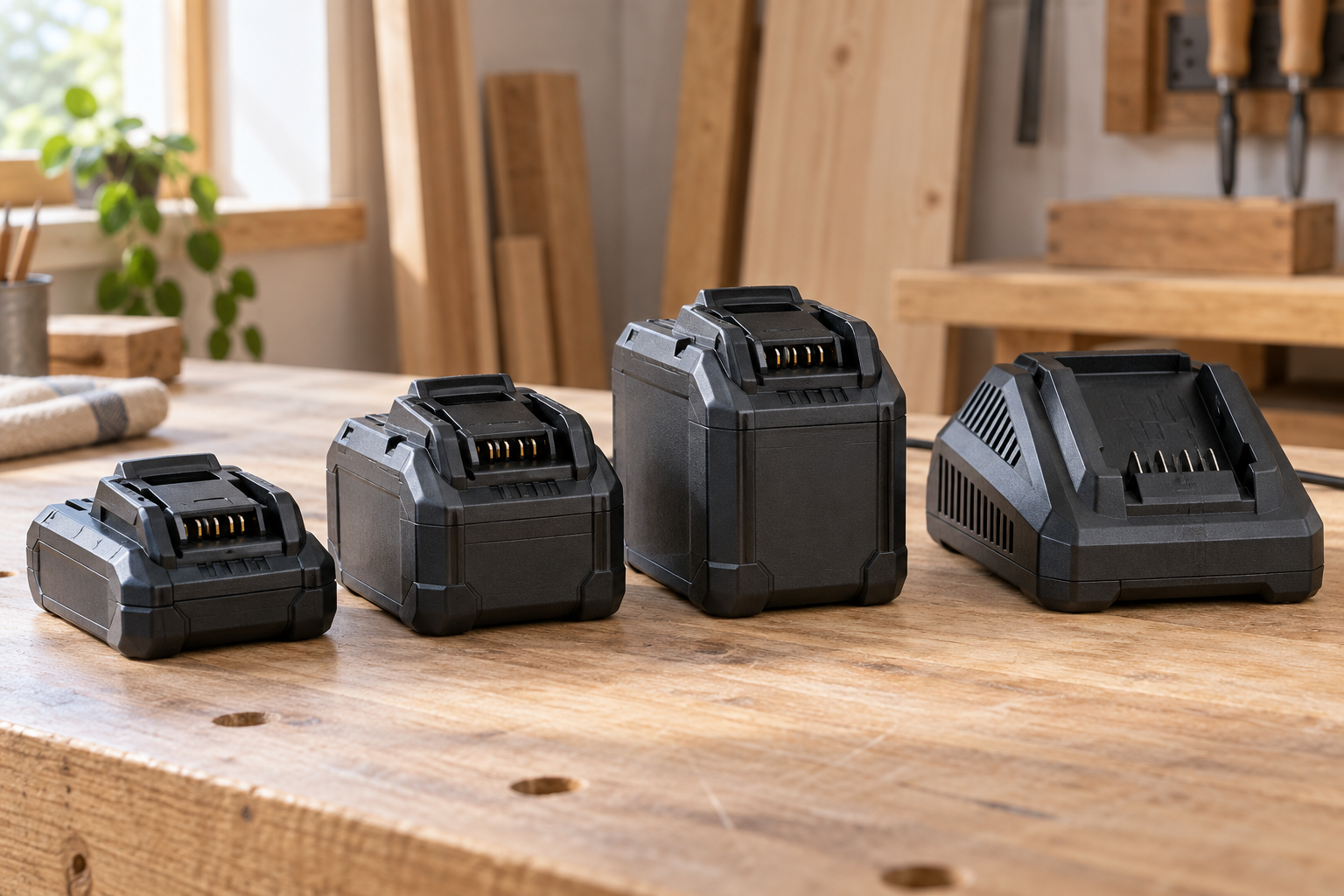
Pack sizes and weights vary, so check the exact battery specifications rather than relying on a general label. A common comparison is a compact 2.0–2.5Ah pack against a 5.0Ah pack. The larger option can make sense in a circular saw, but that extra mass is noticeable in a drill held above shoulder height.
When the upgrade matters
Upgrade when you regularly hit one of these limits: a battery dies before a cut or fastening run is finished; you stop to swap packs several times a day; or a demanding tool runs through your available batteries faster than the charger can refill them. Those are practical signs that more capacity could save time.
For example, a crew making repeated cuts with a circular saw may value a larger pack because swapping batteries between cuts interrupts the flow. The same is true for extended grinding or driving long fasteners into dense material. If you are comparing options, look at Makita LXT 5.0Ah batteries as a high-capacity category, and confirm the listing matches your LXT tools.
Capacity is especially useful when the job is remote and charging is inconvenient. One larger pack may reduce the number of batteries you need to carry, though it is not always the lightest way to work. If a pack is hot after heavy use, let it cool before charging; frequent high-load work can otherwise mean waiting on both cooling and charging, regardless of battery size.
When a standard pack is enough
For cabinet installation, occasional pilot holes, light assembly and short repair jobs, a compact pack is often a sensible choice. It keeps the tool easier to control and avoids paying for capacity you may not use. A spare standard pack can also be more convenient than one heavy battery if you already have a charger and can swap while the other pack charges.
For overhead work, weight is more than a comfort detail. A larger pack can tire your wrist and shoulder sooner, particularly on a compact drill or impact driver. If the task involves frequent starts and stops rather than continuous cutting, the larger capacity may not save enough time to justify that extra weight.
When buying another battery, consider a Makita LXT compact battery for lighter tools and overhead work. Keep in mind that a “standard” pack can mean different capacities across product listings; compare Ah, weight, compatibility and price rather than the wording alone.
Plan around the charger, too
A larger battery is not a complete fix if you have only one pack and a slow charging setup. Check the charger’s stated charging times for the specific capacity you are considering. A 5.0Ah battery generally takes longer to charge than a smaller pack on the same charger. With two packs, you may be able to keep working while one charges; with one pack, you may simply trade fewer swaps for longer downtime.
Heat is another real-world limit. Heavy cutting, grinding or drilling can warm a battery, and a hot pack may need time to cool before charging. Don’t put it against a heater or try to force a charge. If your batteries repeatedly get too hot to continue, reduce the load where possible, clear sawdust from vents, and check whether the tool and battery are being used within their intended limits.
A practical buying decision
Choose high capacity if you can name a recurring job where battery swaps or charging delays cost you time. Choose standard capacity if your tools are used in short bursts, you value lower weight, or your current packs finish the work without a frustrating pause.
For a mixed kit, a useful compromise is one larger pack for saws and other demanding tools, plus compact packs for drills and overhead tasks. That avoids carrying maximum capacity everywhere. Before ordering, verify the battery is for the Makita LXT platform and check the seller’s exact specifications. Avoid choosing by Ah alone: tool compatibility, pack weight, charger time and the way you actually work determine whether the upgrade pays off.
Related guides
- Longest Lasting Lawn Mower Battery: AGM vs Lithium vs Flooded Lifespan and Cost per Season
- Duralast Gold Lawn Mower Battery Review: U1 Fit, CCA and When to Pay for AGM
- Greenworks Pro 80V 21-Inch Mower Review: Runtime Math, Push vs Self-Propelled and Yard Fit
- Bosch High Pressure Washer Gun Replacement: Fittings, Adapters and What Fits Your Model