What's inside
As an Amazon Associate I earn from qualifying purchases. This post may contain affiliate links at no extra cost to you.
What a cordless cut-out tool does
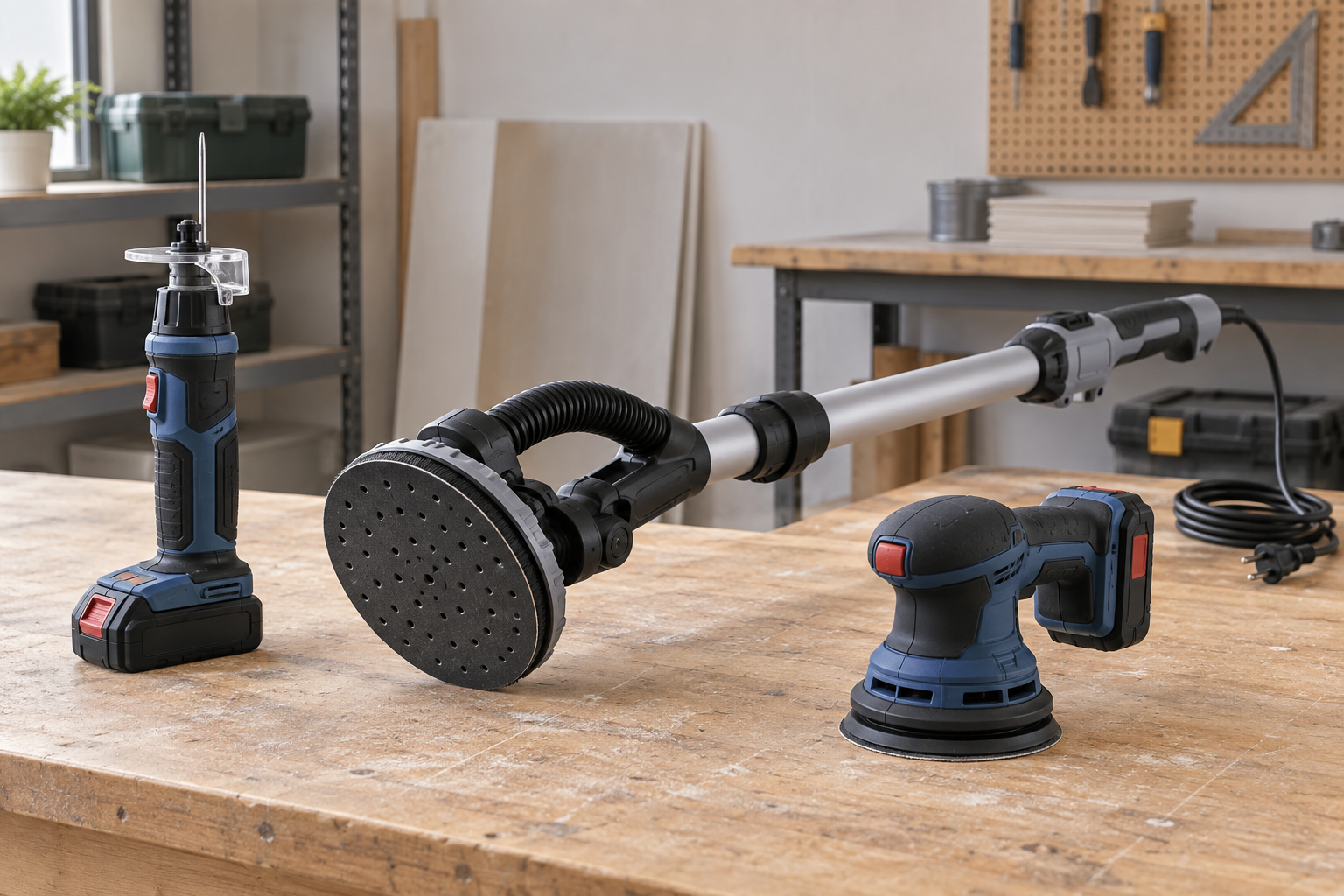
A cordless cut-out tool trims drywall around electrical boxes, outlet openings, recessed lights and other fixtures. Its small rotating bit cuts by following the edge of a box or a marked line. Unlike a jigsaw, it can plunge into the sheet without a starter hole. That makes it handy for renovation work, where boxes are already installed and accuracy matters more than making a long, straight cut.
These tools are also called drywall routers or rotary cut-out tools. Most use a 1/8-inch bit for drywall, though some accept other shank sizes or accessories. They are not substitutes for a hole saw when cutting a clean round opening in an unobstructed sheet: a hole saw is usually neater and captures or limits dust better.
As an Amazon Associate we earn from qualifying purchases at no extra cost to you.



What to look for before buying
Start with your battery platform. A tool that uses batteries you already own is usually a better value than a bare tool from a new system. If you need batteries and a charger, compare the full kit price, not just the tool price. A compact 2.0Ah battery is generally enough for intermittent drywall cuts; higher capacity adds runtime but also weight and bulk.
Variable speed is useful, but it does not make an unsuitable bit safe. Too much speed, a dull bit or pushing hard can scorch the edge, make the tool buck, or tear paper from the drywall. Look for a switch that is easy to reach, a depth guide that stays put, and a base or nose that lets you see the cut. Dust collection is worth considering if you make many openings indoors, but expect some dust even with a shroud.
For occasional home repairs, the least expensive compatible tool may be enough. For electricians, remodelers or anyone cutting dozens of boxes in a day, steadier handling, quick depth adjustment and dust control can save time and cleanup.
Cordless cut-out tool comparison
| Type | Best fit | Trade-off |
|---|---|---|
| Basic cordless rotary cut-out tool | Occasional outlet and repair openings | Often lacks dust collection and refined depth adjustment |
| Professional cordless drywall router | Frequent box cuts and jobsite use | Higher tool cost; battery and charger may be separate |
| Corded cut-out tool | Long sessions near reliable power | Cord management is awkward on ladders and in finished rooms |
| Oscillating tool | Small, controlled notches or cuts near obstructions | Slower for repeated box openings; blade can wander |
Choose by battery platform
If you already own a compatible battery system, search for a cordless drywall cut-out tool that matches it. Check whether the listing is tool-only or includes a battery and charger. A bare tool is usually the sensible choice for someone with several batteries; it is a poor deal if it forces you to buy into a platform for one task.
For a first cordless purchase, compare the cut-out tool with other tools you expect to use. Battery platforms differ in the range and price of their cordless hand tools, batteries and chargers. A low tool price can be offset by an expensive battery kit. If the tool will see only a few hours of use each year, a corded tool may cost less overall, provided you can manage the cord safely.
Bits, setup and safe cutting
Use a drywall-rated bit for gypsum board. Spiral bits are common because they plunge and track around boxes, but they can grab if you force them or enter the material at a poor angle. Follow the tool maker’s instructions for bit installation and depth. Set the depth only slightly deeper than the board—typically about 1/2 to 5/8 inch for common 1/2-inch drywall—so the bit is less likely to strike a wire or plumbing behind it. This setting is not a guarantee of protection: wiring can be close to the surface.
Before cutting, turn off the relevant circuit and confirm it is dead with an appropriate tester. Know what is behind the sheet. Keep the tool’s guide against the box edge, move steadily, and avoid leaning on the tool. A rushed cut can overrun a box corner, enlarge the opening, or nick a cable. If the box is not securely fixed, or its position is uncertain, stop and inspect rather than using the bit to locate it by feel.
Drywall dust is fine and spreads quickly. Wear eye protection and a suitable dust mask or respirator, and use a shroud or vacuum attachment when practical. Keep the bit clear of loose clothing and hold the tool with both hands if the work position allows. Remove the battery before changing bits or clearing a jam.
Which tool is right for your work?
For a homeowner making a handful of clean openings, prioritize compatibility, comfortable grip and a secure depth setting over premium features. A basic cordless rotary cut-out tool is adequate when the drywall is accessible and you can control dust with a vacuum and drop cloth. Buy extra bits if you will cut more than a few openings; a worn bit is slower and more likely to tear the paper.
For regular trade use, compare a professional cordless drywall router with dust collection. The extra cost is easiest to justify when it reduces cleanup or improves repeatability across many boxes. Check actual included accessories and battery requirements before ordering, since dust shrouds and batteries are not always part of the package.
Whichever type you choose, practice on scrap drywall first. A few test cuts reveal how quickly the bit tracks, how much pressure it needs and whether the depth setting holds. That small check is cheaper than repairing an oversized opening or a damaged cable.
FAQ
Which tool is right for your work?
Related guides
- Longest Lasting Lawn Mower Battery: AGM vs Lithium vs Flooded Lifespan and Cost per Season
- Duralast Gold Lawn Mower Battery Review: U1 Fit, CCA and When to Pay for AGM
- Greenworks Pro 80V 21-Inch Mower Review: Runtime Math, Push vs Self-Propelled and Yard Fit
- Bosch High Pressure Washer Gun Replacement: Fittings, Adapters and What Fits Your Model