What's inside
As an Amazon Associate I earn from qualifying purchases. This post may contain affiliate links at no extra cost to you.
Milwaukee M18 and FLEX 24V are both aimed at people who use cordless tools for real work, but they suit different buying strategies. M18 is a large, mature platform with a wide range of tools and batteries. FLEX 24V offers a smaller ecosystem, often with strong performance and warranty coverage, but fewer places to turn when you need a replacement tool or battery quickly.
For a contractor, the decision is not just which drill feels stronger. It is whether the batteries you buy today will run the saw, light, nailer, or specialty tool you need later—and whether you can keep working when a pack fails or gets left on a jobsite.
As an Amazon Associate we earn from qualifying purchases at no extra cost to you.


What the platforms have in common
Both systems use lithium-ion packs designed for their own tools and chargers. An M18 battery will not fit a FLEX 24V tool, and an adapter is not a sensible way to build a work fleet: adapters can interfere with protection systems, create fit or balance problems, and may affect warranty coverage. Choose one platform for your main tools rather than expecting to mix packs.
Voltage labels are not a direct measure of cutting speed or runtime. FLEX’s 24V rating and Milwaukee’s 18V rating use different naming conventions for battery voltage; compare the tool, battery capacity, and workload, not the numbers printed in the platform name. A compact battery may be useful for overhead drilling, while a higher-capacity pack can reduce stops on a saw or grinder. More capacity also means more weight.
Tool range and jobsite availability
Milwaukee’s advantage is breadth. M18 covers common contractor tools as well as a long list of specialty equipment, so a crew can often add a task-specific tool without starting another battery system. Its batteries and chargers are also widely stocked by tool retailers. That matters when a pack is damaged, misplaced, or needed the same day.
FLEX 24V covers core cordless work and has tools designed for demanding applications, but its catalog and retail availability are less extensive. Before choosing it, make a list of the next three or four tools you actually expect to buy. Check that each is available in the configuration you need, and check local stock for batteries and chargers. A bargain kit is less attractive if the bare tool you need next is hard to find.
If the platform is still open, compare M18 cordless tool kits and FLEX 24V cordless tool kits by the tools and batteries included, not just the headline price. A kit with two useful packs can be better value than a cheaper bundle with a battery too small for your main saw.
Battery size, runtime, and replacement cost
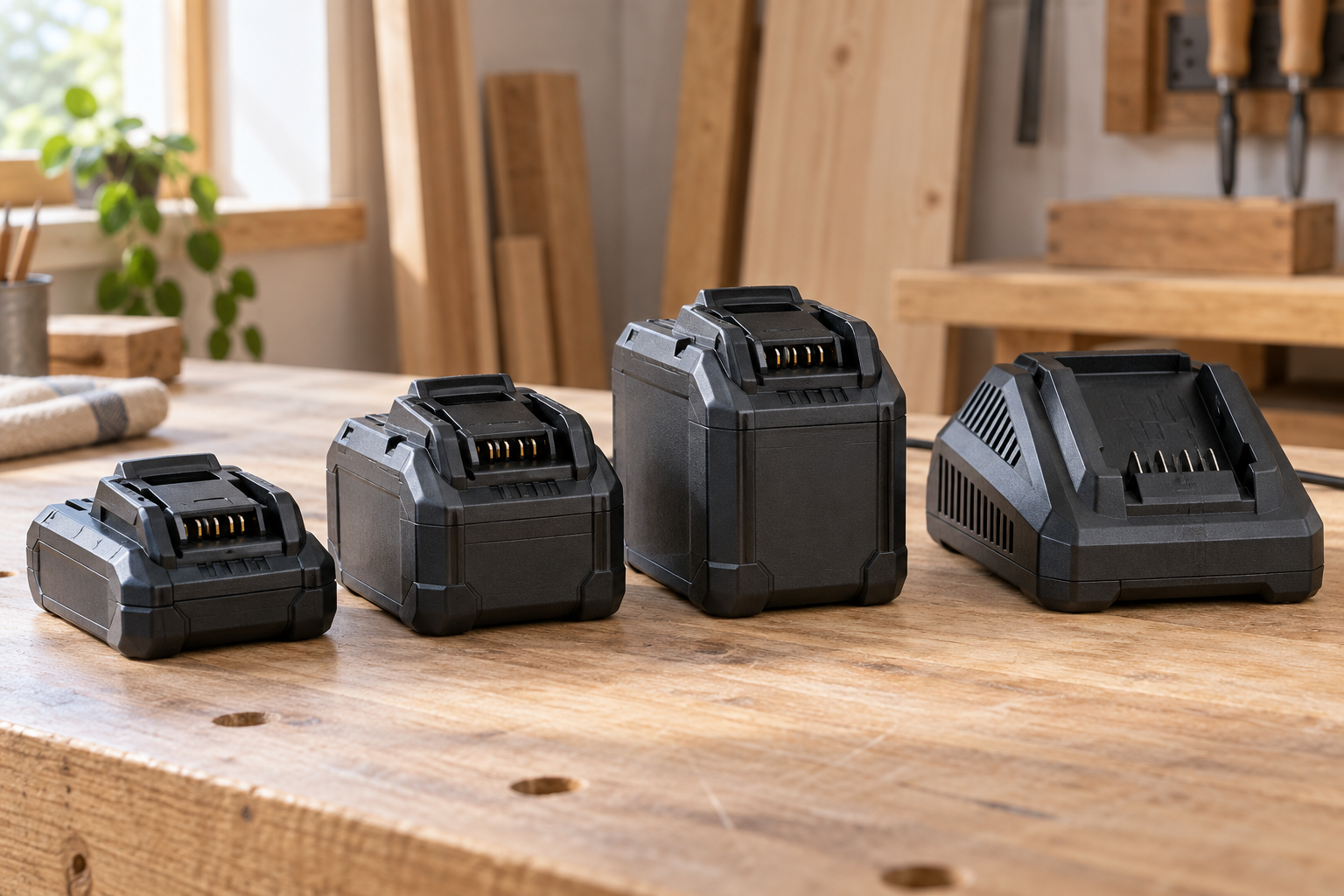
Battery capacity is usually stated in amp-hours (Ah), but runtime still depends heavily on the tool and material. Drilling pilot holes in softwood is a different load from cutting repeated 2x lumber, mixing compound, or grinding steel. For high-draw work, a larger-capacity pack can maintain useful runtime and reduce battery changes; for a drill or impact driver used intermittently, a smaller pack may be lighter and entirely adequate.
Do not buy the biggest batteries for every tool. A large pack can make a compact drill tiring overhead and can upset a tool’s balance. Instead, keep compact batteries for fastening and light work, and reserve higher-capacity packs for saws, grinders, and other sustained loads. For a small crew, two or three batteries per active worker is a practical starting point, adjusted for charging time and how continuously the tools run.
Compare the cost of replacement packs as well as the kit. A low introductory price can disappear if the batteries needed for a full day are expensive or hard to source locally. Keep packs dry, avoid leaving them in a hot vehicle, and retire any battery with a cracked case, damaged contacts, or unusual heat or swelling. A pack that cuts out under load may be depleted, too small for the task, or failing; test it in a known-good tool before blaming the tool.
Milwaukee M18 vs FLEX 24V at a glance
| Factor | Milwaukee M18 | FLEX 24V |
|---|---|---|
| Tool selection | Broad range, including many specialty categories | Core contractor tools and a narrower overall selection |
| Battery and charger access | Generally easier to find through many retailers | Check local and online stock before committing |
| Best fit | Crews building a large, expandable fleet | Buyers whose required tools are already covered |
| Main trade-off | Large ecosystem can mean a substantial investment | Fewer future tool choices and less convenient replacement access |
| What to compare | Pack size, tool configuration, and kit contents | Pack size, tool configuration, warranty terms, and availability |
Warranty, service, and downtime
Warranty terms can make FLEX attractive, but read the current written conditions before treating coverage as a deciding advantage. Coverage may depend on the product, registration, proof of purchase, and whether the failure is considered normal wear or misuse. Milwaukee also provides product warranty coverage, with terms that vary by item. For either brand, save receipts and record purchase dates; a warranty is less helpful if you cannot document the purchase.
For a contractor, service access is part of the platform cost. Ask how tools are repaired, how long common repairs take, and whether a local dealer can handle warranty work. If a failed tool stops paid work, owning a second battery does not solve the problem. Consider keeping a corded backup for critical equipment, or a spare tool if downtime costs more than the replacement.
Which platform should you buy?
Choose M18 if you expect to add specialty tools, share batteries across a crew, or need broad retail availability. Its larger ecosystem is a practical advantage when jobs change and a replacement pack has to be found quickly. The trade-off is commitment: building a fleet and keeping enough batteries on hand takes money.
Choose FLEX 24V if the tools you need are available, its kit pricing is better for your workload, and local battery and service access are acceptable. It can be the cheaper option without being a compromise if your work centers on a few core tools and you do not need a deep catalog. Do not pay extra for platform capacity you will never use.
Before ordering, write down your must-have tools, the number of batteries needed to rotate through a workday, and the cost of a replacement pack. Then compare the same tool categories and battery sizes. A battery-and-charger kit makes sense when it fills a real gap; buying another charger will not extend runtime if the bottleneck is too few batteries or a tool working beyond its intended duty cycle.
FAQ
Which platform should you buy?
Related guides
- Longest Lasting Lawn Mower Battery: AGM vs Lithium vs Flooded Lifespan and Cost per Season
- Duralast Gold Lawn Mower Battery Review: U1 Fit, CCA and When to Pay for AGM
- Greenworks Pro 80V 21-Inch Mower Review: Runtime Math, Push vs Self-Propelled and Yard Fit
- Bosch High Pressure Washer Gun Replacement: Fittings, Adapters and What Fits Your Model