
Our Top Picks
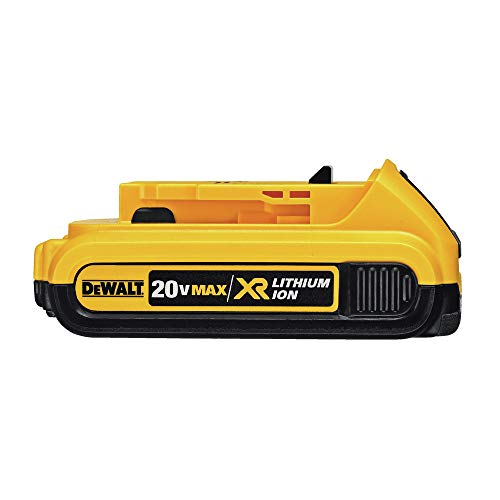
 DEWALT 20V MAX* XR Battery9.20in. x 7.00in. x 3.55in.4.5 x 3.13 x 2.63 Inches2.9 poundsCheck on Amazon
 DEWALT FLEXVOLT 20V/60V MAX Lithium-Ion 9.0Ah Battery DCB6091 battery6 x 3 x 5.5 inches2.8 poundsCheck on Amazon

What's inside
As an Amazon Associate I earn from qualifying purchases. This post may contain affiliate links at no extra cost to you.
A reconditioned cordless tool battery can cost 30% to 60% less than a new pack. Sometimes that is a sensible way to keep an older drill or saw working. Sometimes it is a poor substitute for a new battery, particularly when the pack will power a high-load tool such as a grinder, chainsaw, or circular saw.
The important question is not simply whether the battery is “refurbished.” It is what was replaced, how the cells were matched, whether the protection electronics were tested, and how much work the battery must do.
As an Amazon Associate we earn from qualifying purchases at no extra cost to you.


What “reconditioned” actually means
Battery sellers use “reconditioned,” “rebuilt,” and “refurbished” inconsistently. A proper rebuild usually involves opening the case, testing or replacing the lithium-ion cells, checking the battery management system (BMS), and reassembling the pack. A basic service may replace only visibly failed cells. In the worst cases, the label means a used pack was charged, cleaned, and resold.
Most cordless tool packs use groups of lithium-ion cells connected in series. A nominal 18V or 20V Max pack commonly contains five cell groups. A weak group can make the entire pack shut down under load, even if the other cells are healthy. A credible rebuilder should test individual cell groups, balance voltage, inspect spot welds, and verify that the BMS still handles overcharge, over-discharge, overcurrent, and temperature protection.
Do not assume that a higher advertised capacity proves anything. A “6.0Ah” rebuild made with unknown cells may deliver less usable energy than a worn but genuine 4.0Ah pack.
New pack versus reconditioned pack
| Factor | New battery pack | Reconditioned pack |
|---|---|---|
| Upfront cost | Highest, especially for high-capacity packs | Usually 30%–60% lower |
| Expected consistency | More predictable cell quality and runtime | Depends heavily on the rebuilder and replacement cells |
| Warranty | Typically clear and manufacturer-backed | May be limited to 30–90 days, or unclear |
| Tool and charger compatibility | Designed for the platform’s communication and safety system | Can work normally, but electronics and fit vary by seller |
| Best use | Daily work, high-load tools, and professional fleets | Occasional work, older tools, and low-cost repairs |
New packs are the safer choice when downtime costs money. They also tend to have more consistent internal resistance, which matters because a pack with high resistance sags in voltage and heats up when a saw or impact wrench demands high current.
Reconditioned packs make more sense for a homeowner who uses a drill a few times a month, already owns several tools on the same platform, and can tolerate shorter runtime or an occasional replacement. A rebuilt pack can also be worthwhile when the original tool is in good condition but the manufacturer no longer sells its older battery at a reasonable price.
How to judge a reconditioned battery seller
Look for a stated cell type, capacity, test procedure, and warranty. The listing should identify whether the cells are new and name their manufacturer when possible. “Premium grade cells” without a brand or test specification tells you very little.
Ask whether the pack uses the original BMS or a replacement board. Some tool platforms use more than simple positive and negative terminals. They may monitor temperature, identify the pack, or communicate with the charger. A rebuilt battery can physically slide into the tool yet refuse to charge or trigger a fault because its electronics are wrong.
Check the return policy before buying. A useful warranty should cover failure under normal tool use, not just the first charge. Be cautious if the seller warns against using the battery in high-drain tools while advertising it as a replacement for every pack in the platform.
If you are shopping for a rebuild, compare it with the price of a new cordless tool replacement battery, including shipping. Sales on genuine packs can narrow the difference enough that the new battery is the better value.
Capacity, runtime, and real-world output
Amp-hour ratings are energy estimates, not guarantees of working time. In broad terms, doubling from a 2.0Ah pack to a 4.0Ah pack can nearly double runtime, but tool speed, material, temperature, and battery age all matter. A circular saw cutting hardwood may drain a pack rapidly; a drill driving small screws may run for weeks on the same capacity.
High-capacity packs are often physically heavier. A 5.0Ah or 6.0Ah battery can add roughly 1 to 2 pounds compared with a compact 2.0Ah pack. That weight is useful on a saw but tiring on an overhead drill or impact driver. For light assembly work, a genuine compact pack may be a better choice than a questionable high-capacity rebuild.
Cold weather also reduces output. Lithium-ion batteries can lose noticeable runtime below freezing, and charging a pack while it is below 32°F can damage the cells. Let a cold battery warm indoors before charging.
Charger compatibility and safety
Use the charger made for the battery platform and voltage class. Do not charge a tool pack with a generic bench supply, automotive charger, or charger intended for a different lithium-ion configuration. The charger and BMS are designed to work together; bypassing either one can create an overcharge or fire risk.
Stop using a pack that is swollen, cracked, unusually hot, leaking, smells sweet or solvent-like, or shuts down repeatedly under a light load. Do not open a lithium-ion pack unless you have the equipment and experience to work around high-current cells. A fully charged pack can release enough current to weld tools together or ignite damaged insulation.
For replacement shopping, start with a compatible cordless tool battery charger from the same platform, then verify the battery’s voltage, terminal layout, and tool compatibility. Avoid mixing brands merely because the printed voltage appears similar.
Which option fits the job?
Buy new when the battery will run a high-drain tool, support daily work, be used in a business, or serve as your only pack. The additional cost buys better odds of predictable runtime, stronger warranty support, and correct communication with the charger.
Choose reconditioned when the tool is older, the use is occasional, the savings are substantial, and the seller provides clear testing information and a reasonable return period. For a spare drill battery or a rarely used light, the cheaper option may be entirely adequate.
Before ordering, price one new genuine pack, one reputable rebuild, and—if the platform is becoming expensive—a starter kit with a battery and charger. Sometimes a kit costs little more than a standalone pack. If you are replacing several old batteries, moving to a current platform may make more financial sense than rebuilding every pack in an aging ecosystem.
FAQ
Which option fits the job?
Related guides
More from Amazon
Programs that pair well with the guide above. Offers and eligibility are set by Amazon and may change.
A free business account with business pricing and bulk-buying tools for work, shop or home office.
Create a business accountFree shipping on eligible items, Prime Video and more. Eligible new members can start with a free trial.
Start a Prime free trialAudiobooks and podcasts to listen to on the go. Eligible new members can start with a free trial.
Try Audible freeAd-free music streaming. Eligible new subscribers can start with a free trial.
Try Music Unlimited freeAs an Amazon Associate we earn from qualifying purchases.

Write Your Review
No reviews yet. Be the first to share your experience!