What's inside
As an Amazon Associate I earn from qualifying purchases. This post may contain affiliate links at no extra cost to you.
Usually, yes—but “same brand” is not enough. Cordless tool batteries and chargers are designed around a specific voltage platform and battery generation. A new lithium-ion pack may fit an older charger from the same manufacturer, or it may slide on and appear to fit while refusing to charge. In the worst case, forcing an incompatible combination can damage the pack, charger, or both.
The safest answer comes from the manufacturer’s compatibility chart, not the battery’s color or the fact that the rails look identical. Before buying, identify the platform voltage, battery chemistry, charger series, and any generation markings on the pack and charger.
Voltage and Chemistry Come First
A charger must be built for the battery’s nominal voltage and chemistry. A 12-volt-class lithium-ion pack is not interchangeable with an 18- or 20-volt-class pack, even if the brand uses a similar slide mount. Likewise, an old nickel-cadmium charger should not be used for a lithium-ion battery unless the manufacturer explicitly says it supports that pack.
“20V Max” and “18V” platforms are often describing the same lithium-ion class: roughly 18 volts nominal and about 20 volts when fully charged. That does not make every 18V or 20V pack interchangeable across brands. The battery’s electronics, contacts, locking mechanism, and charger communication still matter.
| What to compare | Why it matters | Typical problem if ignored |
|---|---|---|
| Nominal voltage | Sets the charger’s output range | Pack will not charge or may be dangerously overcharged |
| Battery chemistry | Lithium-ion and NiCd require different charging methods | Heat, pack damage, or fire risk |
| Battery generation | Newer packs may use extra terminals and electronic controls | Charger shows an error or does nothing |
| Physical interface | Rails and contacts must align correctly | Pack cannot lock in or has poor contact |
| Temperature range | Many chargers pause outside roughly 40–105°F | Flashing light or charging delay |
When an Older Charger Usually Works
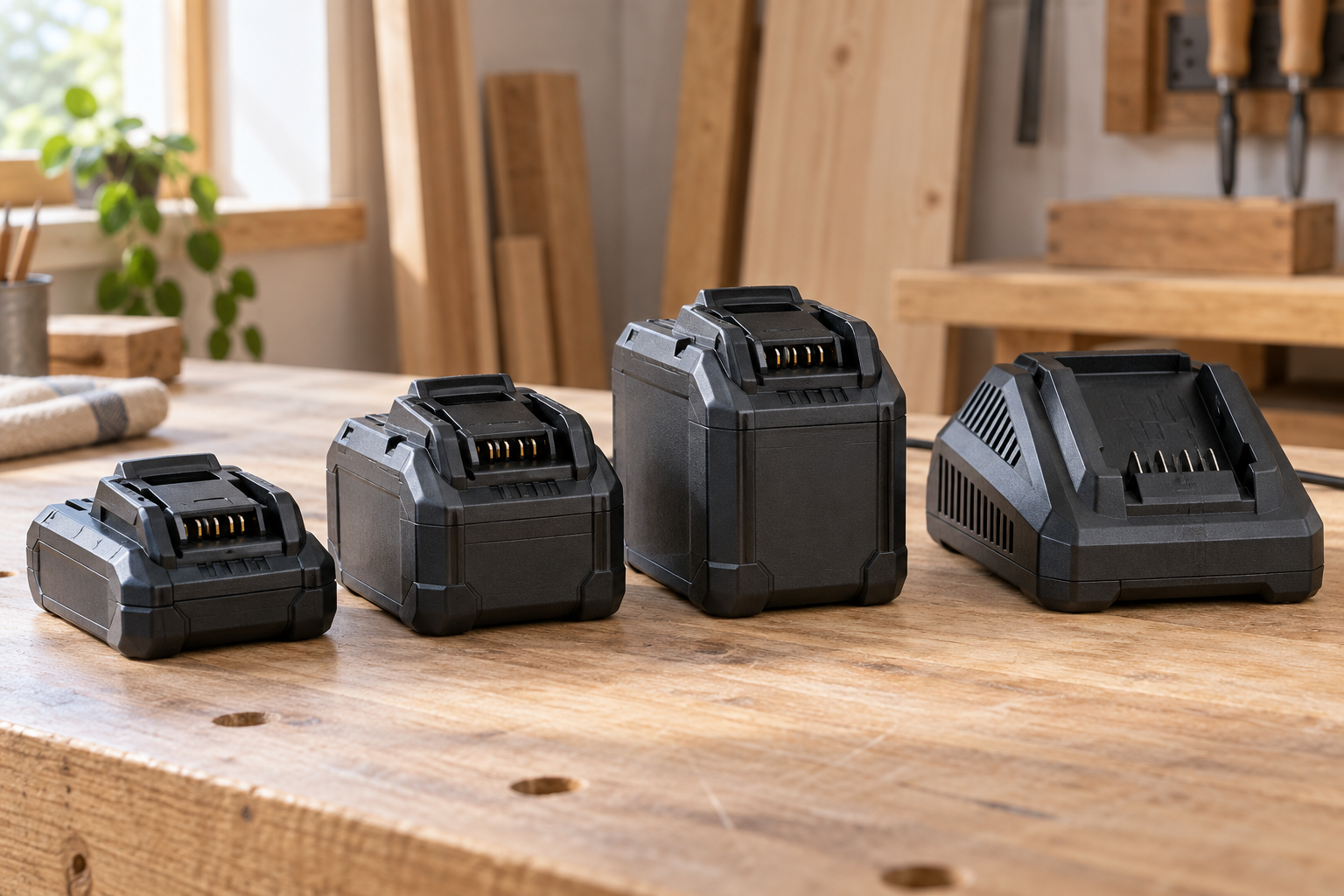
Compatibility is most likely when the manufacturer has kept the same battery platform for several generations. In that situation, a newer pack often includes the same power contacts as the older battery, while the charger recognizes the pack’s voltage and temperature sensor. A charger sold for a platform may support several capacities, such as 2.0Ah, 4.0Ah, and 5.0Ah, although the charge time will differ.
For example, a basic charger that delivers about 2 amps may take roughly one hour to charge a 2.0Ah battery under ideal conditions, and around two to three hours for a 5.0Ah pack. Actual times vary because chargers reduce current near full charge and may pause if the battery is hot or cold. A rapid charger can cut those times substantially, but it is not automatically compatible with every older pack.
Look for language such as “compatible with all batteries in this platform” or a list of supported battery series. If the charger’s manual lists only older pack numbers, do not assume newer high-capacity or high-output batteries are included.
Why Same Brand Is Not Enough
Manufacturers frequently operate multiple cordless systems at once. A compact 12V line, a full-size 18V line, and a high-voltage outdoor-equipment line may all use different chargers. Even within one voltage class, a new battery can require a newer charger because it has additional electronics for cell balancing, state-of-charge reporting, or communication with smart tools.
Some older chargers use only positive, negative, and temperature contacts. Newer packs may add data terminals. The battery may still physically slide onto the charger, but the charger can reject it because it cannot read the required identification signal. That usually produces a flashing indicator, alternating lights, or no light at all.
High-capacity batteries also expose weaknesses in old chargers. A charger that handles a small 1.5Ah or 2.0Ah pack may technically accept a 8.0Ah pack but take many hours to fill it. That is not necessarily unsafe, but it may be inconvenient and can produce more heat during a long charge cycle.
How to Check Before You Buy
Start with the exact model numbers printed on the battery and charger. Search the manufacturer’s support page for the charger model, then read the compatibility list rather than relying on retailer descriptions. Check whether the charger accepts the battery’s voltage class and whether it supports the battery’s chemistry.
If you need a replacement for a lost or obsolete unit, a replacement cordless tool battery charger can be cheaper than buying a battery-and-charger kit. Buy from a seller that identifies the exact supported platform. Avoid listings that say only “fits [brand]” without naming compatible battery series.
Inspect the contacts before testing. Dirt, corrosion, and crushed plastic can prevent charging even when the combination is correct. Clean accessible contacts with a dry cloth, and never bridge terminals with a screwdriver or wire. Insert the battery normally; do not modify rails or force a pack into a charger.
Common Failure Modes
A steady green light often indicates a full battery, but indicator codes vary widely. A rapidly flashing light can mean incompatible electronics, a poor connection, an overheated pack, or a failed battery. Let a hot battery cool to room temperature for 30 to 60 minutes and try again. Do not charge a pack below freezing; let it warm indoors first.
If the charger immediately reports a fault on a battery that worked recently, the pack may have a failed cell group or damaged control board. A battery that gets unusually hot, swells, smells sweet or solvent-like, or makes hissing sounds should be removed from service. Do not open it or attempt to revive it with an improvised power supply.
Third-party adapters deserve extra caution. They can make a battery physically fit a different tool platform, but they do not necessarily provide the tool’s expected temperature or communication signals. The cheaper option is fine for a simple, manufacturer-approved adapter used within one documented platform. It is not a good shortcut for cross-brand charging.
When Buying a New Charger Makes Sense
A new charger is sensible when the old unit predates the battery platform, lacks a compatible model listing, charges intermittently, or takes an impractical amount of time with larger packs. A multi-port battery charger can be worthwhile for users running several batteries daily, but it costs more and may draw more power from a crowded circuit.
For occasional drilling, fastening, or light yard work, keeping a working older charger is often perfectly reasonable if the manufacturer confirms compatibility. There is no performance advantage in buying a rapid charger when you normally charge overnight. Spend the extra money only when charge time, heat management, or multiple batteries directly affects the job.
Related guides
- Longest Lasting Lawn Mower Battery: AGM vs Lithium vs Flooded Lifespan and Cost per Season
- Duralast Gold Lawn Mower Battery Review: U1 Fit, CCA and When to Pay for AGM
- Greenworks Pro 80V 21-Inch Mower Review: Runtime Math, Push vs Self-Propelled and Yard Fit
- Bosch High Pressure Washer Gun Replacement: Fittings, Adapters and What Fits Your Model