What's inside
As an Amazon Associate I earn from qualifying purchases. This post may contain affiliate links at no extra cost to you.
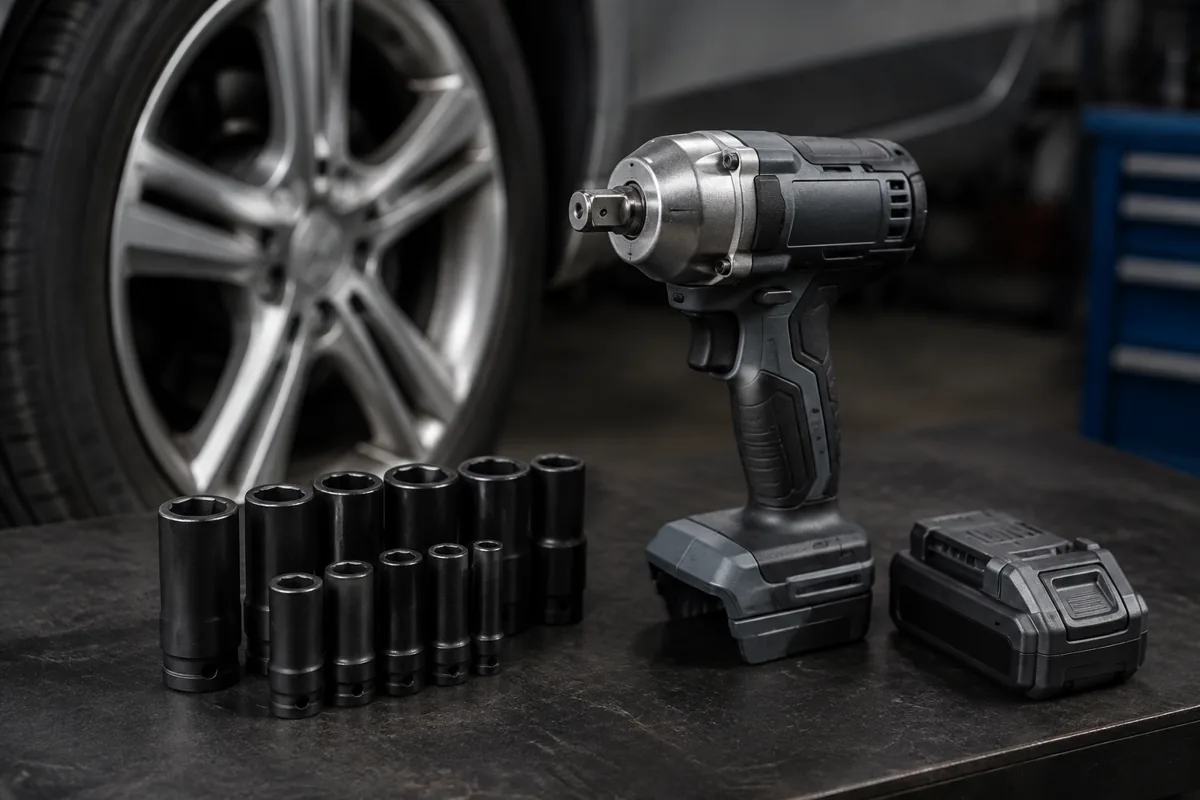
A good cordless mid-torque impact wrench is the practical choice for most vehicle work. It is lighter and easier to control than a high-torque model, but has enough power for wheel lugs, brake work, suspension fasteners, and many chassis bolts. The useful range is roughly 300 to 600 lb-ft of fastening torque, with higher breakaway figures often advertised at 500 to 800 lb-ft.
Those numbers are not directly comparable between brands. Torque depends on the battery, socket, fastener condition, and how the manufacturer measures it. For general repairs, battery compatibility and control are usually more important than the highest number on the box.
As an Amazon Associate we earn from qualifying purchases at no extra cost to you.


What “mid-torque” means
Mid-torque impact wrenches usually have a 1/2-inch square drive and a compact body. They sit between small compact impacts, which are convenient but limited, and bulky high-torque tools intended for seized suspension, truck, and commercial work.
Expect a good mid-torque tool to remove properly installed passenger-car wheel nuts, often torqued between 80 and 120 lb-ft, without difficulty. It should also handle brake caliper brackets, strut hardware, control-arm bolts, and many lug nuts on light trucks. Severely rusted fasteners, axle nuts, and large truck hardware may still require a high-torque wrench, breaker bar, heat, or penetrating oil.
For the best balance of size and capability, shop cordless mid-torque 1/2-inch impact wrenches rather than choosing solely by advertised breakaway torque.
The best platform choices
| Platform type | Strengths | Trade-offs | Best for |
|---|---|---|---|
| 18V/20V professional platform | Strong output, broad tool selection, good controls | Tool and battery kits cost more | Frequent vehicle repair and mixed cordless work |
| 18V value platform | Lower entry price, adequate power for routine jobs | Fewer specialty tools and less refined control | Home garages and occasional repairs |
| Compact 12V platform | Light, maneuverable, inexpensive batteries | Usually too limited for stubborn 1/2-inch fasteners | Interior, trim, small engine, and light-duty work |
| High-torque 18V/20V | Maximum reserve for seized and oversized fasteners | Heavy, bulky, and easier to over-tighten bolts | Trucks, rust belt repairs, and professional shop use |
Milwaukee, DeWalt, Makita, Bosch, and other major 18V or 20V systems offer capable mid-torque tools. The voltage labels are not a useful performance ranking: “20V MAX” and “18V” platforms are generally referring to similar battery classes, with different ways of stating nominal voltage.
If you already own batteries, stay within that system unless the current platform has no suitable wrench. A bare tool may look expensive next to a kit, but buying a second charger and several batteries can erase the apparent savings.
Features worth paying for
Three or four speed settings are more useful than an extreme torque claim. A low setting helps with reassembly, while higher settings provide reserve for removal. Some tools include an auto-stop or reduced-power mode that prevents the wrench from continuing after a fastener breaks loose. These modes are helpful, but they are not a substitute for a calibrated torque wrench.
A friction ring or pin detent affects how you work. A friction ring makes socket changes faster and is usually preferable in a home garage. A pin detent holds the socket more securely, but can be awkward when changing sizes. Either design is acceptable if the wrench has a reliable anvil and replacement parts are available.
Battery size matters. A compact 2.0Ah or 3.0Ah pack keeps the tool light and is usually enough for a tire rotation. A 4.0Ah or 5.0Ah pack can deliver stronger sustained output and will run longer, but adds noticeable weight. For repeated suspension work, a modern high-output battery is often a worthwhile upgrade; for occasional wheel removal, the smallest compatible pack is usually fine.
Look for a bright work light, a comfortable forward/reverse switch, and a battery release that can be operated while wearing gloves. Bluetooth controls and phone connectivity are optional. They do not make a stuck bolt come out.
How to choose for your repair workload
For tire rotations, brake jobs, and normal suspension work, a compact professional mid-torque is the safest all-around choice. Pick the brand that already powers your drill, ratchet, light, or grinder. The cheapest option is fine when you use it a few times per year and have realistic expectations about rusted hardware.
For regular work on older vehicles, choose a tool with a substantial battery and at least three power modes. A mid-torque wrench can remove many stubborn bolts, but repeatedly running it at maximum power generates heat and drains batteries quickly. If you routinely work on seized control-arm bolts, axle nuts, or full-size truck suspension, move up to a high-torque model instead of expecting a mid-torque to do everything.
Home users comparing inexpensive kits can browse cordless 1/2-inch impact wrench kits with battery and charger. A kit is often the better deal when you are entering a battery platform. A bare tool is cheaper only if you already have a compatible battery and charger.
Safe use and torque control
Never use the impact wrench to set final wheel-lug torque. Run the nuts down gently, then lower the vehicle and tighten them with a torque wrench to the vehicle manufacturer’s specification. Many common passenger vehicles call for approximately 80 to 110 lb-ft, but the correct value varies by vehicle and wheel. Over-tightening can distort brake rotors, damage studs, or make roadside removal difficult.
Use impact-rated sockets, not ordinary chrome sockets. A cracked chrome socket can shatter under repeated impact loading. Keep the socket square on the fastener, especially with an extension, because wobble increases the chance of rounding a rusty bolt head.
Common failure modes include using a weak or nearly empty battery, selecting too small a tool for a seized fastener, and assuming “breakaway torque” equals repeatable working torque. If the tool stalls, stop rather than holding the trigger indefinitely. Try penetrating oil, a six-point socket, controlled heat where safe, or a breaker bar. The right mid-torque wrench makes routine work faster; it does not eliminate mechanical diagnosis.
Buying advice by budget
Buy the best mid-torque tool that fits the battery system you will keep using. Spend extra for brushless construction, multiple modes, and a strong battery if you repair vehicles monthly. Choose a value kit if your work is limited to wheels and occasional brakes. If your jobs regularly involve rusted trucks or large fasteners, skip the mid-torque category and consider cordless high-torque 1/2-inch impact wrenches.
For most garages, however, a compact 1/2-inch mid-torque with a 3.0Ah to 5.0Ah battery is the most useful compromise: enough power for normal vehicle repairs, manageable weight, and access to a wider cordless tool ecosystem.
Related guides
- Longest Lasting Lawn Mower Battery: AGM vs Lithium vs Flooded Lifespan and Cost per Season
- Duralast Gold Lawn Mower Battery Review: U1 Fit, CCA and When to Pay for AGM
- Greenworks Pro 80V 21-Inch Mower Review: Runtime Math, Push vs Self-Propelled and Yard Fit
- Bosch High Pressure Washer Gun Replacement: Fittings, Adapters and What Fits Your Model