What's inside
As an Amazon Associate I earn from qualifying purchases. This post may contain affiliate links at no extra cost to you.
A cordless trim router is useful for laminate work because it can follow a countertop or cabinet edge without a cord catching on the work. For trimming laminate, though, power is less important than control, a stable base and a sharp bit. A compact 18V or 20V router is enough for most edge trimming; the right purchase depends largely on which battery platform you already own.
As an Amazon Associate we earn from qualifying purchases at no extra cost to you.



What matters for laminate trimming
Choose a router with variable speed, a clear base and a comfortable depth adjustment. Laminate is thin, but its abrasive surface dulls cutters quickly. A carbide flush-trim bit with a bearing is the usual choice: the bearing rides against the substrate while the cutter removes the overhang. Match the bit’s cutting length to the laminate thickness and avoid letting the bearing ride on finished laminate if it could mark the surface.
Most countertop laminate is around 0.8 to 1.0 mm thick. Set the bit so the cutting edge trims the overhang cleanly without digging into the substrate or cabinet edge. A 1/4-inch shank is common on trim routers and suits this light work. Start near the slower end of the router’s speed range, then adjust if the cut burns or chatters. Feed steadily; pausing in one spot can leave a dark mark.
Dust collection is a practical advantage, not a substitute for eye protection. Small routers can throw sharp laminate chips, so wear safety glasses and keep hands clear of the bit. Clamp the work securely, and check that the bearing turns freely before each cut.
Router types compared
| Type | Best for | Trade-off |
|---|---|---|
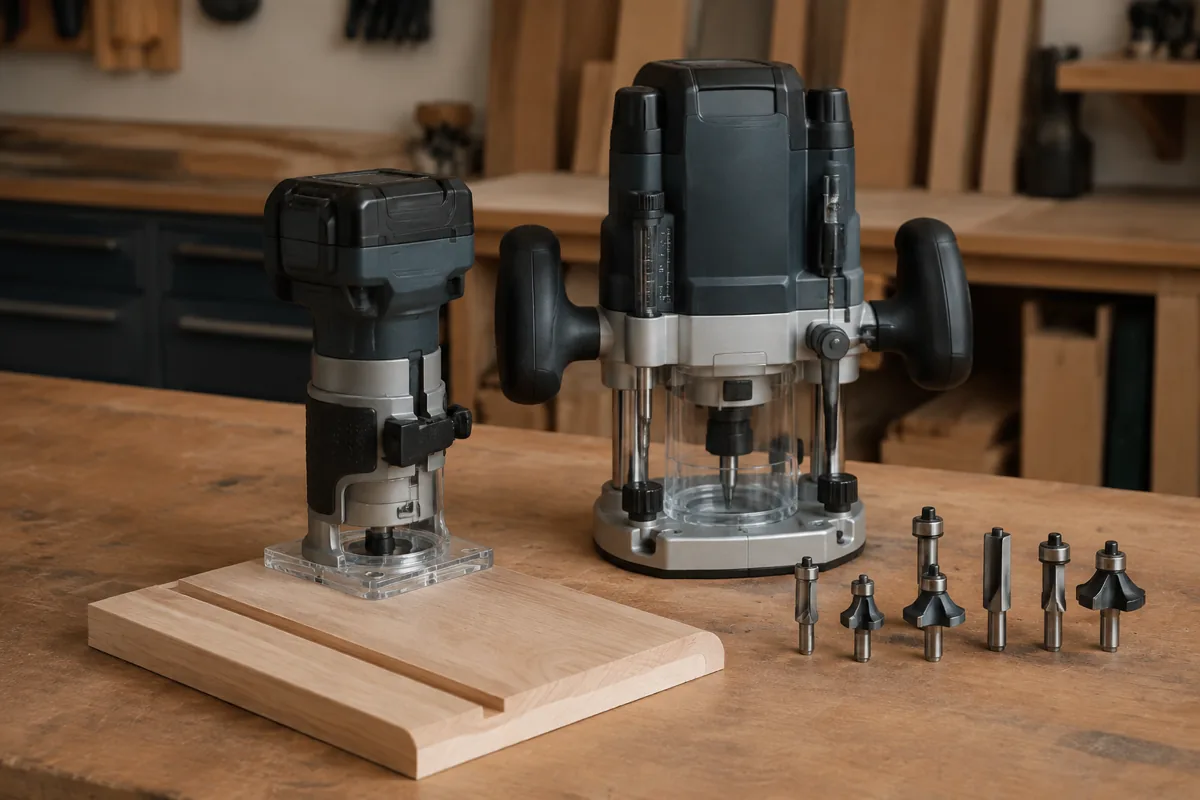
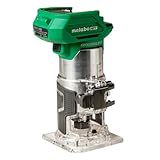
| Compact cordless trim router | Countertop edges, cabinet panels and occasional edging | Lightweight and easy to control, but usually sold as a bare tool |
| Cordless router with plunge base | Edge trimming plus shallow plunge work and template routing | More versatile, but heavier and often more expensive |
| Corded trim router | Infrequent jobs when you do not own compatible batteries | Lower tool cost is possible, but the cord can snag or limit reach |
For laminate edges alone, the compact fixed-base style is generally the simplest choice. A plunge base adds value if you will also cut shallow recesses or use templates; it is extra bulk for a job that does not need plunging.
Choose by battery platform
If you already own cordless tools, buying within that battery family usually makes the most sense. A bare router can cost less than a kit, and a battery you already have avoids another charger and pack. Check the tool’s compatibility rather than assuming every battery from a brand fits every generation of tool.
For one short trimming session, a compact 2.0Ah pack is typically easier to handle than a large high-capacity battery. A larger pack can run longer, but adds weight above the work and may make the router feel less balanced. If you are buying into a platform from scratch, count the cost of the battery and charger alongside the tool: the apparent bargain may disappear once you add both.
Browse cordless trim routers sold as bare tools if you have compatible batteries. If you need a complete setup, compare router kits with a battery and charger against your platform’s individual prices.
Buying checklist
Look for a base that stays square when tightened and a depth adjustment that is easy to make in small increments. A loose or tilted base can make a straight edge uneven. Check whether the package includes a straight edge guide or dust port, but do not pay a premium for accessories you will not use. For basic laminate trimming, the bearing-guided bit does the guiding.
Also check collet size and included accessories before ordering bits. Some routers accept only 1/4-inch shanks; others may include a different collet or require a separate one. Never force an incompatible shank into a collet. For a first bit, a carbide flush-trim bit sized for the laminate and substrate is more useful than a large assortment of general-purpose cutters.
A carbide flush-trim bit with a 1/4-inch shank is a sensible starting point. If the laminate has a beveled or profiled edge, choose a bit for that profile instead; a straight flush-trim bit will not create a decorative edge.
Make the cut without chipping the edge
Trim in a controlled pass rather than trying to remove a large overhang in one go. Keep the router base flat and move at a steady pace. If the laminate overhang is unusually wide, reduce it first with shears or another suitable cutting method, leaving a small margin for the router. Do not twist the router to reach an awkward spot; reposition the work or use a smaller tool.
Test the setup on a scrap with the same laminate and substrate if possible. Inspect the edge for chipping, burning or a shallow lip before moving to the finished piece. If the bit chatters, check that it is sharp and firmly seated, slow the feed, and make sure the bearing is not damaged. If the laminate chips despite a clean, sharp bit, a light pass in the appropriate direction or support close to the edge may help; do not assume more speed will fix it.
When a cheaper option is fine
If you only have one small job and no compatible battery, a corded trim router can be a sensible buy. It avoids the expense of a new battery system, and the cord is manageable on a bench or short countertop run when routed safely away from the cutter. Renting or borrowing a router may be even cheaper for a one-time repair.
Spend more on cordless convenience when you will use the router regularly, already own its batteries, or need to work across a long countertop without a cord tugging at the base. For occasional laminate trimming, a basic compact router, a sharp bearing-guided bit and careful setup matter more than premium power or a large battery.
Related guides
- Longest Lasting Lawn Mower Battery: AGM vs Lithium vs Flooded Lifespan and Cost per Season
- Duralast Gold Lawn Mower Battery Review: U1 Fit, CCA and When to Pay for AGM
- Greenworks Pro 80V 21-Inch Mower Review: Runtime Math, Push vs Self-Propelled and Yard Fit
- Bosch High Pressure Washer Gun Replacement: Fittings, Adapters and What Fits Your Model