What's inside
As an Amazon Associate I earn from qualifying purchases. This post may contain affiliate links at no extra cost to you.
Our Top Picks
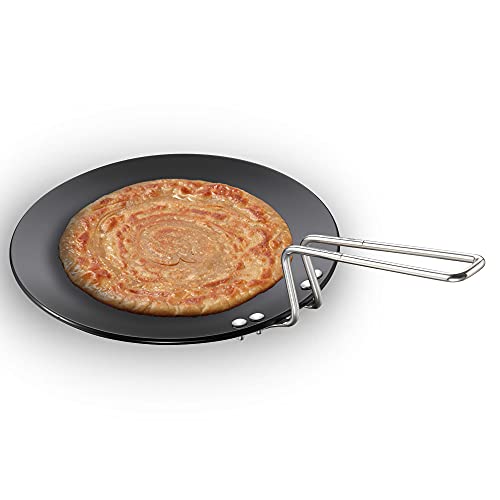


Best Tava Pan for Indian Flatbread
The best tava pan for Indian flatbread is a 26–28 cm carbon-steel tava for most cooks, while cast iron is better for maximum heat retention and nonstick is the easiest choice for beginners who value low maintenance.
A good tava should heat evenly across the cooking surface, give roti or chapati enough room to expand, and allow you to move the bread without catching on a rough patch. The right material depends less on the pan’s appearance than on how often you cook, how much maintenance you accept, and whether you prefer soft, flexible rotis or darker, more blistered flatbreads.
As an Amazon Associate we earn from qualifying purchases at no extra cost to you.


Quick comparison: cast iron, carbon steel, and nonstick
| Tava type | Useful diameter | Typical weight | Heat retention | Surface texture | Seasoning needed | Best for |
|---|---|---|---|---|---|---|
| Cast iron | 25–30 cm | 1.8–3.2 kg | Very high | Usually slightly textured | Yes, regularly | Frequent cooking and strong browning |
| Carbon steel | 26–30 cm | 1.0–2.0 kg | High, with faster response | Smoother after seasoning | Yes, especially at first | Everyday roti and dosa-style cooking |
| Nonstick | 26–28 cm | 0.8–1.5 kg | Moderate | Very smooth | No | Beginners, low-oil cooking, easy cleanup |
These figures are typical ranges rather than fixed specifications. A thick 28 cm pan can weigh considerably more than a thin pan of the same diameter. Check the cooking surface diameter, not only the outside rim, because a wide rolled edge can reduce the usable area.
Which diameter is right for roti?
A 26 cm cooking surface is the most versatile size for home kitchens. It gives a typical 15–18 cm roti enough room to cook without pressing against the sides, while remaining manageable on a standard hob. Choose 28–30 cm if you routinely roll 20 cm rotis, cook large parathas, or want to place several small flatbreads on the pan in succession without cooling the surface.
A 22–24 cm tava is easier to store and heats quickly, but it limits the size of the dough round. It is suitable for small rotis, single-person cooking, or a compact portable burner. The smaller surface can also produce a hotter central zone, so rotating the bread becomes more important.
For gas cooking, confirm that the base sits securely on the grate. On induction, the pan must have a magnetic, flat base; some traditional rounded-bottom tawas will not make sufficient contact. A 28 cm pan may also extend beyond the effective heating ring, producing a cooler perimeter.
Cast iron: the heat-retaining choice
Cast iron holds heat better than the other two materials. That stability is useful when cooking a series of rotis because adding cool dough causes less of a temperature drop. It can produce attractive brown spots and a firm, well-cooked underside, particularly when preheated thoroughly.
The trade-off is weight and slower temperature control. A heavy cast-iron tava stays hot after the burner is reduced, so the first roti may cook perfectly while the next begins to darken too quickly. Cast iron also tends to have a more textured surface. A well-seasoned, smooth example releases dough well, but a rough surface can catch thin rotis during turning.
Seasoning is essential. Wash off manufacturing residue, dry the pan completely, apply an extremely thin film of cooking oil, and heat it until the oil bonds to the surface rather than remaining wet. Several thin cycles work better than one thick, sticky layer. Avoid soaking the pan, putting it in a dishwasher, or leaving acidic food on it. If rust appears, scrub it away, dry the pan over heat, and rebuild the seasoning.
Carbon steel: the best all-rounder
Carbon steel is usually the strongest answer to the question of which is the best tava pan for Indian flatbread. It is lighter than cast iron, heats more quickly, and can develop a smooth, naturally low-stick surface with use. Its heat retention is high enough for batch cooking, but it responds faster when the flame is adjusted.
The surface often starts relatively smooth, although factory finishes can vary. Repeated heating and seasoning gradually darken the steel and improve release. This makes carbon steel particularly good for cooks who want the feel of traditional cookware without lifting a very heavy pan.
New carbon steel needs more attention than nonstick. Use moderate heat while the seasoning develops, avo