What's inside
As an Amazon Associate I earn from qualifying purchases. This post may contain affiliate links at no extra cost to you.
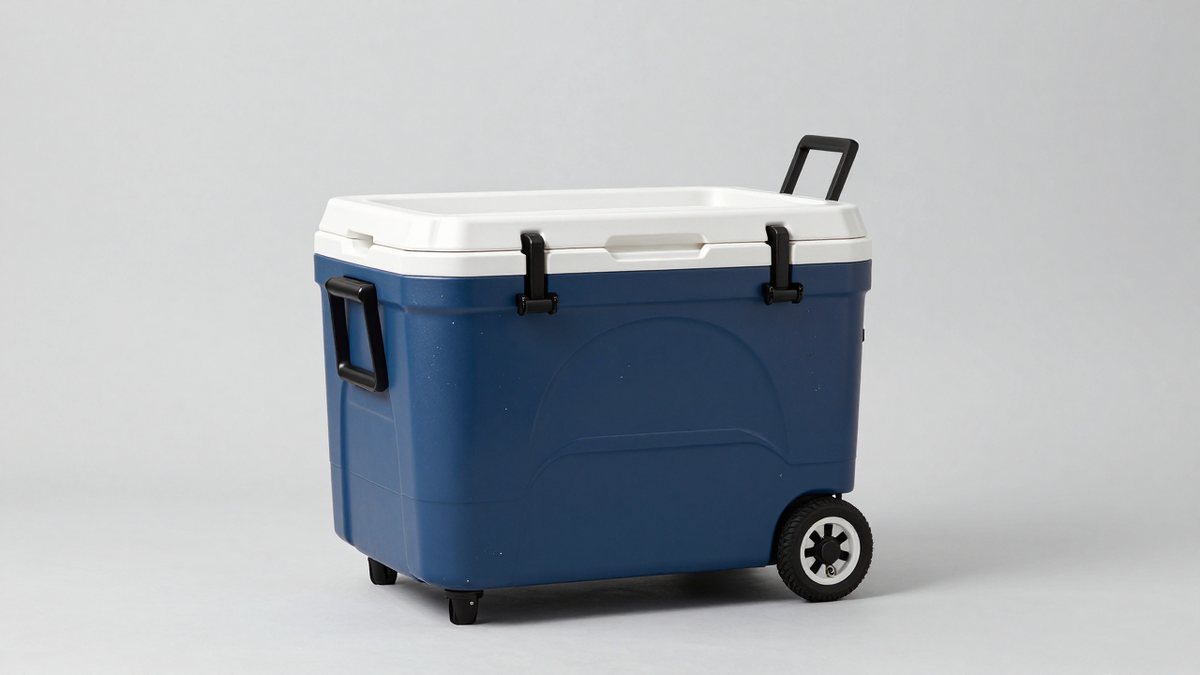
The best wheeled coolers for most buyers are the YETI Roadie 48 Wheeled for premium insulation and easy car loading, the Igloo Trailmate Journey for mixed terrain and built-in conveniences, and a 50–55-quart hard wheeled cooler for the best balance of capacity, price, and trunk fit.
As an Amazon Associate we earn from qualifying purchases at no extra cost to you.


Our Top Picks
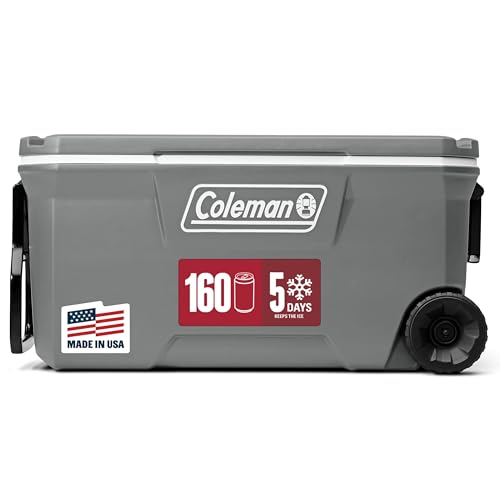 Coleman Classic Series Insulated Portable Rolling Cooler100qt36.9 x 17.3 x 18 Inches20.37 PoundsCheck on Amazon


Best wheeled coolers at a glance
Capacity is only part of the decision. A large cooler can hold more food, but its empty weight, axle design, handle strength, and footprint may make it frustrating to move or impossible to fit across a small hatchback trunk. The table below compares useful real-world specifications rather than just marketing features. Dimensions and weights can vary slightly by production version.
| Cooler | Usable class | Approx. empty weight | Approx. exterior size | Wheel and handle strengths | Best suited to |
|---|---|---|---|---|---|
| YETI Roadie 48 Wheeled | 45-liter class | About 28 lb | About 19.5 × 14.5 × 19 inches | All-terrain wheels, telescoping handle, strong molded body | Frequent hauling, premium insulation, car-to-campsite trips |
| YETI Roadie 60 Wheeled | 55-liter class | About 32 lb | About 21 × 15 × 19 inches | Larger wheels and extendable handle for heavy loads | Families and long weekends where capacity matters |
| Igloo Trailmate Journey | 70-quart class | About 35 lb | About 34 × 19 × 20 inches | Oversized wheels, wide axle, telescoping handle | Grass, gravel, beach approaches, and large groups |
| RTIC 52 QT Ultra-Tough Wheeled | 52-quart class | About 30 lb | About 29 × 17 × 18 inches | Large wheels, pull handle, rotomolded-style construction | Value-focused buyers needing a rugged general-purpose cooler |
| Coleman 50-Quart Xtreme Wheeled | 50-quart class | About 13–15 lb | About 23 × 18 × 18 inches | Lightweight pull handle and molded wheels | Day trips, occasional use, and lower carrying weight |
Capacity figures are not directly interchangeable: quart ratings often describe the interior volume before food, ice, baskets, and dividers take up space. A practical rule is to reserve roughly one-third of the interior for ice if you want reliable cooling over more than a few hours.
Our picks by situation
Best overall for frequent outdoor hauling: YETI Roadie 48 Wheeled
The Roadie 48 Wheeled is the most balanced choice when the cooler will regularly travel from a vehicle to a campsite, sports field, dock, or picnic area. Its upright form is easier to pull than a low, wide chest, and the telescoping handle keeps your hand away from the cooler body. The all-terrain wheel design is more useful than small suitcase-style casters on grass and compact gravel.
The main trade-off is cost and weight. Premium insulation and a rigid molded body make it heavier before loading, so it is not the best choice if you frequently carry it up stairs. Its tall shape also needs vertical clearance in the trunk or cargo area.
Best for rough paths and large groups: Igloo Trailmate Journey
The Trailmate Journey prioritizes mobility over compactness. Its oversized wheels and broad axle are helpful on sand, lawn, uneven campground paths, and loose gravel where narrow wheels tend to dig in. The large capacity works well for group lunches, beach days, and multi-person events.
It is a poor match for a small sedan. The cooler is long and wide, and accessories such as the food basket and side features occupy space that a simpler cooler would leave available. Choose it when terrain performance and volume matter more than trunk efficiency.
Best value for a rugged mid-size cooler: RTIC 52 QT Ultra-Tough Wheeled
A 52-quart wheeled cooler is a useful middle ground: enough room for several people without the footprint of a 70-quart model. The RTIC 52 QT Ultra-Tough Wheeled is aimed at buyers who want a hard-sided, heavily insulated design and large wheels without moving into the highest premium price range.
Check the loaded weight before buying. Fifty-two quarts of water-equivalent contents would weigh more than 100 lb, although food and ice usually produce a lighter load. For easier pulling, use block ice, pre-chill drinks, and avoid filling the cooler completely with loose ice.
Best for occasional use and easy lifting: Coleman 50-Quart Xtreme Wheeled
The Coleman 50-Quart Xtreme Wheeled is attractive when empty weight matters more than maximum retention. Its lightweight construction is easier to lift into a trunk and adequate for day trips, tailgating, youth sports, and backyard use.
It generally gives up some insulation thickness, wheel robustness, and hardware durability compared with rotomolded premium coolers. That is a reasonable compromise for infrequent use, especially if the cooler is transported on pavement rather than dragged across rocks or sand.
How to choose the right capacity
Start with people, duration, and ice rather than the advertised quart number.
- One or two people for a day: 30–45 quarts is usually easier to carry and more likely to fit a compact trunk.
- Three to five people for a day: 45–55 quarts provides useful room for food, drinks, and ice.
- Six or more people or an overnight trip: 60–70 quarts may be worthwhile, but plan for a heavier load and more difficult loading.
- Separate food and drinks: Two medium coolers can be more practical than one huge cooler because the drink cooler is opened often and the food cooler stays colder.
As a rough planning example, suppose five people each need four 12-ounce cans for a day. That is 20 cans, occupying approximately 0.9 gallons before ice and packaging. Add food containers and a substantial ice allowance, and a 45–55-quart cooler gives much more usable flexibility than a small personal cooler. A 70-quart model is unnecessary unless you are also carrying meals, bottled water, or supplies for additional people.
Wheel, handle, and terrain details that matter
Wheel diameter is one of the clearest predictors of terrain performance. Wheels around 6 inches or larger roll more smoothly over grass and cracks than small molded wheels. Wide wheels reduce sinking on soft ground, while a longer axle improves stability but increases the cooler’s width.
Look for a handle that locks in both the extended and stored positions. A handle that flexes under load transfers stress to its mounting points and can become difficult to retract. For a heavy cooler, pulling is preferable to pushing because the handle applies force through the wheel axle rather than pressing the front edge into the ground.
On slopes, do not rely on a telescoping handle to act as a brake. Keep one hand on the cooler body, move slowly, and avoid allowing the cooler to roll unattended. The wheels, axle, and handle are usually the first parts to suffer from repeated curb impacts.
Drain design and insulation: small details with large effects
A drain plug should be easy to reach while the cooler is upright, seal securely without excessive force, and allow water to exit without lifting the entire cooler. Tethered plugs are preferable because a loose plug is easy to lose at a campsite. Some large coolers drain slowly when placed on level ground; tilting them slightly toward the drain can help, but never force a loaded cooler onto an unstable angle.
Thick walls and a tight gasket help retain ice, but performance also depends on preparation. Pre-chill the cooler, use frozen food where practical, keep the lid closed, and leave as little empty air space as possible. Do not use a cooler’s claimed ice-retention duration as a guarantee: outdoor temperature, direct sunlight, opening frequency, and starting ice temperature can change the result substantially.
Will it fit in your car trunk?
Measure the opening, not just the cargo floor. A cooler may fit inside a trunk but fail to pass through the lid opening, or fit only when placed on its side. Measure three dimensions: the narrowest opening width, the available height under the trunk lid, and the usable depth with the rear seats in their normal position.
Allow at least 2 inches of clearance in the tightest direction so the cooler can be loaded without scraping trim. For example, if the trunk opening is 21 inches high, a cooler listed at 20 inches high is a marginal fit because the lid, handle, and uneven loading angle reduce practical clearance. A 19-inch-high cooler leaves a more useful margin.
Remember that a telescoping handle may add several inches when extended, and wheels can prevent a cooler from sitting flat against the seatback. For sedans and compact hatchbacks, a 45–55-quart model is usually easier to live with than a 70-quart model. Measure before ordering, particularly for upright coolers such as the Roadie series.
Ownership costs and maintenance
The purchase price is not the whole cost. A premium wheeled cooler may cost several hundred dollars, while lightweight wheeled models commonly occupy a lower general market range. A simple cost-per-use calculation helps: a $300 cooler used 30 times costs $10 per outing before ice and transport. If you use it five times a year, a less expensive model may make more sense; if you use it weekly during warm months, stronger wheels and hardware can justify the higher initial cost.
- Rinse melted ice and food residue after every trip.
- Wash the gasket and drain plug, where sand and grit can prevent a watertight seal.
- Dry the cooler completely with the lid open before storage to reduce odors and mildew.
- Inspect wheel fasteners, axle ends, and handle-release buttons periodically.
- Do not sit on the lid unless the manufacturer specifically says it supports that use.
- Avoid dragging the cooler sideways, which can bend the axle or wear the wheel mounts.
For most buyers, choose the smallest cooler that holds your food, drinks, and planned ice. Pick the YETI Roadie 48 Wheeled for frequent use and premium mobility, the Igloo Trailmate Journey for rough ground and large groups, the RTIC 52 QT for a rugged middle-size value, and the Coleman 50-Quart Xtreme Wheeled when low empty weight and occasional use are the priorities.