What's inside
As an Amazon Associate I earn from qualifying purchases. This post may contain affiliate links at no extra cost to you.
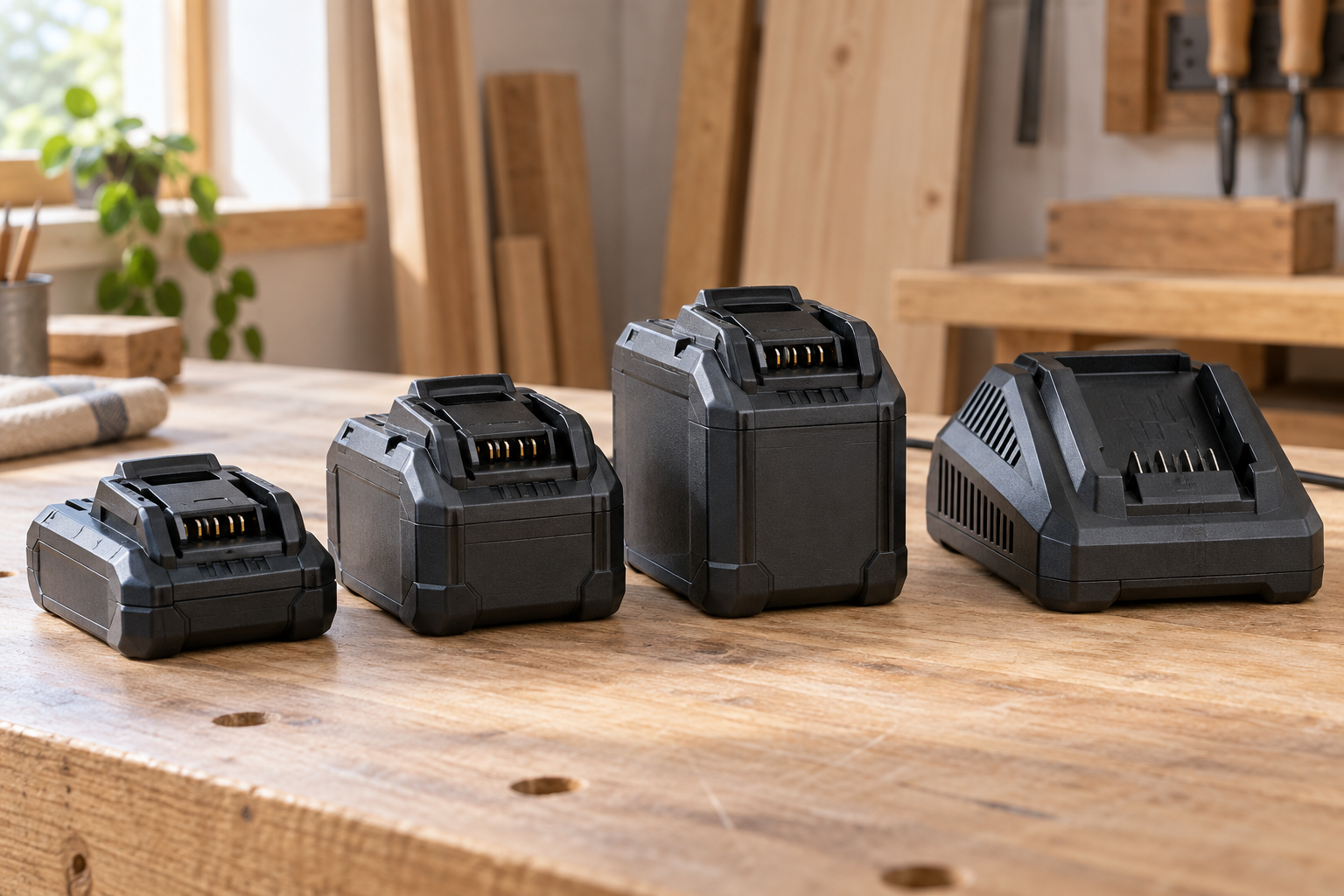
Usually, yes. If a battery fits the tool and belongs to the same battery platform, a higher amp-hour (Ah) rating generally means longer runtime, not higher voltage. A 5.0Ah battery can replace a 2.0Ah battery in a compatible tool; it does not force extra current into the motor. But the larger pack may weigh more, cost more, and behave differently under heavy loads.
Check compatibility first
Match the battery to the tool’s manufacturer-approved platform and voltage class. A battery labeled 18V or 20V Max, for example, may be part of a platform shared by many tools from that brand, but similar voltage labels alone do not make batteries interchangeable. The shape, contacts, electronics, and communication between tool and pack all matter.
Use the manufacturer’s compatibility chart when in doubt. Don’t force a pack that seems to fit, and don’t rely on a third-party adapter as proof of compatibility. An adapter can bypass protection or communication features, and may leave the tool without the safeguards the manufacturer intended.
What amp-hours change
Amp-hours are a measure of battery capacity. If two compatible batteries use the same voltage, a 5.0Ah pack has roughly 2.5 times the rated capacity of a 2.0Ah pack. That does not guarantee 2.5 times the working time: runtime varies with the tool, material, temperature, battery condition, and how hard you work it.
For a light task such as driving short screws, the difference may matter less than it does when cutting lumber with a circular saw or grinding under sustained load. High-demand tools can also draw enough current that a larger pack may deliver power more steadily, depending on its design. Ah alone does not tell you how much current a battery can safely provide.
| Pack size | Typical trade-off | Often suits |
|---|---|---|
| 2.0Ah | Light and compact; fewer cuts or fasteners per charge | Drills, impact drivers, overhead work, occasional jobs |
| 4.0–5.0Ah | Longer runtime; more weight and bulk | General site work, saws, and mixed tool use |
| 6.0Ah and above | More capacity, but heavier and sometimes less convenient in small tools | Long sessions or demanding tools where runtime matters |
These are broad categories, not performance guarantees. Battery construction differs by platform, and two packs with the same Ah rating can have different size, weight, and power capability.
Consider weight and balance
The biggest practical drawback is often the extra weight. A larger pack can make a drill tiring to hold at arm’s length, shift a tool’s balance, or make a compact saw awkward. For ladder work, overhead drilling, or repetitive fastening, a smaller battery may help more than the extra runtime helps.
For a stationary or two-handed tool, the trade-off is easier. A larger pack can mean fewer interruptions to swap batteries during framing, decking, or cutting. If you already have a compact pack, it can be sensible to keep it for light tools and buy a larger one for the tools that drain it quickly.
Heat, heavy loads, and battery wear
A higher Ah rating does not make a tool immune to overheating. Long, hard cuts can heat the motor, battery, and electronics. If a pack or tool becomes unusually hot, stop and let it cool rather than repeatedly restarting it. Battery protection may shut the pack down when it gets too hot, too cold, or is pushed beyond its limits; that shutdown is a safeguard, not a reason to bypass the protection.
Cold weather can also reduce available runtime, and an old or frequently abused pack may deliver less than its label suggests. A new high-capacity battery won’t fix a dull saw blade, a binding bit, or a tool being pushed beyond its intended workload. Those conditions waste power and create heat regardless of battery size.
Choosing a battery for the job
If you mainly use a drill or impact driver for household repairs, a lightweight 2.0Ah battery is often the cheaper, more comfortable choice. Consider a compact replacement battery in your tool’s platform if your current pack is worn out and runtime has been adequate.
For a circular saw, reciprocating saw, or other tool that runs for longer stretches, a mid-size pack is a reasonable starting point. A compatible 4.0–5.0Ah battery can reduce swaps without going straight to the heaviest option. Check the pack’s weight and the tool’s manual before buying, especially if you do overhead work.
If you regularly run several tools all day, compare the cost of a larger pack with the cost of keeping a second battery charged. A battery-and-charger bundle may be worthwhile when it costs less than buying each item separately, but only if the charger supports the battery and platform you use.
Charging and storage
A higher-capacity battery may take longer to recharge, particularly on a basic charger. The actual time depends on charger output and pack design, so check the manufacturer’s stated charge times rather than estimating from Ah alone. Use a charger approved for that battery platform; do not assume a physically compatible charger is safe.
Store packs dry and away from extreme heat. If a battery is cracked, swollen, leaking, or has damaged contacts, stop using it and follow the maker’s disposal guidance. For a healthy compatible pack, though, moving from a lower to a higher Ah rating is a routine upgrade: expect more capacity, not a change in tool voltage, and weigh the runtime gain against added size, weight, and cost.
Related guides
- Longest Lasting Lawn Mower Battery: AGM vs Lithium vs Flooded Lifespan and Cost per Season
- Duralast Gold Lawn Mower Battery Review: U1 Fit, CCA and When to Pay for AGM
- Greenworks Pro 80V 21-Inch Mower Review: Runtime Math, Push vs Self-Propelled and Yard Fit
- Bosch High Pressure Washer Gun Replacement: Fittings, Adapters and What Fits Your Model