What's inside
As an Amazon Associate I earn from qualifying purchases. This post may contain affiliate links at no extra cost to you.
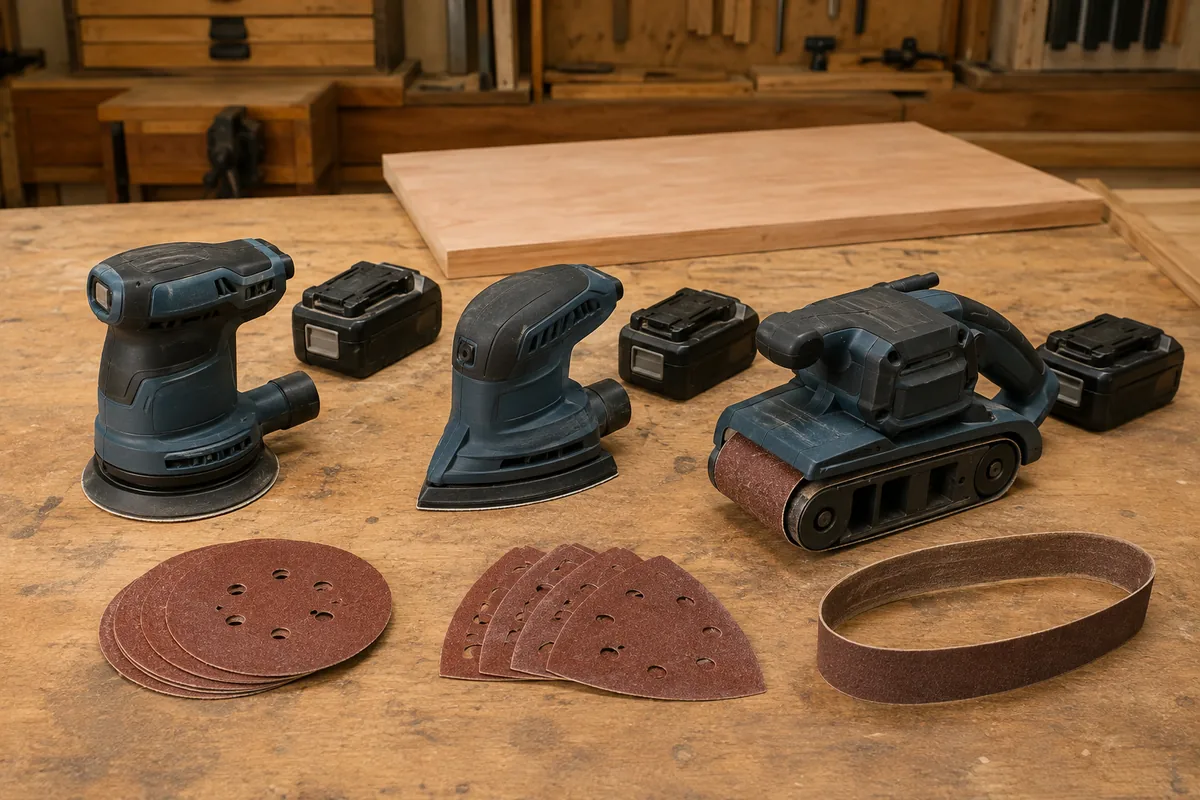
A cordless belt sander makes sense when the work is away from an outlet: fitting a door on site, easing a timber edge, or removing a rough patch before assembly. It is a poor substitute for a stationary sander on large panels, and it can remove material faster than a small job allows. Choose by belt size, battery platform, dust control and balance—not by voltage claims alone.
As an Amazon Associate we earn from qualifying purchases at no extra cost to you.


What to look for
Most cordless belt sanders use a 3-by-18-inch belt, a useful compromise between control and coverage. Wider 3-by-21-inch belts cover more area, but the tool is larger and heavier. Check belt availability before buying: common sizes and grit choices are easier to find locally than unusual formats. For site work, keep 80- and 120-grit belts on hand; use 80 for stock removal and 120 for refining. A belt sander leaves linear scratches, so finish with a finer sander or hand sanding when the surface will be visible.
Battery compatibility can matter more than a small difference in sanding speed. If you already own a suitable battery platform, a bare tool may be the economical choice. A 5.0Ah battery generally offers more useful runtime than a compact pack, but also adds weight. On a tool held by the front handle for edge work, that extra weight can make fatigue noticeable. Confirm whether the listing includes a battery and charger; bare tools are often priced attractively but need both to run.
How the main options compare
| Option | Best for | Trade-off |
|---|---|---|
| 3-by-18-inch cordless sander | Door fitting, trim and general site work | Less coverage than a wider belt |
| 3-by-21-inch cordless sander | Faster work on broad boards | More bulk, weight and belt demand |
| Corded belt sander | Long sanding sessions near power | Cord management and no battery-platform benefit |
| Random-orbit sander | Surface finishing and reducing visible scratch patterns | Slower for aggressive edge or stock removal |
For most mobile carpentry, start by comparing cordless 3-by-18-inch belt sanders in the battery system you already use. A wider format is worth considering if you routinely level broad boards, but it is not automatically better for trim or door edges.
Match the tool to your battery platform
If you have no batteries yet, compare the cost of a kit—not just the bare sander. Include at least one battery with enough capacity for sustained work and a compatible charger. The same battery may serve drills, saws and lights, which can make a platform more valuable than a one-off deal. If you already have several batteries, check that the sander is compatible with your exact battery family; brands sometimes sell incompatible ranges under similar names.
Runtime depends heavily on pressure, wood species, belt condition and grit. There is no reliable single runtime figure for every job. A clogged belt on resinous wood can draw more power and sand poorly, while pressing hard tends to heat the work and drain the pack without improving the cut. Bring a spare charged battery for a full day of intermittent sanding. For occasional door adjustments, a compact battery may be entirely adequate.
Compare cordless belt-sander kits with battery and charger against bare tools only after checking the pack capacity and included accessories. A kit with a small battery can still be a good deal for light work, but may be a frustrating choice for repeated stock removal.
Dust, tracking and control
A dust bag is convenient for small touch-ups, not a guarantee of clean work. Fine wood dust escapes, and the bag fills quickly when removing material across a large surface. If the sander has a vacuum port, check its size and whether your extractor hose fits directly or needs an adapter. Wear eye protection and a suitable dust mask or respirator, especially indoors. Keep dust away from ignition sources and clean it up rather than letting it accumulate around the work area.
Before sanding, inspect the belt direction marks and install the belt correctly. Misalignment can make it walk off the rollers; tracking adjustment should be made with the tool running only as directed in the manual, with hands clear of the belt. Test on scrap, then use light, even passes with the belt moving along the grain where practical. Keep the sole flat. Tilting the tool or lingering at an edge can cut a hollow or round over a corner in seconds.
Common problems are usually simple: a glazed or clogged belt stops cutting; a full dust bag worsens collection; and a worn belt may track poorly. Replace belts when cleaning no longer restores their bite. Let the tool reach speed before contacting the wood, and keep it moving. On thin stock, support the work well and avoid sanding near unsupported edges.
When a cheaper or different tool is better
If you sand only a few doors each year and already own a corded sander, keeping it is sensible. A corded belt sander can be cheaper and avoids buying another battery ecosystem. For smoothing a finished tabletop or removing light scratches, a cordless random-orbit sander is usually easier to control and leaves a more suitable finish. For narrow edges and small repairs, hand sanding may be faster than setting up a belt sander.
Buy cordless when portability saves real setup time or when you already own compatible batteries. Choose the narrower belt for mixed site work and the wider one for repeated broad-board sanding. Whatever you buy, budget for replacement belts, use extraction where possible, and practise on scrap before working on a fitted door or finished piece.
Related guides
- Longest Lasting Lawn Mower Battery: AGM vs Lithium vs Flooded Lifespan and Cost per Season
- Duralast Gold Lawn Mower Battery Review: U1 Fit, CCA and When to Pay for AGM
- Greenworks Pro 80V 21-Inch Mower Review: Runtime Math, Push vs Self-Propelled and Yard Fit
- Bosch High Pressure Washer Gun Replacement: Fittings, Adapters and What Fits Your Model