What's inside
As an Amazon Associate I earn from qualifying purchases. This post may contain affiliate links at no extra cost to you.
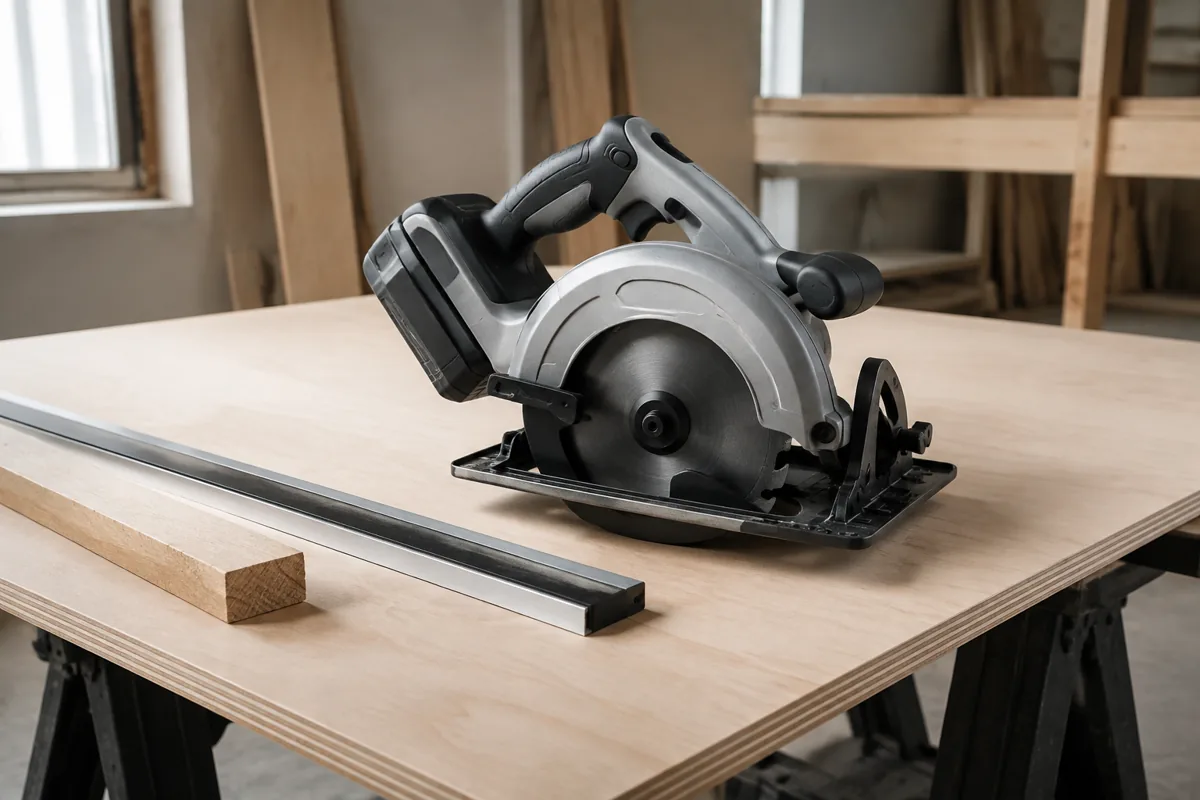
What a 6.5-inch saw can do for framing
A cordless circular saw with a 6.5-inch blade is lighter and easier to handle than a typical 7.25-inch framing saw, but it gives up cutting depth. That trade-off matters more than the battery brand. Most 6.5-inch models cut about 2-1/8 inches deep at 90 degrees, enough for a single 2-by- lumber member and many common framing cuts. It is not enough to cut through a nominal 2-by-4 (actual thickness 1.5 inches) and a thick shoe or jig in one pass, and it generally cannot cut a 2-by-4 on edge in one pass.
For framing, check the saw’s published maximum depth at both 90 and 45 degrees. A 45-degree bevel reduces usable depth substantially; do not assume the saw will bevel through a 2-by-4 cleanly. Also check whether the blade is on the left or right. Blade-side preference is personal, but visibility, cut-line access, and how the saw sits in your hand can affect accuracy and comfort.
As an Amazon Associate we earn from qualifying purchases at no extra cost to you.


Best pick by job and battery platform
The best buy is usually the saw that fits batteries you already own. If you have no batteries yet, compare the cost of the saw, two batteries, and charger—not just the bare-tool price. A powerful saw on a small, older pack may be less useful than a balanced saw on a suitable battery.
| Buyer or job | What to prioritize | Trade-off |
|---|---|---|
| Occasional framing and repairs | Affordable brushless saw kit, if available | Less runtime or speed under heavy load than a high-output setup |
| Frequent cuts in framing lumber | Brushless motor and a higher-capacity battery | More weight, cost, and bulk |
| Already invested in a battery platform | Bare tool compatible with your packs | Platform lock-in; confirm the exact battery connection |
| Long bevel cuts or deep stock | Consider a 7.25-inch saw instead | Heavier, but offers more depth and blade choices |
For a starter setup, compare 6.5-inch cordless circular saw kits. A kit makes sense when you need a charger and batteries; if you already have compatible packs, check the bare-tool options first.
Battery size, runtime, and cut speed
Framing puts more sustained load on a saw than trimming thin sheet goods. Battery capacity, usually listed in amp-hours (Ah), affects how long you can work, while cell design and pack electronics also influence how well the battery handles high current. A larger pack can help with runtime and may improve performance on some platforms, but it adds weight. Follow the saw maker’s guidance on compatible packs; a higher-capacity battery is not automatically a better match for every saw.
Do not judge runtime by a headline cut count without knowing the wood, blade, battery, and cut conditions. Wet, knotty, or pressure-treated lumber can slow the saw and drain a pack faster. For a day of framing, two compatible batteries let one cool or charge while you use the other. Keep a spare blade as well: a dull or pitch-coated blade makes the motor work harder and encourages pushing too fast.
Brushless motors are a sensible preference for frequent work because they avoid brush wear and can manage load efficiently. But a brushed saw can still be a reasonable lower-cost choice for occasional repairs. Buy the tool for the work you actually do, not just the motor label.
Features worth checking before you buy
Look for a firm shoe, a depth adjustment that stays put, and a bevel scale you can read. A rafter hook is useful when working on ladders or framing platforms, though it should not interfere with your grip. An electric brake can stop the blade sooner after a cut; it does not replace safe handling. A dust port may help indoors, but framing lumber and jobsite debris can clog small ports, so it is not a substitute for clear visibility.
Check that the saw accepts a common blade size and arbor configuration before buying specialty blades. A sharp, suitable framing blade is more important than a high tooth count for fast crosscuts in lumber. For cleaner cuts in plywood or finish work, use a blade designed for that material and slow down. Always confirm the blade’s rotation and install it in the direction marked on the saw.
Common failure modes and how to avoid them
If the saw bogs down, do not force it. Ease pressure, check for a dull blade, and make sure the blade is not pinched by a closing kerf. Supporting the work correctly matters: a board that sags can bind the blade, while an unsupported offcut can fall and twist. Secure the material and keep hands clear of the cut path.
Repeatedly tripping battery protection may mean the pack is too small, too hot, or worn, or that the blade is binding. Let the battery cool and inspect the cut setup before trying again. If the saw still stalls in ordinary dry framing lumber with a sharp blade, compare its performance using a compatible, suitable battery rather than assuming the motor is defective.
For bevel cuts, set the angle while the saw is unplugged or the battery is removed, then test the depth on scrap. The shoe can drift if its lock is loose, leaving an angled cut that misses the mark. Check the setting periodically, especially after moving the saw between jobs.
Make the final choice
Choose a 6.5-inch cordless saw if lower weight and a familiar battery platform matter more than maximum depth, and most of your cuts are in standard framing lumber. A kit is the practical choice when you need batteries and a charger; a bare tool is usually better value when you already own compatible packs. If you regularly need deep bevel cuts, cut thick built-up material, or want one saw for heavy framing, compare a 7.25-inch cordless framing saw before buying. The extra depth is useful, but it comes with more size and weight.
Related guides
- Longest Lasting Lawn Mower Battery: AGM vs Lithium vs Flooded Lifespan and Cost per Season
- Duralast Gold Lawn Mower Battery Review: U1 Fit, CCA and When to Pay for AGM
- Greenworks Pro 80V 21-Inch Mower Review: Runtime Math, Push vs Self-Propelled and Yard Fit
- Bosch High Pressure Washer Gun Replacement: Fittings, Adapters and What Fits Your Model