
Our Top Picks

What's inside
- In this guide
- Types of electric hedge trimmer
- How to choose
- Blades, tooth gap and cutting capacity
- Other features worth checking
- Power, voltage and battery runtime explained
- Use cases by hedge type
- Setup and cutting technique
- Safety
- Maintenance
- Common mistakes
- Who should choose what
- Buying checklist
- Frequently asked questions
- Conclusion
As an Amazon Associate I earn from qualifying purchases. This post may contain affiliate links at no extra cost to you.
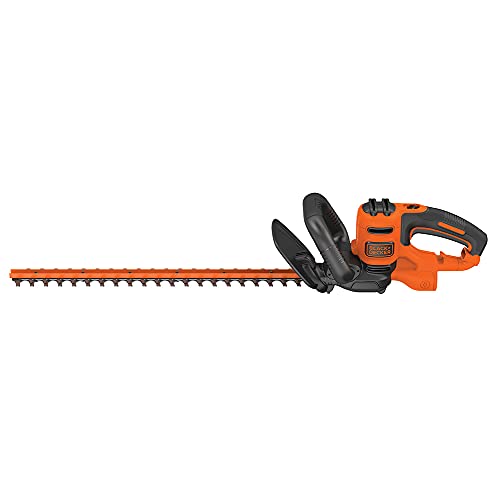
The short answer: pick an electric hedge trimmer by looking at your hedge, not the catalogue. Small, tidy garden hedges and shrubs are well served by a light cordless trimmer with a modest blade. Long boundary hedges near an outdoor outlet suit a corded trimmer with a longer blade, which never runs out of power. Tall hedges you cannot reach comfortably call for a pole or long-reach trimmer, and thick, woody growth needs a wider tooth gap and a stronger motor. Weight, balance and a two-hand safety switch matter as much as power, because trimming is repetitive and tired arms make mistakes.
In this guide
- Types of electric hedge trimmer
- How to choose
- Blades, tooth gap and cutting capacity
- Other features worth checking
- Power, voltage and battery runtime explained
- Use cases by hedge type
- Setup and cutting technique
- Safety
- Maintenance
- Common mistakes
- Who should choose what
- Buying checklist
- FAQ
- Conclusion
Types of electric hedge trimmer
Corded hedge trimmers
A corded trimmer draws power from a household outlet. You get steady output, no charging and usually a lower purchase price than a comparable battery tool. The catch is the cord. It trails behind you, and the most common way to damage a corded trimmer is to cut the cable. They work best when the hedge is within a modest distance of an outdoor outlet, and when you are happy to manage the cable as you move along the line.
Cordless battery trimmers
Battery trimmers give freedom to work along a whole property without hunting for a socket or untangling a cable. They are quiet and quick to start. The limits are runtime and weight, since the pack sits on the tool. For a typical suburban garden that is fine; for long hedges you may need a spare pack. If you already own batteries from other garden tools on the same platform, a bare-tool purchase can be good value.
Pole and long-reach trimmers
These put the blade on the end of a shaft, sometimes with an adjustable head angle. They let you trim the tops of tall hedges from the ground, and some can angle the head to work vertically or flat across the top. They are heavier to hold out in front of you and more tiring for long sessions, but they remove the need for a ladder, which is often the more dangerous part of the job.
Shrub shears and compact trimmers
Small battery shears are meant for topiary, box balls and light shaping rather than hedging proper. They are very light and easy to control, and they are not a substitute for a full trimmer on a long hedge.
| Type | Power | Strength | Drawback | Best for |
|---|---|---|---|---|
| Corded | Outlet | Steady power, lower running cost | Cable must be managed | Hedges near an outlet |
| Cordless | Battery | Freedom, quiet | Runtime and extra weight | Typical garden hedges |
| Pole / long-reach | Cord or battery | Reaches high tops from the ground | Tiring, harder to see the cut line | Tall hedges |
| Shrub shears | Small battery | Light, precise | Little cutting capacity | Topiary and shaping |
| Hedge situation | Suggested approach | What to look for |
|---|---|---|
| Small ornamental hedge, soft growth | Light cordless trimmer | Low weight, shorter blade |
| Long boundary hedge | Corded, or cordless with spare packs | Longer blade, comfortable handle |
| Tall hedge | Pole trimmer | Adjustable head, manageable weight |
| Overgrown, woody hedge | Stronger trimmer, wider tooth gap, plus loppers | Robust blades, strong motor |
| Formal shapes and topiary | Shears or short-blade trimmer | Fine tooth spacing, good control |
How to choose
Walk the hedge and note three things: its total length, its height and how thick the woody growth is. A short, soft hedge of privet does not need the same tool as an old, thick boundary of mixed species with stems as thick as a finger or more.
Then think about power access. Outdoor outlets are convenient but rarely cover an entire garden. If you need an extension cord that reaches around a corner and across a path, a cordless trimmer starts to look attractive. If you prefer to avoid batteries altogether, a corded model is a reasonable choice and simpler to maintain.
Finally, consider your own body. Hedge trimming is repetitive and often performed at arm’s length or overhead. A tool that feels fine for five minutes in a shop can feel very different after half an hour. Choose weight and balance you can sustain, and take breaks.
Blades, tooth gap and cutting capacity
Blade length
Blade length is the most visible number on the box. Longer blades cover more hedge per pass, which speeds up straight runs, but they also add weight at the front of the tool and make fine shaping harder. Shorter blades are easier to control around curves and corners. For a typical garden, a medium blade is a practical middle ground; use a longer one only if you have long, flat runs and the strength to handle it.
Tooth gap
The gap between the teeth sets the maximum stem thickness the blade can accept. A narrow gap leaves a neat finish on soft growth and is safer for light work. A wider gap can swallow thicker stems but may leave a rougher cut. Manufacturers state a cutting capacity, and you should treat it as a ceiling for clean cuts, not a target. Anything thicker than the stated capacity should be cut with loppers or a pruning saw rather than forced through the blade.
Single-sided and double-sided blades
Double-sided blades cut in both directions, so you can sweep back and forth without turning the tool. This is faster, but it exposes more cutting edge. Single-sided blades cut on one side only, with a protected back edge that some users find safer and more comfortable to rest against the hedge. The best choice depends on your confidence and the job.
Other features worth checking
- Two-hand safety switch: the blades only run when both hands are on the controls, which reduces the risk of cutting yourself. Many designs include a lock-off as well.
- Rotating rear handle: lets you tilt the grip for vertical cuts on the sides of a hedge without twisting your wrist.
- Blade brake: some trimmers stop the blades quickly when you release the switch. This is a valuable safety feature.
- Cable retention hook: a hook or clip at the back of a corded trimmer keeps an accidental tug from unplugging the cord, and helps you manage its position.
Power, voltage and battery runtime explained
Corded motors
Corded trimmers are often rated in watts. A higher rating suggests a stronger motor, which helps with thicker growth, but blade design and gearing also influence performance. For most garden hedges, a mid-range corded motor is more than enough. Match the cord to the tool: use an outdoor-rated extension cord of the recommended gauge and keep it as short as is practical.
Battery voltage and capacity
Voltage indicates the power level of the system; amp-hours indicate how much energy the pack stores. Higher voltage platforms tend to provide more torque for thicker stems, while capacity decides how long you can keep going. For long hedges, a spare pack or a fast charger can matter more than a slightly higher voltage. Remember that cold weather reduces battery performance, and dense, woody growth uses more energy than light, leafy shoots.
Weight and balance
Weight is rarely a headline spec but it determines how long you can work comfortably. A heavier trimmer with excellent balance can feel better than a lighter one that is front-heavy. If you can, hold the tool with both hands at the position you would use on the hedge, and imagine doing that for twenty minutes.
Use cases by hedge type
Formal hedges
Neat evergreen hedges, such as box or yew, benefit from regular light trimming with a short or medium blade. Frequent small cuts keep the shape crisp and leave less debris. Use string lines or a straight edge as a guide for flat tops.
Informal and flowering hedges
Mixed or flowering hedges are often better shaped with a lighter touch and at the right time of year, so you do not remove next season’s blooms. Check the species before cutting, and avoid trimming during the bird nesting season, since nests are often protected by law in many regions. Check local rules.
Conifers
Many conifers do not regrow from bare old wood, so cut only the green growth and avoid cutting back into brown, leafless stems. Light, regular trimming is the safest approach.
Overgrown hedges
A neglected hedge needs a staged approach. Use loppers or a pruning saw for thick branches first, then use the trimmer to tidy the surface. Forcing a trimmer through thick stems risks blade damage, motor strain and kickback jerks.
Tall hedges
For heights beyond comfortable reach, use a pole trimmer rather than a ladder. If the hedge is very tall or near power lines, consider hiring a professional.
Setup and cutting technique
- Inspect the area. Walk the hedge and remove any wire, string, stones or hidden objects, and look for nests.
- Check the tool. Make sure the blades are clean and undamaged, guards are fitted and the switches work. Disconnect power before any adjustment.
- Prepare power. Charge the battery fully, or arrange an outdoor-rated cord and a GFCI-protected outlet.
- Dress properly. Wear eye protection, gloves, long trousers, sturdy footwear and hearing protection if the tool is loud.
- Start with the sides. Work upward from the bottom, using a gentle sweeping arc. Keep the blade at a slight angle so the hedge is slightly wider at the base, which helps light reach the lower growth.
- Do the top last. Use a straight line or string guide for a level finish, and sweep in smooth passes rather than pushing against the hedge.
- Clean up. Collect clippings promptly, which also reduces slip hazards.
Let the blades do the work. If the tool slows or stalls, you are probably pushing too hard or the stems are too thick.
Safety
Also check for nests and other wildlife before you begin, and stay clear of overhead power lines.
Protective equipment
- Safety glasses or goggles, because twigs and chips fly.
- Gloves with a good grip.
- Long trousers and sturdy closed shoes with non-slip soles.
- Hearing protection for extended use, particularly on louder models.
Electrical safety
With corded trimmers, use an outdoor-rated extension cord and a GFCI-protected outlet or a portable GFCI. Keep the cord behind you and over your shoulder or away from the blades, and check it for damage before every use. Never trim in the rain or when the hedge and ground are soaking wet, and do not use a corded tool when standing in water. Do not carry a trimmer by the cord. Disconnect the plug or remove the battery before clearing a jam or touching the blades.
Handling the blades
- Keep both hands on the handles while the blades are running.
- Do not hold the hedge with your free hand while cutting.
- Stand on stable ground. Avoid overreaching, and never trim from a ladder with a heavy trimmer, as a slip with moving blades can be serious.
- Keep children and pets well away.
- Carry the trimmer with the blade pointing backward and fit the blade cover for storage and transport.
Maintenance
- Clean after each use: remove sap and clippings from the blades and vents with a brush, with the power disconnected.
- Lubricate the blades: apply a light blade oil or the lubricant recommended in the manual before and after use to reduce friction and rust.
- Check for damage: bent teeth, nicks and loose bolts affect the cut and safety.
- Sharpen or replace: a dull blade tears rather than cuts, which leaves ragged, brown-tipped growth. Some blades can be sharpened; others are better replaced.
- Battery storage: keep packs indoors, charged part way if the manual advises, and away from extreme heat or cold.
- Cord care: coil it loosely and store it dry. Replace any cord with cuts or exposed wire.
Common mistakes
- Buying a long blade that is too heavy to control comfortably.
- Forcing the trimmer through thick branches instead of using loppers.
- Letting the cord trail in front of the blade.
- Trimming in damp conditions or on wet grass.
- Cutting conifers back into bare brown wood.
- Trimming during nesting season without checking for nests.
- Skipping blade lubrication and cleaning.
- Over-reaching or using a ladder instead of a pole trimmer.
Who should choose what
Owner of a small garden: a light cordless trimmer with a moderate blade is easy to store and use. Owner of a long boundary hedge: a corded trimmer or a cordless model with a spare battery. Owner of tall hedges: a pole trimmer with an adjustable head, along with a helmet and eye protection. Gardener with topiary: shrub shears and a short-blade trimmer for precision. Someone with limited strength or joint problems: prioritise low weight, a rotating handle and a trimmer that lets you work with your arms close to your body. Owner of an overgrown hedge: a strong trimmer for finishing, with loppers or a pruning saw for the heavy work.
To compare options, start with the electric hedge trimmer range, check pole hedge trimmers if you have tall hedges, and consider garden loppers for thicker stems.
Buying checklist
- Measure the length and height of your hedges.
- Estimate the thickest stems and compare with the stated cutting capacity.
- Decide between corded, cordless and pole models.
- Choose a blade length you can control for the full job.
- Confirm a two-hand safety switch and, ideally, a blade brake.
- Look for a rotating handle if you do many vertical cuts.
- Check weight and balance in your hands.
- For cordless, count the packs needed and check charging time.
- For corded, buy an outdoor-rated cord and plan a GFCI.
- Buy eye protection, gloves and a blade cover or lubricant.
Frequently asked questions
What blade length is best for a garden hedge?
A medium blade suits most gardens, balancing speed with control. Long blades speed up flat runs but add weight and make shaping harder. Choose the longest blade you can hold steady for a full session.
Is a cordless trimmer as good as a corded one?
For typical hedges, yes. Cordless gives freedom and convenience, while corded gives constant power and lower running cost. Heavy, dense growth and very long hedges favour corded or extra batteries.
What does tooth gap mean?
It is the spacing between blade teeth, which sets the maximum stem thickness the blade can accept. A narrow gap gives a neat finish on soft growth, and a wider gap handles thicker stems. Never force stems thicker than the stated capacity.
Can I trim a wet hedge?
It is better not to. Wet foliage clogs blades, makes slippery footing and, with corded tools, adds an electrical hazard. Wait for dry weather and for the hedge to dry out.
When should I trim my hedge?
It depends on the species. Many formal evergreen hedges are trimmed in late spring or summer, while flowering hedges are best cut after blooming. Avoid the nesting season, and check local wildlife regulations.
Do I need a GFCI for a corded trimmer?
It is strongly recommended. A ground-fault circuit interrupter cuts power quickly if current leaks to ground, which is a real risk with a blade that can cut its own cable. Use a protected outlet or a portable GFCI.
How do I stop my arms getting tired?
Choose a light, balanced tool, keep your elbows close to your body, take regular breaks and avoid overreaching. For high hedges, use a pole trimmer rather than holding a heavy tool overhead.
How often should I oil the blades?
Lubricate before and after use, and during long sessions if the manual suggests it. Clean sap and debris first, with the power disconnected, then apply a light film along the blade.
Conclusion
The best electric hedge trimmer is the one that fits your hedge and your body. Cordless models suit most gardens, corded ones reward long runs near an outlet, and pole trimmers keep you off ladders. Look at blade length, tooth gap, weight and the safety switch before you look at headline power figures. Wear eye protection, respect the cord, avoid wet conditions and check for nesting birds before you start. Keep the blades clean, lubricated and sharp, and little and often will serve you better than a big annual battle with an overgrown hedge.
Disclosure: As an Amazon Associate, loapowertools.com earns from qualifying purchases. We may receive a small commission if you buy through links on this page, at no extra cost to you.
Related guides
More from Amazon
Programs that pair well with the guide above. Offers and eligibility are set by Amazon and may change.
A free business account with business pricing and bulk-buying tools for work, shop or home office.
Create a business accountFree shipping on eligible items, Prime Video and more. Eligible new members can start with a free trial.
Start a Prime free trialAudiobooks and podcasts to listen to on the go. Eligible new members can start with a free trial.
Try Audible freeAd-free music streaming. Eligible new subscribers can start with a free trial.
Try Music Unlimited freeAs an Amazon Associate we earn from qualifying purchases.

Write Your Review
No reviews yet. Be the first to share your experience!