
Our Top Picks
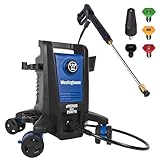
 Westinghouse ePX3500 Electric Pressure Washer2500 Max PSI13.5 x 14 x 16.5 inches19 PoundsCheck on Amazon


What's inside
- Quick Start: The 8-Step Routine
- Top Picks at a Glance: Machines That Fit the Beginner Routine
- Comparison Table
- Step 1: Know What You Have
- Step 2: Set Up Safely
- Step 3: Choose the Right Nozzle
- Step 4: How to Use Soap With a Pressure Washer
- Step 5: How to Wash a Car Without Damaging It
- Step 6: Decks, Fences and Trex Composite Decking
- Step 7: Concrete, Driveways, Siding and Patios
- How the Machines in This Guide Fit the Job
- How We Chose
- Common Mistakes
- After You Finish: Shut Down and Store
- Frequently Asked Questions
- Which Setup Should You Choose?
- Sources
As an Amazon Associate I earn from qualifying purchases. This post may contain affiliate links at no extra cost to you.
To use a pressure washer safely, connect the water supply and purge the air before you start the motor, begin with the widest-angle nozzle, keep the tip at a distance from the surface, and work in even overlapping passes from top to bottom. That is the core routine for every electric or gas machine, whether it is a Greenworks, a Ryobi or any other brand. Power washing and pressure washing mean the same thing in everyday use: a “power washer” is usually a pressure washer that heats the water, which is mostly a commercial feature. This guide walks through setup, nozzle choice, soap, cars and decks, and the mistakes that damage surfaces and people.
This is a research-based guide. We did not personally use the products named here. The steps combine general guidance from manufacturers’ manuals and widely used how-to references. Every machine has its own manual, and the manual always wins over a general article. We do not state PSI limits as universal; the safe pressure depends on the surface, the nozzle, the distance and the maker’s instructions.
As an Amazon Associate we earn from qualifying purchases at no extra cost to you.


Quick Start: The 8-Step Routine
- Read the manual and put on eye protection, closed-toe shoes and gloves.
- Clear the area of pets, children, loose items and anything fragile.
- Connect the garden hose to the water inlet and turn the water fully on.
- Attach the high-pressure hose and the spray wand; choose a wide nozzle.
- Squeeze the trigger to purge air until the water flows steadily.
- Start the machine (plug into a GFCI outlet for electric; follow the manual to start gas).
- Try the spray on a hidden spot from a distance, then work across the surface in overlapping strokes.
- Release the trigger, turn the machine off, shut the water and squeeze the trigger to release pressure.
Top Picks at a Glance: Machines That Fit the Beginner Routine
- Best Beginner Electric: Greenworks 2200 PSI (1.2 GPM Max) Electric Pressure Washer
- Best Budget Electric: Ryobi 1800 PSI 1.2 GPM Corded Electric Pressure Washer
- Best with Onboard Soap Tank: Westinghouse ePX3100 Electric Pressure Washer
- Best Step-Up Electric: Greenworks 3000 PSI (2.0 GPM Max) Brushless Electric Pressure Washer
- Best Soap Add-On: Tool Daily 1 Liter Foam Cannon with 1/4 Inch Quick Connector
Comparison Table
| Product | Best for | Key specs from the listing | Watch for | Price tier |
|---|---|---|---|---|
| Greenworks 2200 PSI | Cars, patios, light decks | 2200 PSI; 1.2 GPM max; electric | Confirm included nozzles and soap method | Mid-range |
| Ryobi 1800 PSI | Small jobs, first machine | 1800 PSI; 1.2 GPM; cold water; corded | Slower on stubborn stains | Budget |
| Westinghouse ePX3100 | Easy soap use | 2300 max PSI; 1.76 max GPM; onboard soap tank; anti-tipping | Max PSI is the rating at peak, not working pressure | Budget to Mid-range |
| Greenworks 3000 PSI Brushless | Driveways, bigger jobs | 3000 PSI; 2.0 GPM max; brushless electric | Easy to overdo on soft surfaces; use wide nozzles | Premium |
| Tool Daily Foam Cannon | Cars, siding | 1 liter bottle; 1/4 inch quick connector; 5 nozzle tips | Check that its connector fits your wand | Budget |
Step 1: Know What You Have
Pressure is measured in PSI and flow in GPM. Pressure breaks dirt loose; flow carries it away, and the two multiplied give “cleaning units.” A machine marked 2000 PSI at 1.2 GPM is a different tool from one with higher flow. Listings often print “max PSI,” which can be higher than the pressure you actually get at the nozzle. Electric machines usually sit in the 1,500 to 3,000 PSI band; gas machines run higher. For most home use, electric is easier because it is lighter, quieter and does not need fuel. Check the wattage and the amp draw; extension cords must be rated for outdoor use and sized for the load, and the plug should be GFCI-protected.
What does “power wash” mean?
People use “power wash” and “pressure wash” interchangeably. Technically, a power wash uses heated water, while a pressure wash uses cold water. For most homeowners, the machines are cold-water pressure washers. The Ryobi listing in this guide, for example, calls itself a cold water washer.
Step 2: Set Up Safely
Before you connect anything
Wear safety glasses, because a nozzle can throw gravel and chips at you. Wear sturdy shoes. Do not wear sandals; a high-pressure stream can injure skin and cut deeply, and any injury from a jet needs prompt medical attention. Never point the wand at yourself, another person or an animal. Keep the nozzle away from your feet when you start, and never put your hand in front of the stream.
Water and hose
Use a garden hose that meets the length and diameter in your manual. Open the water fully and let air escape before powering on. Running the pump dry can damage it. Many machines have a small inlet filter; inspect and rinse it to keep grit out of the pump.
Power and extension cords
Plug electric machines into a GFCI outlet. Keep connections off wet ground. Do not use a cord that is too thin or too long unless the manual allows it. For gas machines, add fuel with the engine off and cool, work outdoors only, and never run a gas engine in a garage or enclosed area because of carbon monoxide.
Step 3: Choose the Right Nozzle
Nozzle angle controls the force. A narrow tip concentrates the stream; a wide tip spreads it out. A common color code is red for 0 degrees (never use on most home surfaces), yellow for 15, green for 25, white for 40, and black for a low-pressure soap tip, but always check your own nozzles because colors and angles vary by brand. Quick-connect tips make it easy to switch. Start with the widest tip, 40 degrees if you have one, and move to a narrower tip only if the surface can take it.
- Wide angle (40 degrees): cars, windows, siding, soft wood.
- Medium (25 degrees): decks, fences, patios, driveways when the surface allows.
- Narrow (15 degrees): stubborn concrete stains only.
- Soap tip (black or low pressure): applying detergent.
Hold the tip farther away first and move closer only as needed. Closer means more force; too close can etch concrete, splinter wood and strip paint.
Step 4: How to Use Soap With a Pressure Washer
You apply detergent through the low-pressure soap tip or a foam cannon, not through the high-pressure tip. Some machines have an onboard soap tank. The Westinghouse ePX3100 listing, for example, mentions an onboard soap tank, which makes soap use simple: fill the tank, attach the soap tip and spray at low pressure. Others use a detachable foam cannon, such as the Tool Daily 1-liter model, which attaches to the wand with a 1/4-inch quick connector and mixes soap and water into foam.
- Choose a detergent labeled safe for pressure washers and for the surface. Do not use bleach or random household cleaners in the pump unless the manual allows them, as some chemicals damage seals.
- Dilute according to the bottle. Concentrates such as Zep All-in-1 and Simple Green Oxy Solve concrete cleaner are sold for pressure washers, and each bottle gives its own mix ratio.
- Apply soap from the bottom up, so streaks do not form, and let it dwell for the time on the label without letting it dry.
- Switch to the rinse nozzle and rinse from the top down.
- Flush the soap system with clean water afterward so the detergent does not clog the line.
Protect plants by wetting them first and rinsing them after. Do not let runoff with chemicals go into storm drains where local rules forbid it; check your area’s guidance.
Step 5: How to Wash a Car Without Damaging It
Use the widest tip and a low-pressure setting, and keep the nozzle well back from the paint. Many detailing and DIY sources suggest staying around 1,200 to 1,900 PSI for cars, using a 40-degree tip and keeping a distance of at least roughly 12 to 24 inches, and some are more conservative still. These are general suggestions from sources we reviewed, not manufacturer limits. Check your vehicle owner’s manual and your pressure washer’s manual. Avoid spraying directly at seals, emblems, peeling paint, loose trim, wheel bearings and engine bays.
- Rinse loose dirt first, from the top down.
- Apply foam with a foam cannon and let it dwell briefly.
- Wash by hand with a mitt if the car is very dirty; do not rely on pressure alone.
- Rinse from the top, work down and keep the tip moving.
- Dry with a soft towel to prevent water spots.
The question “what PSI pressure washer for a car” has a simple answer: the lower, wider and farther you work, the safer. A machine in the lower pressure range such as the 1800 PSI Ryobi or the 2200 PSI Greenworks is generally enough, and you can reduce force with distance and a wide tip. A 3000 PSI machine can be used with care but gives you less margin.
Step 6: Decks, Fences and Trex Composite Decking
Wood is soft. Use a 25- or 40-degree tip, keep the tip moving, work with the grain and avoid dwelling in one place. A too-close nozzle raises the grain and leaves marks that look like stripes. Try a hidden spot first. After cleaning, let the wood dry before staining or sealing, following the product’s instructions.
For composite decking such as Trex, follow the maker’s published cleaning guidance. Many composite makers provide a maximum pressure, a minimum distance and a recommended nozzle, and a few discourage high pressure or a narrow tip because it can damage the surface. Because those limits vary by product line and year, we do not repeat numbers here; read the current care instructions for your exact decking. In many cases, soft brushing with a recommended cleaner works better than force. If you decide to pressure wash, use a wide fan tip, hold it back, keep it moving and follow the boards.
Step 7: Concrete, Driveways, Siding and Patios
Concrete can take stronger pressure than wood but can still be etched. Use a 25-degree tip, overlap your passes and keep a consistent distance. A surface cleaner attachment gives even results on large flat areas and avoids striping. For siding, work from the bottom up with soap and rinse from the top down; never aim up under lap siding, because water can get behind it. Keep a safe distance from windows, light fixtures, outlets, vents and old paint.
How the Machines in This Guide Fit the Job
Greenworks 2200 PSI (1.2 GPM Max)
A middle-of-the-road electric machine that suits cars, patio furniture and light decks. The listing gives 2200 PSI and 1.2 GPM maximum. Check the nozzle set and soap method on the current page. The Greenworks manual covers startup, nozzles and storage; follow it.
Ryobi 1800 PSI 1.2 GPM Corded Electric
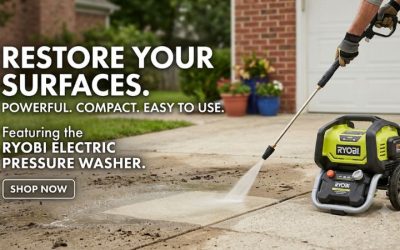
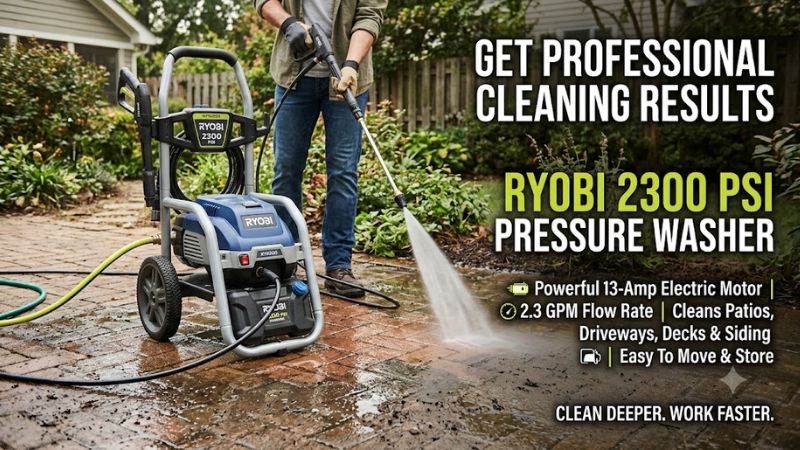
A basic cold-water corded machine. It is a gentle first washer for cars, bikes and outdoor furniture. Expect slower work on heavy stains. Follow the Ryobi manual for the quick-connect nozzles and its detergent method.
Westinghouse ePX3100
This listing mentions 2300 max PSI, 1.76 max GPM, anti-tipping design and an onboard soap tank. It is a convenient pick for new users who want a simple soap step. Remember that “max PSI” is a peak figure.
Greenworks 3000 PSI Brushless
A stronger electric unit with 2.0 GPM maximum flow. It cleans driveways faster but can damage soft surfaces more easily. Use the wide tip and distance.
Accessories
A foam cannon and a pressure-washer detergent give you proper soap action. A surface cleaner attachment is another useful add-on for driveways, and it is sold separately.
How We Chose
This is research-based. We did not personally use these products. We reviewed the store’s catalog for electric pressure washers, foam cannons and cleaner concentrates, then read the listing information and general how-to guidance from manufacturers and home-improvement references. We included a mix of pressure levels, one machine with an onboard soap tank, and accessories that matter for soap use. We do not quote prices; tier words only. Unverified details are marked “not listed” or sent back to the manual.
Common Mistakes
- Starting the motor before the water has purged the air.
- Using a 0-degree or narrow tip on a car, deck or siding.
- Holding the nozzle too close to wood or paint.
- Putting soap through the high-pressure tip.
- Using an undersized extension cord or a non-GFCI outlet.
- Leaving water in the pump during freezing weather.
- Pointing the stream at your feet, hands or a person.
After You Finish: Shut Down and Store
Turn off the motor, close the water, squeeze the trigger to release trapped pressure and disconnect the hoses. Drain water from the pump and hose according to the manual. In cold weather, protect the pump from freezing, since a cracked pump is expensive to repair. Rinse and store nozzles, check the inlet filter and coil the hose without kinks. Store the machine in a dry place.
Frequently Asked Questions
How do I use a pressure washer for the first time?
Read the manual, connect the water and purge the air, attach a wide nozzle, start the machine and try it on a hidden spot from a distance. Work in overlapping passes from top to bottom.
How do I use an electric pressure washer?
Connect water first, then plug into a GFCI outlet and squeeze the trigger to purge air before starting. Use the right extension cord and keep the cord and plug away from standing water.
How do I use soap with a pressure washer?
Use the low-pressure soap tip, an onboard tank or a foam cannon, with a detergent made for pressure washers. Apply bottom to top, let it dwell without drying, then rinse top to bottom.
What is a power wash?
It usually means pressure washing. Technically, a power wash adds heated water, which is mostly a commercial feature. Most home machines are cold-water pressure washers.
What PSI pressure washer is safe for a car?
Many sources suggest roughly 1,200 to 1,900 PSI with a 40-degree tip at a distance, but this is general guidance, not a universal limit. Check your vehicle owner’s manual and your washer’s manual.
How do I use a Greenworks or Ryobi pressure washer?
The steps are the same as above, but follow the specific manual for the quick-connect nozzles, soap method and storage. The brand does not change the safety routine.
Can I pressure wash Trex decking?
Often yes, but follow the maker’s current care instructions for pressure, distance and nozzle, and consider a soft brush and a recommended cleaner first.
Which Setup Should You Choose?
If you are new to pressure washing, start with a mid-pressure electric machine such as the Greenworks 2200 PSI or, on a tighter budget, the Ryobi 1800 PSI. If you want easy soap, look at a model with an onboard tank like the Westinghouse ePX3100. If you have a big driveway, a stronger electric unit like the Greenworks 3000 PSI saves time, but use wider tips and more distance. In every case, the habit that protects surfaces is the same: wide nozzle, steady distance and overlapping passes.
Sources
- Greenworks pressure washer owner’s manuals
- Ryobi pressure washer owner’s manuals
- Westinghouse pressure washer product information
- Trex decking care and cleaning guidance
- Family Handyman guide to pressure washing a car
- Home Depot how-to guide: how to use a pressure washer
Last updated: October 2026
Related guides
More from Amazon
Programs that pair well with the guide above. Offers and eligibility are set by Amazon and may change.
A free business account with business pricing and bulk-buying tools for work, shop or home office.
Create a business accountFree shipping on eligible items, Prime Video and more. Eligible new members can start with a free trial.
Start a Prime free trialAudiobooks and podcasts to listen to on the go. Eligible new members can start with a free trial.
Try Audible freeAd-free music streaming. Eligible new subscribers can start with a free trial.
Try Music Unlimited freeAs an Amazon Associate we earn from qualifying purchases.
Write Your Review
No reviews yet. Be the first to share your experience!