
Our Top Picks


What's inside
- Quick Comparison
- Why Random Orbital?
- 1. DeWalt DWE6423 Random Orbital Sander
- 2. Bosch ROS20VSC Random Orbital Sander
- 3. Makita BO5041 Random Orbital Sander
- 4. Mirka Deros Electric Sander
- 5. Black+Decker BDERO100 Random Orbit Sander
- Choosing Sandpaper Grits
- Technique Tips
- How to Choose
- Dust Collection and Your Lungs
- Corded Versus Cordless Sanders
- Common Mistakes
- FAQ
- Conclusion
As an Amazon Associate I earn from qualifying purchases. This post may contain affiliate links at no extra cost to you.
A 5-inch random orbital sander is the most useful sander for most DIYers, because it removes material quickly and leaves a swirl-free finish. The DeWalt DWE6423, Bosch ROS20VSC and Makita BO5041 are proven corded options, while Black+Decker offers a budget pick and Mirka is a premium choice. Look for good dust collection and low vibration.
Quick Comparison
| Pick | Best for | Key feature |
|---|---|---|
| DeWalt DWE6423 Random Orbital Sander | General furniture and trim work | Variable speed and dust bag |
| Bosch ROS20VSC Random Orbital Sander | Smooth, low-vibration sanding | Microfilter canister, comfort grip |
| Makita BO5041 Random Orbital Sander | Everyday sanding with good balance | Variable speed, easy pad changes |
| Mirka Deros Electric Sander | Pros seeking low vibration | Compact brushless design |
| Black+Decker BDERO100 Random Orbit Sander | Light home projects | Low price and simple dust bag |
Why Random Orbital?
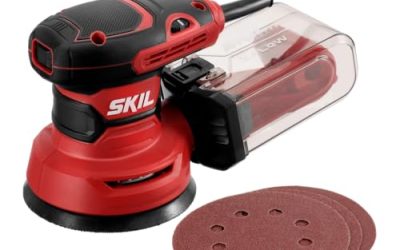
A random orbital sander spins its pad while also moving it in small ellipses, so no abrasive grain follows the same path twice. That is why it leaves fewer visible swirls than a plain round sander and why it is forgiving for beginners. It can handle stripping paint, smoothing rough lumber and sanding between coats of finish. It is not ideal for tight corners, which is where a detail sander helps, and it should not be used on end grain with heavy pressure. Hook-and-loop pads make swapping sandpaper quick, and dust holes in the pad connect to a bag or vacuum to keep the surface clear.
1. DeWalt DWE6423 Random Orbital Sander
The DeWalt DWE6423 random orbital sander is a solid all-round option. It has variable speed, a dust-sealed switch and a bag that collects a fair amount of dust. It is comfortable for most hand sizes. The trade-offs are moderate vibration compared with premium sanders, and a dust bag that is only decent. Connecting a vacuum makes a major improvement.
2. Bosch ROS20VSC Random Orbital Sander
The Bosch ROS20VSC random orbital sander is highly regarded for its smooth operation and effective dust collection. The microfilter canister is easy to empty, and the low profile makes it comfortable on flat surfaces. It suits woodworkers who spend time on finishes. The disadvantages include a bulkier canister and cord. It is a very good value for the quality.
3. Makita BO5041 Random Orbital Sander
The Makita BO5041 random orbital sander is a dependable corded tool with good balance and simple pad changes. It is a friendly choice for those who sand regularly. It tends to be reliable, and replacement pads are easy to find. The cons are a basic dust bag and a modest speed range. As with other sanders, use a vacuum for best results.
4. Mirka Deros Electric Sander
The Mirka Deros electric sander is a premium, compact tool designed for professionals who sand all day. Its low vibration and small body reduce fatigue, and it is designed for excellent dust extraction with a vacuum. The significant downside is price, plus the need for a compatible vacuum and abrasives. It is not necessary for an occasional DIYer, but it is a joy to use.
5. Black+Decker BDERO100 Random Orbit Sander
The Black+Decker BDERO100 random orbit sander is an inexpensive tool for light projects like refinishing a small table or sanding a door. It is easy to handle. It lacks the power and smoothness of higher-end tools, vibrates more and may wear out faster. Use it for occasional jobs rather than daily work.
Choosing Sandpaper Grits
The grit you pick matters as much as the sander. Coarse grits around 60 to 80 remove paint and level rough surfaces. Medium grits, 100 to 120, smooth the surface and remove marks from the coarse step. Fine grits, 150 to 220, prepare wood for stain or finish. Avoid skipping more than one step at a time, or the finer paper will not remove the scratches from the previous one. Change paper often. A worn disc does little more than polish dust. Always match the disc hole pattern to your pad, or dust extraction suffers.
Technique Tips
- Let the sander do the work. Light pressure keeps the pad spinning freely and prevents swirl marks.
- Keep the pad flat on the surface, and avoid tilting it, which digs edges.
- Move in slow, overlapping passes and work with the grain on final grits.
- Start the sander before touching the surface and lift it off before turning it off.
- Wipe the surface with a tack cloth between grits to remove dust that scratches.
How to Choose
- Pad size: Five inches is common and versatile. Six-inch pads cover more area for big flat surfaces.
- Dust collection: A vacuum port gives the best results. Bags are convenient but less effective.
- Vibration and weight: Lower is better for long sessions.
- Speed control: Variable speed helps with finishes and delicate work.
- Pad brake: It stops the pad from spinning when lifted, which prevents gouges.
- Availability of discs: Standard five-inch hook-and-loop discs are easy to find.
Dust Collection and Your Lungs
Sanding creates fine particles that hang in the air and can irritate eyes, throat and lungs, and some woods and finishes are worse than others. A sander connected to a shop vacuum captures much more dust than the supplied bag, which also keeps the abrasive cleaner and extends disc life. Look for a vacuum hose with an adapter that fits your sander’s port, and consider an anti-static hose to reduce shocks. Even with extraction, wear a properly rated respirator or at least a well-fitting dust mask, especially when sanding old paint, which may contain lead in older homes. Work in a ventilated area, and clean up with a vacuum instead of sweeping, which kicks dust back into the air. Do not use compressed air to blow dust off your clothes. Taking these precautions makes sanding more pleasant and keeps your workshop cleaner.
Finally, store discs flat in their packaging or in a labeled box by grit, so you grab the right one quickly and the hook-and-loop backing stays clean.
Corded Versus Cordless Sanders
Cordless sanders are convenient for quick touch-ups, working on ladders and avoiding a trailing cord across a freshly finished surface. Their downsides are weight from the battery, limited runtime on big jobs and a higher price if you do not already own batteries. Corded sanders deliver steady power, stay lighter and cost less. For furniture refinishing and whole-deck jobs, a corded model is usually the better choice, and a cordless one makes sense if you are already invested in a battery platform.
Common Mistakes
- Pressing hard. It slows the sander and creates marks.
- Skipping safety gear. Wear a respirator and eye protection. Fine dust is hazardous to breathe.
- Using worn discs. They generate heat and no cutting action.
- Ignoring the vacuum. Dust clogs paper and coats the surface.
FAQ
Random orbital or palm sander?
A random orbital removes material faster and leaves a better finish. A palm sander is smaller for light touch-ups.
Can I use it on drywall?
Not ideally. Drywall dust is fine and clogs, so use a drywall sander or hand sand with a vacuum attached.
How often should I change the pad?
When the hook-and-loop surface stops holding the discs firmly, or when it is cracked or worn.
Cordless or corded?
Corded sanders give constant power and lighter weight. Cordless ones are convenient but need batteries.
Conclusion
A good random orbital sander makes finishing work faster and more satisfying. Look for comfortable handling, effective dust collection and discs that are easy to find. Pair it with the right grits and a vacuum, and you will get smooth results with little effort.
As an Amazon Associate we earn from qualifying purchases.
Related guides
More from Amazon
Programs that pair well with the guide above. Offers and eligibility are set by Amazon and may change.
A free business account with business pricing and bulk-buying tools for work, shop or home office.
Create a business accountFree shipping on eligible items, Prime Video and more. Eligible new members can start with a free trial.
Start a Prime free trialAudiobooks and podcasts to listen to on the go. Eligible new members can start with a free trial.
Try Audible freeAd-free music streaming. Eligible new subscribers can start with a free trial.
Try Music Unlimited freeAs an Amazon Associate we earn from qualifying purchases.




Write Your Review
No reviews yet. Be the first to share your experience!