What's inside
As an Amazon Associate I earn from qualifying purchases. This post may contain affiliate links at no extra cost to you.
The short answer
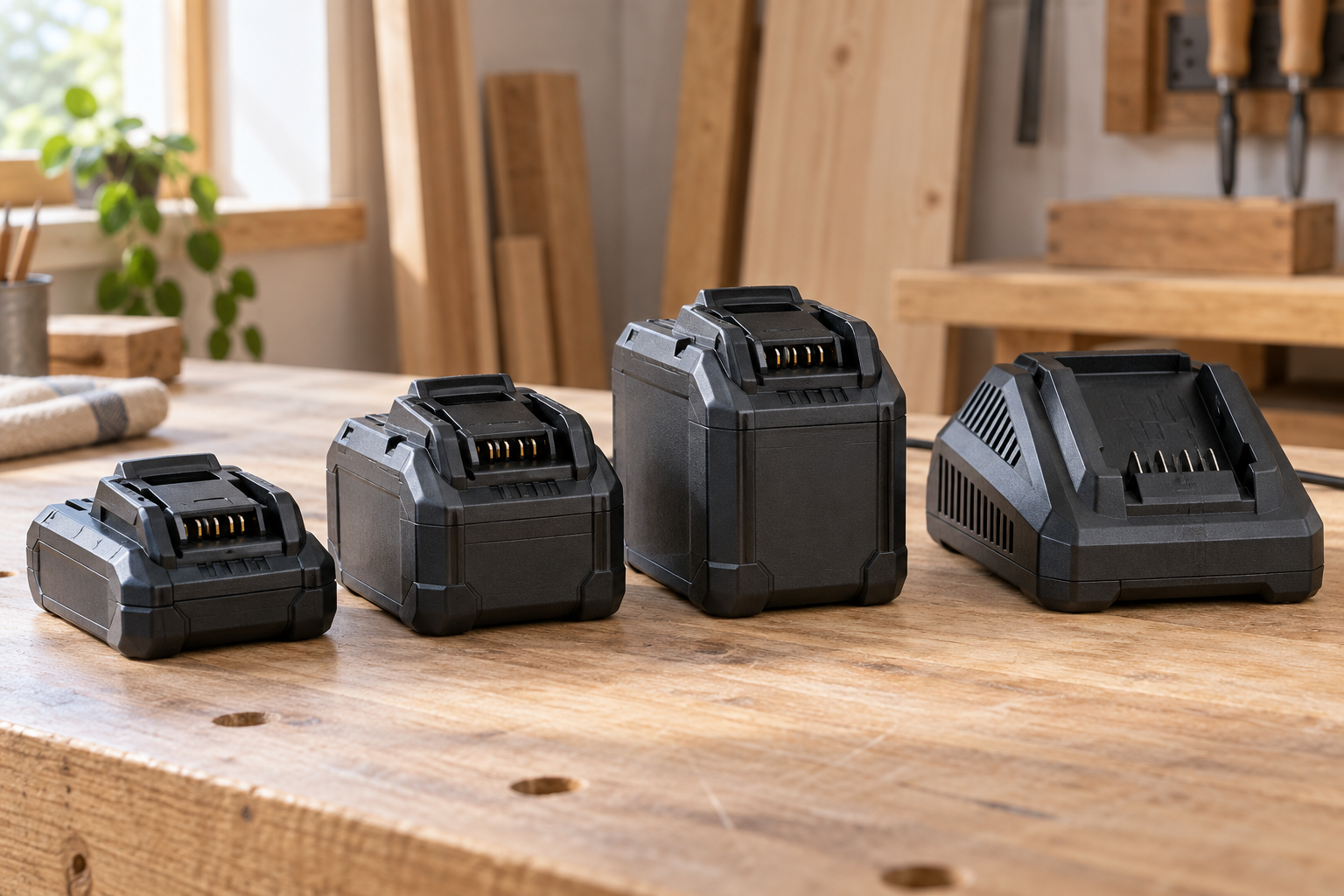
A Kobalt 24V 2.0Ah battery is lighter and usually enough for ordinary drilling, small assembly jobs, and occasional impact-driver use. A 4.0Ah pack stores roughly twice the energy, so it can run the same tool longer under similar conditions. It does not make the tool twice as powerful, and it will not always deliver exactly twice the runtime: workload, battery condition, temperature, and tool design all matter.
Choose 2.0Ah if you value a compact, light tool and can recharge between jobs. Choose 4.0Ah for repeated fastening, larger holes, or a workday where stopping to charge is inconvenient. If you own only one battery and regularly use both a drill and an impact driver, the 4.0Ah pack is generally the more practical starting point.
As an Amazon Associate we earn from qualifying purchases at no extra cost to you.


What the Ah rating means for runtime
Amp-hours (Ah) describe battery capacity, not the tool’s power setting. Both packs belong to Kobalt’s 24V system; the 4.0Ah version has about twice the stated capacity of the 2.0Ah version. At the same voltage, that also means roughly twice the stored energy. Real runtime rarely doubles neatly because a tool’s load changes from moment to moment, and batteries can cut out before all their rated capacity is usable.
Light work such as driving small screws draws much less current than boring large holes or driving long structural screws. A 2.0Ah battery may feel surprisingly capable when the drill spends most of its time idle between holes. Under sustained heavy load, it empties sooner and may warm up more. A 4.0Ah pack gives you more working time before a swap, but adds weight and bulk at the handle.
For a rough planning example, if a particular job uses half of a healthy 4.0Ah pack, a 2.0Ah pack might complete about half as much work under comparable conditions. Treat that as a capacity-based estimate, not a promise of a specific number of holes or screws. Bit size, material, clutch setting, speed, and technique can change consumption substantially.
Kobalt 24V 2.0Ah vs. 4.0Ah
| Factor | 2.0Ah pack | 4.0Ah pack |
|---|---|---|
| Stated capacity | 2.0Ah | 4.0Ah, about twice the capacity |
| Weight and size | Generally lighter and more compact | Generally heavier and bulkier |
| Runtime on the same task | Shorter; convenient for light or brief jobs | Longer; fewer battery changes during sustained work |
| Best fit | Overhead work, occasional repairs, compact setup | Repeated drilling, long fastening sessions, fewer interruptions |
| Main trade-off | More frequent charging or swapping | More weight in hand and a higher purchase cost in many bundles |
Pack weight and dimensions can vary by exact battery version, so check the listing or product label before buying if a small change in balance matters. A larger battery can make a drill feel more stable when working low or near the ground, but it can tire your wrist faster when drilling overhead or holding the tool at arm’s length.
How the choice affects a drill
For pilot holes, cabinet hardware, and occasional holes in softwood, the 2.0Ah battery is often adequate. The lighter pack is useful when the drill is above shoulder height or when the job involves many short bursts. If you are driving a few dozen small screws around the house, swapping packs may never be an issue.
For larger twist bits, repeated holes in framing lumber, or mixing tasks that keep the drill working for long stretches, the 4.0Ah pack is the safer choice. A low battery can interrupt a hole partway through, which is frustrating and can leave a bit hot or stuck. If the drill slows noticeably, stop and check the battery, bit, and material rather than forcing the tool. A sharp bit, the correct speed, and steady pressure often save more runtime than changing batteries alone.
If you mainly do light repairs, look for a Kobalt 24V 2.0Ah battery when you need a spare without adding much weight. Check that the battery is explicitly listed for the Kobalt 24V platform and that the seller identifies the capacity you want.
How the choice affects an impact driver
Impact drivers can use battery capacity quickly when driving long screws, lag screws, or fasteners into dense material. Their repeated impacts make sustained fastening a better case for the 4.0Ah pack than a few short screws do. A 2.0Ah battery is still reasonable for assembling furniture, installing small hardware, and keeping the tool light for overhead work.
Battery size is not a fix for using the wrong fastener or bit. If the driver struggles, check that the bit fits snugly, the fastener is suitable for the material, and the tool is not being pushed beyond its intended job. For large holes, a drill is often the better tool. For repeated long screws, a 4.0Ah pack usually means fewer pauses, but it will not prevent a bit from camming out or a fastener from snapping.
For regular framing or deck work, consider a Kobalt 24V 4.0Ah battery. It is the more useful choice when runtime matters more than minimum tool weight. Compare the battery-only price with kits that include a charger, especially if you do not already have a compatible charger.
Charging, heat, and battery care
A larger pack takes longer to recharge in many charging setups, though the actual time depends on the charger and the battery’s temperature and condition. If continuous work matters, keeping a second compatible battery charged can be more useful than relying on one larger pack. A 2.0Ah and a 4.0Ah battery can also serve different roles: use the small one for overhead tasks and the larger one for demanding work.
Let a hot battery cool before charging, and do not leave a pack in a hot vehicle or in freezing conditions. Repeated heavy use can trigger a thermal or low-voltage cutoff. That protection is a warning to pause or change packs, not a reason to keep restarting the tool. Over time, aging reduces usable runtime, so an old 4.0Ah pack may no longer outperform a newer pack by the full expected margin.
Which one should you buy?
Buy the 2.0Ah pack if your work is occasional, your drilling is mostly light, or low weight is a priority. It is the sensible cheaper option when charging is easy and a short pause will not disrupt the job.
Buy the 4.0Ah pack if you drive many fasteners, drill larger holes, or want fewer battery changes during a long session. If you can afford only one battery and do not mind the extra weight, it is usually the more versatile choice. For frequent tool use, owning one of each gives you the best balance: the 2.0Ah for compact handling and the 4.0Ah for jobs that keep the tool working.
FAQ
Which one should you buy?
Related guides
- Longest Lasting Lawn Mower Battery: AGM vs Lithium vs Flooded Lifespan and Cost per Season
- Duralast Gold Lawn Mower Battery Review: U1 Fit, CCA and When to Pay for AGM
- Greenworks Pro 80V 21-Inch Mower Review: Runtime Math, Push vs Self-Propelled and Yard Fit
- Bosch High Pressure Washer Gun Replacement: Fittings, Adapters and What Fits Your Model