
What's inside
As an Amazon Associate I earn from qualifying purchases. This post may contain affiliate links at no extra cost to you.
The Ridgid R86093 and R86092 are both 18V chargers for Ridgid’s cordless tool batteries, but they are not interchangeable in speed or features. The key buying question is how often you need a battery back in service: the R86093 is the faster, more capable choice, while the R86092 is adequate for occasional use and slower-paced work.
As an Amazon Associate we earn from qualifying purchases at no extra cost to you.

Quick comparison
| Feature | Ridgid R86093 | Ridgid R86092 |
|---|---|---|
| Charger type | 18V sequential charger | 18V standard charger |
| Charging slots | Two | One |
| Battery charging | Charges two batteries in sequence, not at the same time | Charges one battery |
| Cooling fan | Yes | No |
| Best fit | Users who rotate multiple batteries or want faster charging | Occasional use, backup charging, or a single-battery setup |
Charging times depend on the battery’s capacity, temperature, and condition. The R86093’s fan and higher-output design can shorten charge time versus the R86092, but neither charger makes every 18V pack charge at one fixed rate. Check the battery and charger labels or current Ridgid documentation for a confirmed time for your specific pack.
How the charging systems differ
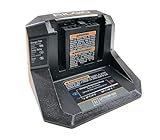
The R86092 is a basic single-bay charger: connect one compatible Ridgid 18V battery, wait for the indicator to show that charging is complete, then swap packs. It is a straightforward choice for a homeowner who uses a drill or impact driver now and then and can leave a battery charging between jobs.
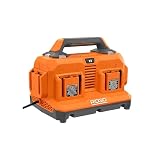
The R86093 has two bays and charges batteries sequentially. That distinction matters: it does not charge two batteries simultaneously. Instead, it handles one pack and then moves to the next, so you can load both and avoid returning to the charger to start a second charge. Its cooling fan helps manage battery temperature during charging, a useful feature when packs have been worked hard or are being turned around quickly.
A two-bay charger is not automatically twice as fast. If you have only one battery, the second slot does nothing for your immediate turnaround. If you have two packs, the R86093 can keep the queue moving with less attention, but the total time still depends on the batteries’ capacity and charging conditions.
Choose by workload, not by slot count
For occasional drilling, assembly, or small repairs, the R86092 is usually enough. Put a battery on charge after the job and keep a second pack as a spare if downtime would be inconvenient. It is also a sensible backup charger for a garage or workshop where charging speed is not critical.
For repeated cutting, fastening, or drilling through a workday, the R86093 is the better fit. A fan and sequential two-bay setup help when you are cycling through multiple packs. The practical benefit is less time spent managing batteries—not a guarantee that every pack will be ready at a particular minute.
Battery size changes the equation. A compact pack generally needs less time to recharge than a high-capacity pack, while a heavily used or warm battery may take longer. If your tools regularly drain large packs, adding another battery can make more difference to uninterrupted work than replacing a functioning charger. Compare Ridgid 18V battery chargers and Ridgid 18V batteries against your current setup before spending more.
Compatibility and safe use
Both chargers are intended for compatible Ridgid 18V batteries. Confirm the voltage and battery platform on the pack before plugging it in; a similar-looking battery from another brand is not a substitute. If buying used, check that the charger’s contacts are clean, the cord is undamaged, and the indicator lights work normally.
Do not try to charge a pack that is extremely hot from use or has visible damage. Let a hot battery cool in a dry, ventilated place first. If a charger repeatedly reports an error, stops charging, or the battery becomes unusually hot, remove it and inspect the pack rather than repeatedly restarting the cycle. Dust on contacts can also interrupt charging, so wipe them with a dry cloth; avoid liquids and metal tools around the terminals.
Keep the charger on a firm surface with room for airflow. The R86093’s fan needs unobstructed ventilation, and a charger buried under sawdust or packed into a closed cabinet can run hotter than intended. The R86092 has no fan, but it still should not be covered while charging.
Which one should you buy?
Choose the R86092 if you charge one battery at a time, use your tools intermittently, and are comfortable waiting. It is the cheaper option in many listings, and paying extra for a fan and second bay does not help much when a pack can sit on the charger overnight.
Choose the R86093 if you own several batteries, regularly work through them, or want to load two packs without coming back to start another charge. It is the more convenient choice for a busy shop, but remember that sequential charging is not simultaneous charging.
If you are building out a Ridgid kit, consider the full system cost: charger, battery count, and the tools you actually use. A charger upgrade is worthwhile when charging is the bottleneck. Otherwise, the R86092 remains a practical way to keep a basic 18V setup ready without paying for features you may rarely use.
FAQ
Which one should you buy?
Related guides
- Longest Lasting Lawn Mower Battery: AGM vs Lithium vs Flooded Lifespan and Cost per Season
- Duralast Gold Lawn Mower Battery Review: U1 Fit, CCA and When to Pay for AGM
- Greenworks Pro 80V 21-Inch Mower Review: Runtime Math, Push vs Self-Propelled and Yard Fit
- Bosch High Pressure Washer Gun Replacement: Fittings, Adapters and What Fits Your Model