What's inside
As an Amazon Associate I earn from qualifying purchases. This post may contain affiliate links at no extra cost to you.
For occasional DIY, the best cordless platform is usually the one that makes your next two or three jobs affordable—not the one with the most tools or the biggest battery. Start with the work you expect to do, compare the cost of a starter kit and bare tools, then check battery availability and charger details. A large ecosystem is useful only if you’ll actually buy more tools.
Start with the jobs, not the brand
List the jobs you expect to tackle over the next few years: hanging shelves, assembling furniture, drilling masonry, cutting branches, or building a deck. A drill-driver and an impact driver cover many household tasks, but they are not interchangeable. A drill-driver is more controllable for small holes and screws; an impact driver drives long screws with less wrist-twisting, but can snap small fasteners or damage soft material if you lean on the trigger.
For basic repairs, a cordless drill-driver kit is a sensible starting point. If you expect to drive many long screws, compare a drill-and-impact combo kit—but don’t pay for the second tool just because it is bundled. For occasional use, a corded circular saw or shop vacuum may be cheaper and more practical than expanding the battery platform.
Compare the real cost of getting started
Kit prices vary with sales, but compare like with like: number and size of batteries, charger type, and whether the tools are brushed or brushless. A low-priced bare tool is not a bargain if you still need a battery and charger. Conversely, if you already own compatible batteries, a bare tool can make sense.
| Option | What you pay for | Best fit | Trade-off |
|---|---|---|---|
| One-tool kit | Tool, battery, charger; sometimes a case | A single expected job or a cautious first purchase | May cost more per tool if you later add several |
| Two-tool combo kit | Two common tools, usually batteries and charger | Regular drilling and screw-driving | Bundled tools may be less useful than their price suggests |
| Bare tool | Tool only | Adding to a platform you already own | Requires a compatible battery and charger |
| Corded tool | Tool and access to an outlet | Infrequent work in one place, especially high-demand tasks | Cord limits reach and requires an outlet or extension cord |
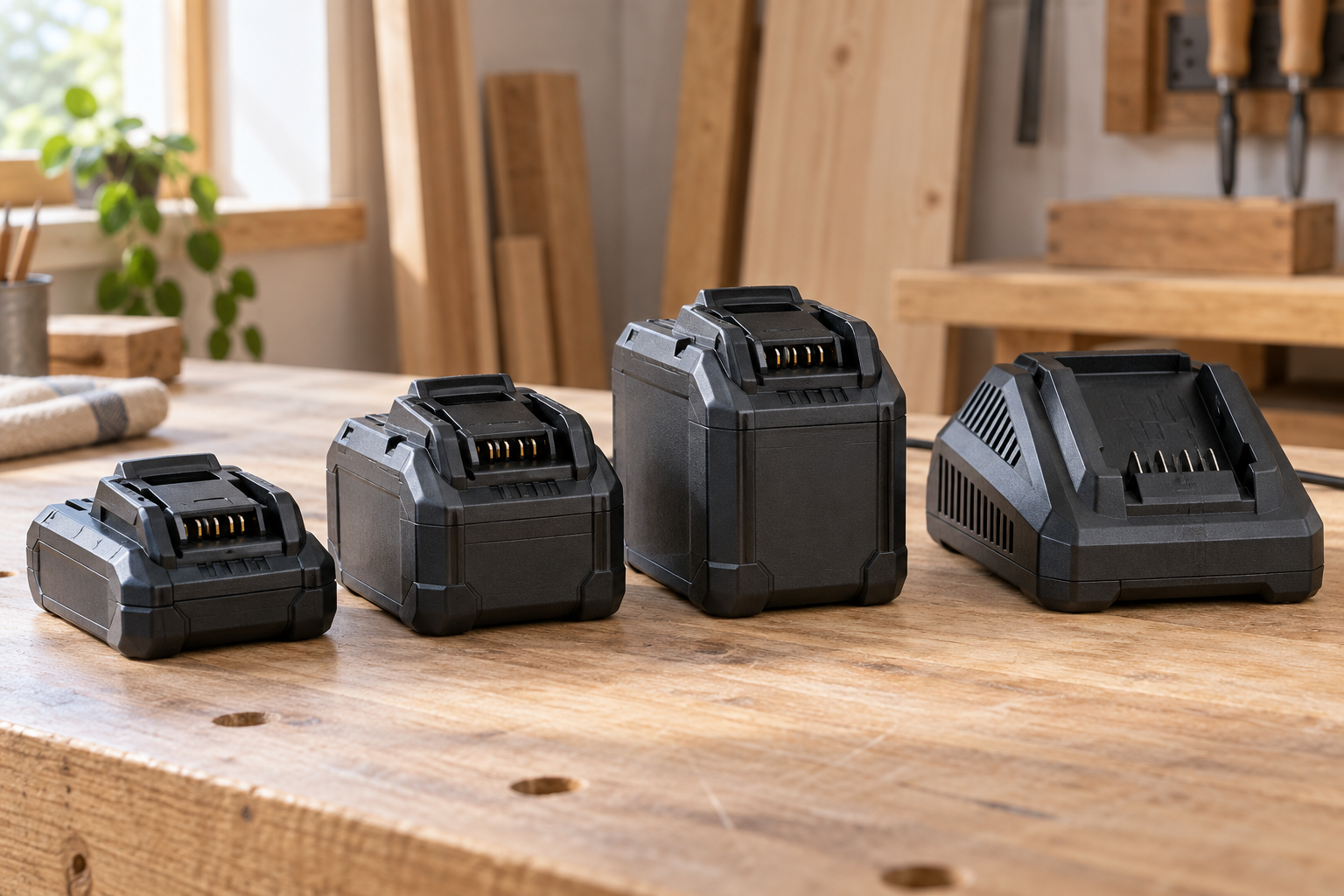
Check what the kit actually includes. Two batteries are convenient if you work continuously, but one battery can be enough for a weekend project if you can pause while it charges. A compact battery is lighter for overhead work; a higher-capacity one generally runs longer but adds weight. Capacity is commonly listed in amp-hours (Ah): a 2.0 Ah battery has about half the rated capacity of a 4.0 Ah battery at the same voltage, though real runtime depends on the tool and task.
Understand voltage and battery fit
Voltage classes help distinguish tool families, but they do not tell you everything about performance. A higher-voltage tool is not automatically the right choice for occasional use. Within a platform, batteries may differ in capacity, size, and output, and some tools need a higher-output pack to deliver their rated performance.
Do not assume batteries fit across brands—or even across every product line from one brand. Verify the exact platform and battery compatibility in the manufacturer’s product information before buying. Adapters exist, but they can add bulk, may not support every feature, and can complicate warranty or safety support. They are a poor basis for choosing your first platform.
For routine DIY, one 2.0–4.0 Ah pack is often a manageable balance of runtime and weight. Bigger batteries are helpful for demanding cutting or yard tools, but can make a drill awkward. A spare pack is useful if a project must keep moving; it is unnecessary if you can work in stages and charge between sessions.
Check the charger and plan for storage
Charging time matters less when you use a tool once a month, but it matters if a drained battery could stall a day’s work. Compare the supplied charger’s stated charge times for the included battery, not just a general “fast charger” label. A simple charger is adequate for light use; paying extra for rapid charging is hard to justify if the battery will sit unused most of the time.
Store batteries indoors, dry, and away from direct heat. Follow the manufacturer’s instructions for long-term storage and charging; don’t leave packs in a hot car or use one that is cracked, swollen, wet, or unusually hot. If a battery repeatedly stops working, check its charge level and temperature first: protection circuitry may shut it down when it is too hot, too cold, or deeply discharged. Let it return to a normal temperature before charging, and replace a damaged pack rather than trying to repair it.
Choose an ecosystem you can sensibly expand
Search the brand’s current range for the tools you are likely to need, not every tool it makes. Look for a useful spread—such as a drill, impact driver, light, and perhaps a saw—and check that replacement batteries and chargers are readily sold. A broad platform offers flexibility, but an occasional user may never recover the higher upfront cost of a premium line.
Pay attention to warranty terms, service access, and whether the product is sold through retailers you can return to. Keep the receipt and note the battery platform name. If you later add a cordless impact driver bare tool, confirm it accepts the batteries you already own and compare its price with a kit on sale. A sale kit can sometimes be cheaper than the bare tool, but only if the extra battery or charger is useful.
Make the decision with a simple test
Price the smallest setup that can do your next real job: tool, battery, charger, and any bits or blades you’ll need. Then price the next tool you realistically expect to buy. If the same platform keeps both costs reasonable and offers a comfortable battery for the work, it is a good fit. If your second tool is unlikely—or would be used only once—buy the first tool that suits the job, even if it means choosing a different power source.
For occasional DIY, a modest starter kit is often the best value. Spend more only for a clear reason: a tool you will use often, batteries that improve runtime, or a platform with practical tools you expect to add. The aim is a dependable setup, not a collection of batteries waiting for projects.
Related guides
- Longest Lasting Lawn Mower Battery: AGM vs Lithium vs Flooded Lifespan and Cost per Season
- Duralast Gold Lawn Mower Battery Review: U1 Fit, CCA and When to Pay for AGM
- Greenworks Pro 80V 21-Inch Mower Review: Runtime Math, Push vs Self-Propelled and Yard Fit
- Bosch High Pressure Washer Gun Replacement: Fittings, Adapters and What Fits Your Model