What's inside
As an Amazon Associate I earn from qualifying purchases. This post may contain affiliate links at no extra cost to you.
Choosing the right saw
For threaded rod, strut and electrical conduit, a cordless portable band saw is usually the best all-around choice. Its narrow blade cuts through metal without the broad shower of sparks and abrasive dust produced by a cut-off wheel. A compact model is easier to maneuver overhead or in a crowded panel, while a full-size portable band saw is steadier on larger stock and generally cuts faster.
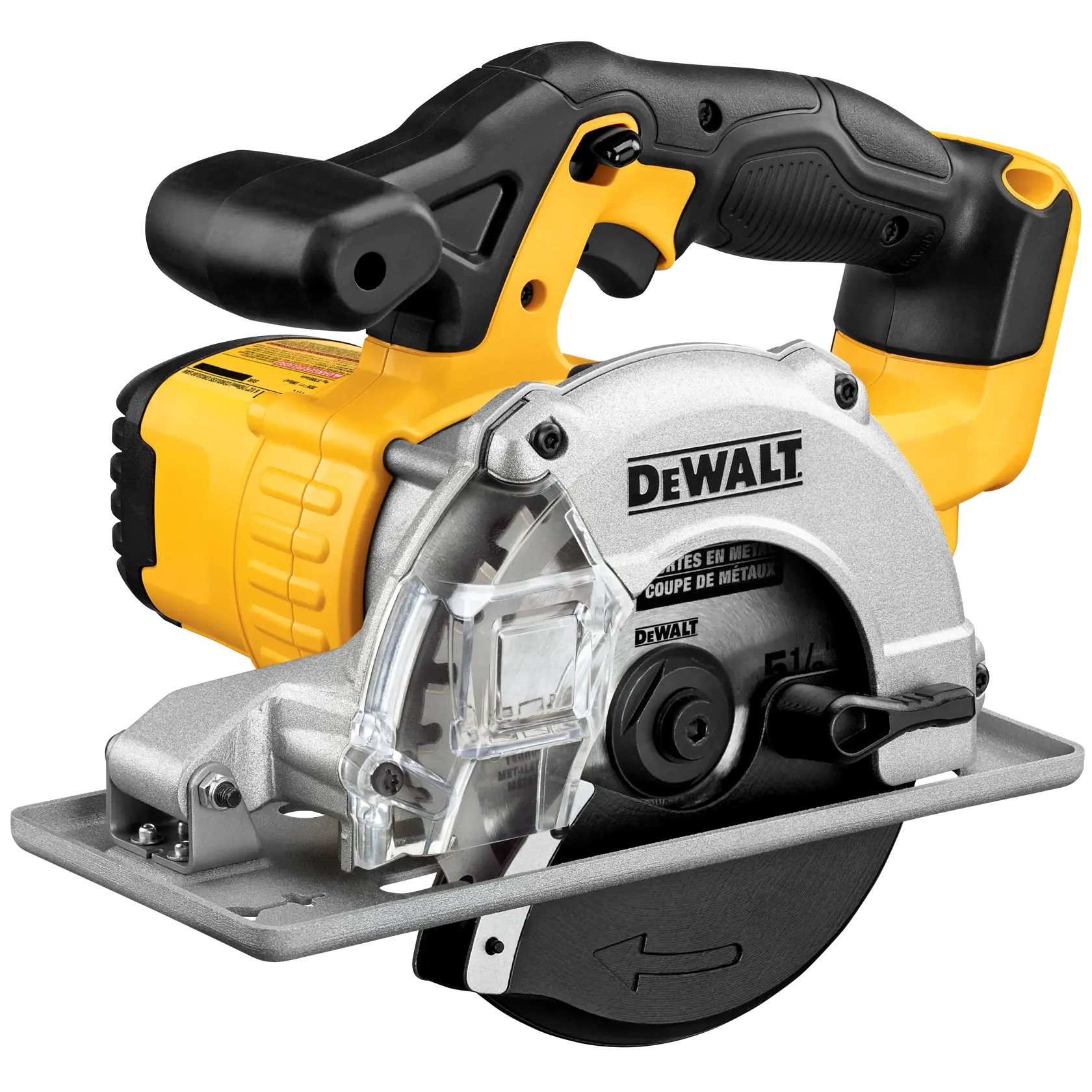
A cordless metal-cutting circular saw can be quicker on straight cuts, especially in conduit, but it is less forgiving: the work must be held securely, the blade guard needs room to move, and the blade throws hot chips. An angle grinder with a cut-off wheel is the low-cost option for occasional cuts, but expect more sparks, noise and cleanup. Choose based on the material you actually cut, how often you cut it, and which battery platform you already own.
As an Amazon Associate we earn from qualifying purchases at no extra cost to you.



Quick comparison
| Saw type | Best for | Main trade-off |
|---|---|---|
| Compact portable band saw | Threaded rod, small conduit and work in tight spaces | Slower on thick stock; cutting capacity is limited |
| Full-size portable band saw | Frequent cutting of larger conduit, pipe and strut | Heavier and harder to use overhead |
| Metal-cutting circular saw | Fast, straight cuts in securely supported material | Hot chips, blade cost and less access in cramped spots |
| Angle grinder | Infrequent cuts or jobs where a saw is not justified | Sparks, burrs, noise and more cleanup |
Band-saw size and cutting capacity
For common electrical work, a compact band saw is often enough for threaded rod up to 3/8 inch and standard small conduit. Check the tool’s published cutting capacity rather than judging by the blade length or the words “compact” and “deep cut.” Capacity varies, and some compact saws will not accept the stock size you need to cut in one pass. For larger conduit, pipe or stacked material, look for a full-size portable saw with a capacity that clears the widest piece you plan to cut.
Compact saws are easier to carry up a ladder and can make controlled cuts in overhead work, but forcing one through stock at its limit can bog down the blade and shorten blade life. Full-size saws offer more room and are less cramped against a bundle, yet their extra weight matters during repetitive overhead cutting. If most of your work is 1/2- and 3/4-inch conduit, buying the biggest saw available may add bulk without improving the job.
Compare cordless compact portable band saws by capacity, weight and blade availability, not just by bare-tool price.
Blade speed, teeth and cut quality
Threaded rod and thin-wall conduit need a blade suited to metal, not a wood blade. A fine-tooth metal blade reduces tooth snagging on thin material; a coarse blade can cut faster through thicker stock but may chatter or strip teeth on thin-wall conduit. Follow the saw maker’s blade recommendations, and keep a spare blade on hand if you cut regularly. A dull blade tends to cut slowly, wander and heat the work rather than simply becoming less convenient.
Variable speed is useful when switching between thin conduit and heavier stock, but it does not make poor technique safe. Let the blade do the work: push steadily without leaning hard on the saw. Excess pressure can twist the blade, cause a crooked cut or stall the tool. With a circular saw, use the specified metal-cutting blade and keep the shoe flat against the work; an abrasive wheel is not a substitute for a toothed metal-cutting blade.
Battery platform and runtime
If you already own cordless tools, staying on that battery platform is usually the practical choice. A bare tool costs less than a kit, and a battery you own can be moved between a saw, drill and impact driver. But match battery size to the job. A small, light battery helps on a compact saw used overhead; a higher-capacity pack can maintain output longer during repeated cuts, at the cost of more weight.
Runtime depends on material, blade condition, cutting pressure and battery temperature. There is no reliable universal cuts-per-charge figure. Cutting clean, supported conduit with a sharp blade is very different from sawing thick steel all day. If you are buying into a new platform, compare the cost of the saw, a suitable battery and charger, plus the other cordless tools you may want later. Browse bare-tool portable band saw options only after confirming that your existing batteries fit.
Cutting safely and cleanly
Secure the work before starting. Threaded rod can spin or whip if it is held loosely, and thin conduit can collapse under a clamp that is overtightened. Support the piece close to the cut, but keep the clamp clear of the blade path. Mark the cut, hold the saw square, and wait for the blade to stop before setting the tool down. Wear eye protection; band saws can still shed chips, and circular saws and grinders can throw hot debris. Keep sparks away from flammable material, wiring and finished surfaces.
Cutting threaded rod leaves a burr that can make a nut difficult to start. Deburr the end with a file or suitable tool, then check that the nut runs freely before installation. On conduit, remove sharp edges inside and outside the cut so they do not damage conductors or hands. A band saw generally leaves less abrasive dust than a grinder, but it does not eliminate cleanup.
When a cheaper tool is enough
If you make only a few cuts a year, a corded saw or an angle grinder you already own may be more sensible than buying into another battery ecosystem. A grinder is inexpensive and can handle awkward cuts, but it is loud, produces sparks and usually leaves more burr to remove. For repeated conduit and rod cuts, a band saw is easier to control and creates a cleaner work area. For straight cuts in well-supported stock where speed matters most, a metal-cutting circular saw can be the better fit.
Before buying, check capacity, bare-tool versus kit pricing, battery compatibility, blade cost and whether the saw can reach the stock in the spaces where you work. The best cordless metal saw is the one that fits the material and access you have—not necessarily the largest or fastest tool.
Related guides
- Longest Lasting Lawn Mower Battery: AGM vs Lithium vs Flooded Lifespan and Cost per Season
- Duralast Gold Lawn Mower Battery Review: U1 Fit, CCA and When to Pay for AGM
- Greenworks Pro 80V 21-Inch Mower Review: Runtime Math, Push vs Self-Propelled and Yard Fit
- Bosch High Pressure Washer Gun Replacement: Fittings, Adapters and What Fits Your Model