What's inside
As an Amazon Associate I earn from qualifying purchases. This post may contain affiliate links at no extra cost to you.
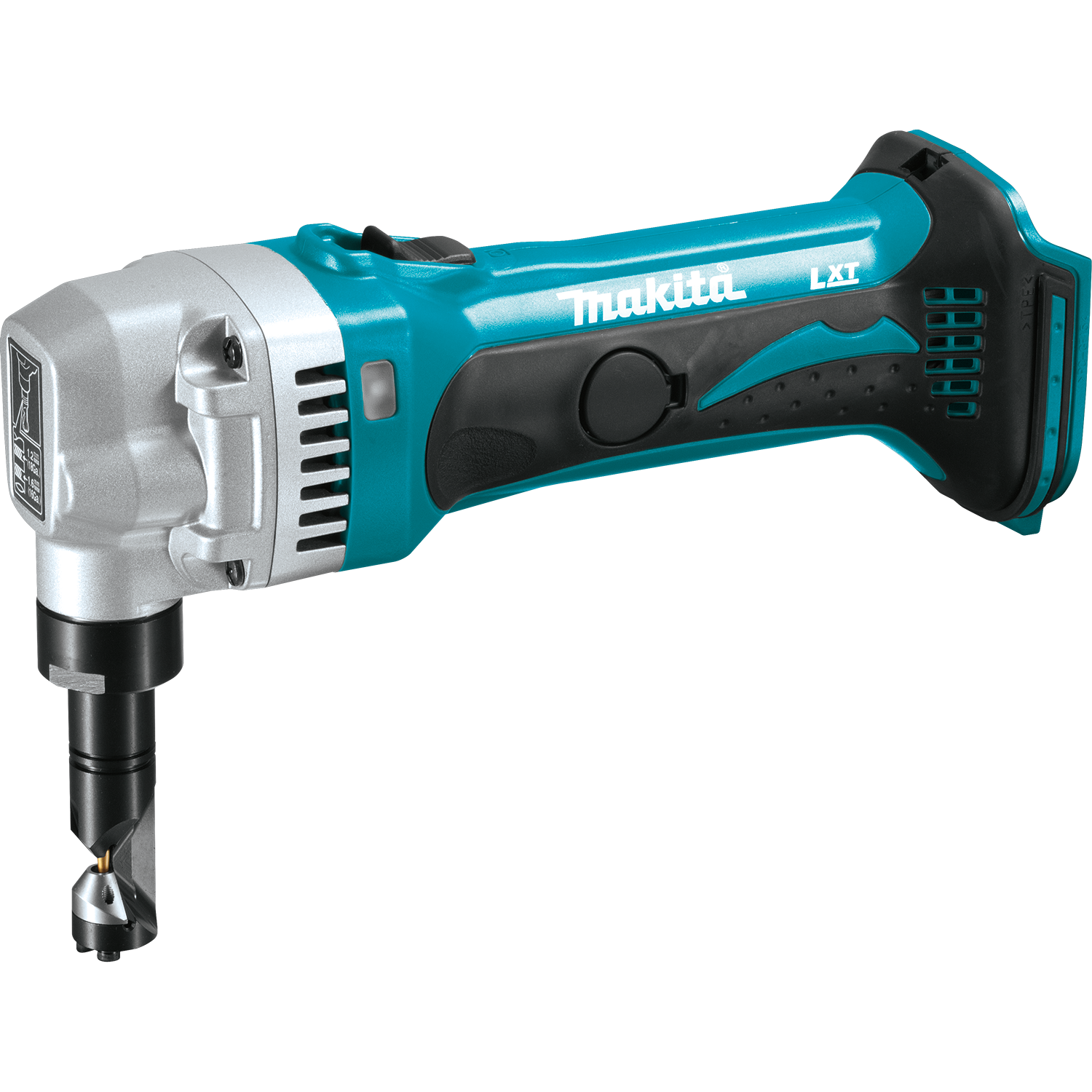
A cordless nibbler is useful when a cut has to follow a curve, dodge an obstruction or stay inside a sheet rather than start at an edge. It removes small bites of metal instead of grinding away a continuous slot. That keeps the sheet relatively cool and makes tight curves easier to control, but the tool leaves a narrow strip of scrap and can be slower than shears on long straight cuts.
For occasional ductwork, flashing and thin panels, a corded tool or hand snips may be the better buy. Go cordless when you already own compatible batteries, work away from an outlet, or make enough cuts that managing a cord gets in the way.
As an Amazon Associate we earn from qualifying purchases at no extra cost to you.

What to buy for curved cuts
For most buyers, the practical choice is a cordless sheet-metal nibbler from a battery platform they already use. Check the tool’s rated capacity for the material you actually cut—not just the maximum capacity printed in a listing. Capacity varies by metal type, and a rating for mild steel does not mean the same thickness is appropriate for stainless steel.
Compare head shape and die orientation, too. A compact head is easier to steer through a tight radius or around a flange. A rotating head can help keep the battery and handle clear of the work, but it does not make every cut easier: you still need to see the cutting line and control the tool without twisting your wrist. If your curves are broad and you also need long straight cuts, consider a cordless shear instead. It typically wastes less material and may be quicker on straight runs, but it is less suited to small-radius curves.
| Option | Best use | Trade-off |
|---|---|---|
| Cordless nibbler | Curves, cutouts and work away from an outlet | Leaves chips and uses a narrow cutting path |
| Cordless shear | Long straight cuts and broad curves | Less maneuverable around tight curves and corners |
| Hand snips | Short cuts in thin sheet and occasional repairs | Slow and tiring over longer cuts |
| Corded nibbler | Frequent cuts near reliable power | Cord can snag or restrict movement |
Battery platform matters
A nibbler can draw power continuously while cutting, so battery choice affects both runtime and handling. A compact battery makes the tool lighter and easier to steer, particularly when working overhead. A larger pack may provide more cutting time, but its extra weight can make a tight curve harder to follow. If the manufacturer specifies a minimum battery size or recommends a particular pack for full performance, follow that guidance.
Check whether the tool is sold bare or with batteries and a charger. A bare tool is usually the sensible price if you already have compatible packs; it is not a bargain if you need to buy into a new platform. Confirm compatibility by voltage and platform, not brand alone. Batteries from different voltage families or generations may not fit, and adapters can affect fit, balance or warranty coverage. If you need a starter set, compare a nibbler kit with battery and charger against buying the tool and pack separately.
For intermittent home use, an existing mid-size pack is often enough. For repeated cuts through thicker material, bring a spare and avoid pushing the tool beyond its rated capacity. A slowing motor, rough cutting or a battery that gets unusually hot is a reason to stop and check the material rating, blade condition and battery—not to force the cut.
Cut quality, clearance and waste
A nibbler does not produce a finished edge. The punch and die make a series of small cuts, leaving a burr that may need filing or deburring. It also ejects small metal slugs. Those chips can travel farther than expected, collect inside the work area or scratch a finished surface. Wear eye protection, secure the sheet, and keep chips away from moving parts and people. Do not cut while holding a loose panel in your hand.
Allow room for the tool’s cutting head and for the scrap strip to move. A curved line close to a folded edge, rib or frame may be impossible to follow if the head cannot sit flat. Before cutting, check both sides of the sheet for wires, insulation, fasteners and anything the punch might hit. Mark the curve clearly and, if the panel is costly or visible, test the setup on offcut material of the same thickness.
For an internal cutout, check how the manufacturer says to start the cut. Some nibblers require a drilled entry hole large enough to accept the head; others use a different procedure. Do not assume a small pilot hole is enough. The required entry size depends on the tool. A poor entry can damage the panel or jam the punch.
Choose by the job, not the maximum rating
For thin flashing or occasional duct alterations, hand snips are cheaper, quieter and easier to set up. If the cut is short, saving a few minutes may not justify buying a powered tool. For regular curved cutouts in sheet metal, a nibbler is easier to steer and places less heat into the edge than an abrasive wheel. For long straight cuts, a shear is usually the cleaner, faster tool. A cordless metal shear is worth comparing if straight runs make up most of your work.
Before buying, verify the cutting capacity for your metal, the entry method for internal cuts, head access around your typical panels, and compatibility with your batteries. Also check replacement-punch and die availability: these are wear parts, and a bargain tool becomes frustrating if a damaged or dull set is hard to replace. For occasional work, a compatible bare tool and a fresh cutting set can be a better value than paying extra for a kit you do not need.
Related guides
- Longest Lasting Lawn Mower Battery: AGM vs Lithium vs Flooded Lifespan and Cost per Season
- Duralast Gold Lawn Mower Battery Review: U1 Fit, CCA and When to Pay for AGM
- Greenworks Pro 80V 21-Inch Mower Review: Runtime Math, Push vs Self-Propelled and Yard Fit
- Bosch High Pressure Washer Gun Replacement: Fittings, Adapters and What Fits Your Model