What's inside
As an Amazon Associate I earn from qualifying purchases. This post may contain affiliate links at no extra cost to you.
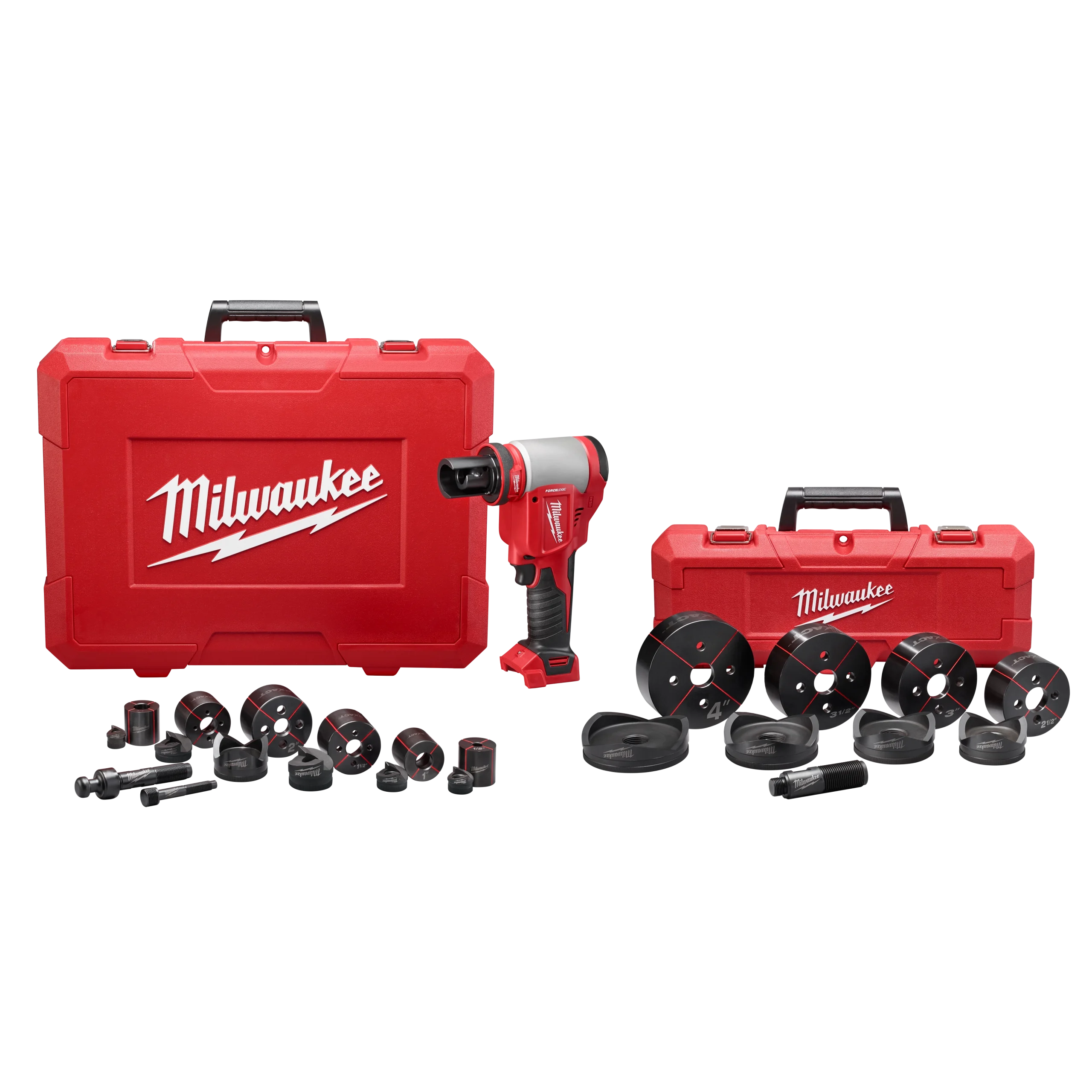
A cordless knockout tool is worth buying when conduit holes are frequent, large, or awkward to reach. For occasional holes in thin steel, a manual draw stud and ratchet cost less and need no charged battery. For repeated work, a battery-powered hydraulic tool can pull a punch through without the long hand effort—and usually makes a cleaner, more consistent opening.
The main buying decision is not just brand. Match the tool’s capacity to the punch sizes and enclosure materials you actually use, then consider whether its battery platform fits the rest of your kit.
As an Amazon Associate we earn from qualifying purchases at no extra cost to you.

How cordless knockout tools work
A cordless hydraulic knockout tool drives a draw stud through a matching punch and die. The punch cuts the hole as the tool pulls the stud. Most kits use interchangeable dies and punches, while some compact tools are designed around a specific range of sizes or accessories.
Capacity varies by tool and material. Check the manufacturer’s stated maximum for the material you plan to cut; a rating for mild steel does not automatically apply to stainless steel. Common trade sizes include 1/2-inch through 2-inch conduit openings, but the actual hole diameter is larger than the conduit’s nominal trade size. Confirm the punch size chart before ordering: confusing trade size with hole diameter is an easy way to buy the wrong punch.
Before cutting, check the enclosure layout and keep the die square against the panel. A tilted punch can bind, damage the work, or load the tool unevenly. Remove burrs after punching, and use the correct punch-and-die pairing rather than mixing components that merely appear to fit.
What to compare before buying
| Factor | What to check | Why it matters |
|---|---|---|
| Capacity | Maximum hole size, material type, and thickness | Capacity limits differ; stainless steel may require more force than mild steel. |
| Kit contents | Punches, dies, draw studs, adapters, case, and battery | A bare tool can look inexpensive but cost more once the missing parts are added. |
| Battery platform | Voltage, compatible battery family, and charger availability | Using batteries you already own can reduce the real purchase cost. |
| Access and handling | Tool head size, weight, balance, and operating clearance | A large tool may be difficult to position inside a crowded cabinet. |
| Service support | Warranty, repair access, and replacement parts | Hydraulic tools are specialized equipment; downtime matters on a job. |
Which type makes sense
For frequent commercial work: Choose a full-size cordless hydraulic tool with capacity that covers your largest routine punch and the materials you encounter. A complete kit is often the sensible starting point if you do not already own compatible punches and draw studs. Compare cordless hydraulic knockout tool kits by included components and published material ratings, not just the tool’s headline capacity.
For occasional work or tight budgets: A manual ratchet knockout set is often fine for a few holes in thinner mild-steel enclosures. It is slower and takes more effort, especially on larger openings, but avoids the cost of a dedicated battery tool. Look for a set with the hole sizes you need, compatible draw studs, and a case that keeps the dies together. A manual ratchet knockout set can be a better buy than a cordless kit that will spend most of its life on a shelf.
For work where access is the main problem: Consider a compact cordless model only after checking its maximum punch size and material rating. Smaller head dimensions can help around existing components, but compact tools may give up capacity or require separate accessories. Compare compact cordless knockout tools against the actual enclosure clearance—not a product photo taken outside the cabinet.
Choose the battery platform carefully
If you already own cordless tools, staying on that battery platform can make a premium knockout tool easier to justify. But do not assume that a familiar brand name means every battery fits every tool. Verify the exact battery family and voltage specified by the tool manufacturer. A battery adapter is not a substitute for confirmed compatibility, particularly on a high-load hydraulic tool.
Check whether the listed price includes a battery and charger. A bare tool may be the better deal for someone with several compatible packs; for a new platform, add the cost of at least one suitable battery and charger before comparing prices. Battery runtime is usually less important than having a charged pack available when the tool is needed, but cold storage, old batteries, and a small low-capacity pack can reduce performance. Keep a second compatible battery charged if the tool is part of daily production.
Common buying and job-site mistakes
Buying by maximum size alone: Maximum capacity does not tell you whether the tool can punch your material at that size. Confirm both figures in the documentation. If the rating stops short of your regular work, do not count on forcing it through; an undersized tool can stall, and the punch or stud may be damaged.
Forgetting the full accessory cost: A tool-only package may not include the dies, punches, draw studs, or adapters needed for your holes. Make a list of the sizes you use, then compare complete setups. Also check whether existing punches are compatible rather than assuming all brands use interchangeable hardware.
Skipping layout and cleanup: Measure carefully, account for nearby knockouts and internal parts, and support the panel as needed. A punch does not correct a misplaced mark. After cutting, inspect the edge for burrs and remove them before fitting conduit or wiring; a sharp edge can damage conductors and compromise the installation.
Make the purchase fit the workload
Buy cordless hydraulic capacity when repeated holes, larger punches, or reduced hand effort will save meaningful time. Choose a kit that covers your real materials and sizes, and favor a battery platform you can support with batteries and charging equipment already on hand. If you only make a few holes in thin enclosures, a manual set is a reasonable, lower-cost choice. The best tool is the one that reaches the work, cuts within its rated limits, and includes the parts needed to finish the job.
Related guides
- Longest Lasting Lawn Mower Battery: AGM vs Lithium vs Flooded Lifespan and Cost per Season
- Duralast Gold Lawn Mower Battery Review: U1 Fit, CCA and When to Pay for AGM
- Greenworks Pro 80V 21-Inch Mower Review: Runtime Math, Push vs Self-Propelled and Yard Fit
- Bosch High Pressure Washer Gun Replacement: Fittings, Adapters and What Fits Your Model