What's inside
As an Amazon Associate I earn from qualifying purchases. This post may contain affiliate links at no extra cost to you.
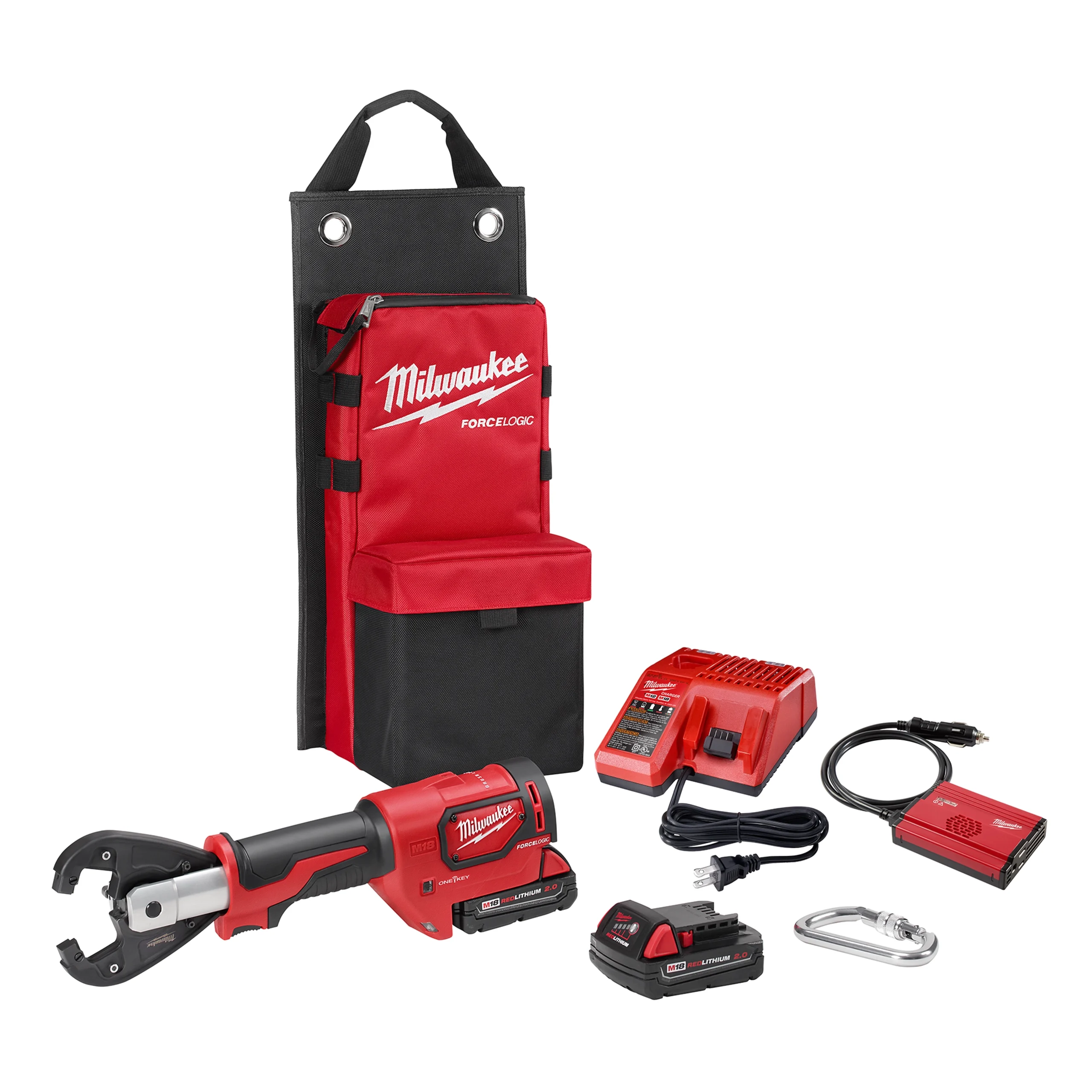
Large electrical lugs need a crimper that can deliver repeatable force, fit the lug and conductor, and make a complete crimp without relying on hand strength. Cordless hydraulic crimpers do that with a battery-powered pump and interchangeable dies. They save time on repeated jobs, but they are expensive, bulky, and only dependable when the tool, die, lug, and cable are compatible.
As an Amazon Associate we earn from qualifying purchases at no extra cost to you.


What counts as a large lug
There is no universal cutoff. A job involving 2 AWG cable may call for a different tool and die set than one involving 4/0 AWG or 500 kcmil conductors. Check the crimper’s rated range and the lug manufacturer’s instructions; a tool advertised for a large maximum conductor size may not include the die you need. Some tools use U-shaped dies, while others use hex dies or specific manufacturer die profiles. Similar-looking dies are not automatically interchangeable.
Also check whether the lug is copper or aluminum, whether it is a compression lug or a different connector type, and whether the conductor is stranded or solid. Use the connector maker’s specified tool and die combination where required. A crimp that looks tight can still have poor electrical contact if the die is wrong or the tool did not complete its cycle.
What to check before buying
Start with the conductors and lugs you actually install. Compare their sizes with the tool’s rated range, then confirm that the correct dies are available and included. A kit with a broad range is not useful if it lacks the die profile your connectors require. For occasional work, borrowing or renting a compatible tool can be more sensible than buying a premium kit.
Look for the cycle details, too. Many hydraulic crimpers have an automatic return after reaching pressure; some offer a manual release for a stalled or incomplete cycle. Know how the tool signals completion and what to do if it stops early. Do not assume that a motor stopping means the crimp is finished. Follow the manufacturer’s instructions, and inspect the completed crimp as the connector maker specifies.
Battery compatibility matters if you already own cordless tools. A crimper on your existing platform can reduce the cost and hassle of carrying another charger and battery type. But do not choose a crimper solely to match your drill batteries: die compatibility, capacity, service support, and ergonomics matter more. If the tool will be used overhead or in a crowded panel, weight and head rotation can be as important as cycle speed.
Compare the main options
| Option | Best fit | Main trade-off |
|---|---|---|
| Cordless hydraulic crimper | Repeated large-lug work, field installation, or jobs without convenient power | High purchase cost; battery and die compatibility need checking |
| Manual hydraulic crimper | Occasional large lugs where cycle time is not critical | Slower and more tiring; usually less convenient for many crimps |
| Battery-powered mechanical crimper | Jobs within its rated capacity where a compact tool is preferred | Not a substitute for a hydraulic tool if the connector specifies hydraulic compression |
A cordless hydraulic tool is worthwhile when it replaces many manual pump strokes or repeated trips to a bench. For a few lugs a year, a correctly rated manual hydraulic tool may be adequate and costs less. If your work is limited to smaller conductors, a compact battery-powered crimper may be easier to handle, but its listed maximum capacity is not proof that it suits every lug at that size.
Which type to shop for
For frequent work with large conductors, compare cordless hydraulic crimpers by rated capacity, included dies, return mechanism, and battery platform. Confirm the exact die system before ordering; tool capacity alone does not tell you whether it will make the connector maker’s approved crimp.
If the budget does not support a battery tool and you can accept slower work, a manual hydraulic cable-lug crimper can be a reasonable choice. Treat it as a tool for connectors and conductor sizes within its stated range, not as a universal press. Check that the kit includes the dies for your lugs before buying.
For jobs that stay below the capacity of compact tools, consider a battery-powered cable-lug crimper. It may be lighter and more manageable, but verify the permitted conductor sizes and connector types carefully. A smaller tool is not a bargain if it forces you to change the installation method or produces an unapproved connection.
Battery, maintenance, and jobsite practicalities
Hydraulic crimpers can consume battery capacity quickly during repeated cycles, especially when working at the upper end of the tool’s range. Carry a charged spare for production work, and check whether the kit includes a battery and charger or only the bare tool. On an established cordless platform, compare the bare-tool price with a complete kit; buying another charger may be unnecessary.
Inspect the head, pins, dies, and hydraulic system before use. Dirt or damage on a die can affect the crimp, while worn or mismatched dies can compromise the connection. Keep the tool within its service schedule, and use only the specified hydraulic fluid and repair process. A leak, abnormal noise, incomplete cycle, or failure to return properly is a reason to stop and have the tool checked—not to compensate by squeezing again.
Make the connection correctly
Strip the conductor to the lug’s specified length without nicking strands. Insert it fully, orient the lug in the die as directed, and keep hands clear of the crimp head. Complete the tool’s prescribed cycle and release procedure. Do not add extra crimps or reposition the connector based on guesswork; the number and placement of compressions depend on the connector instructions.
Afterward, inspect the lug for full insertion, correct die impressions, cracks, and displaced strands. If the tool failed to complete its cycle or the die slipped, do not assume the connection is usable. Follow the connector manufacturer’s rejection criteria. Electrical terminations carry serious shock and fire risks, so de-energize the circuit and use a qualified electrician when the work is beyond your training or local rules.
Related guides
- Longest Lasting Lawn Mower Battery: AGM vs Lithium vs Flooded Lifespan and Cost per Season
- Duralast Gold Lawn Mower Battery Review: U1 Fit, CCA and When to Pay for AGM
- Greenworks Pro 80V 21-Inch Mower Review: Runtime Math, Push vs Self-Propelled and Yard Fit
- Bosch High Pressure Washer Gun Replacement: Fittings, Adapters and What Fits Your Model