What's inside
As an Amazon Associate I earn from qualifying purchases. This post may contain affiliate links at no extra cost to you.
A cordless impact driver can drive screws quickly, but its hammering action does not prevent cam-out—the bit climbing out of the screw recess and chewing it up. That usually comes from a poor bit fit, too much speed, weak pressure, or a screw that has met more resistance than the driver can handle. A few setup changes make a bigger difference than buying the most powerful tool.
Choose the right bit
Match the bit to the screw’s drive type and size. A Phillips #2 bit is common, but it is not a universal fit: a loose #2 in a smaller recess will slip, while the wrong size can damage the head before the screw is fully seated. Torx and other star-shaped drives generally hold the bit more securely, especially in long structural screws, but they still need the correct size.
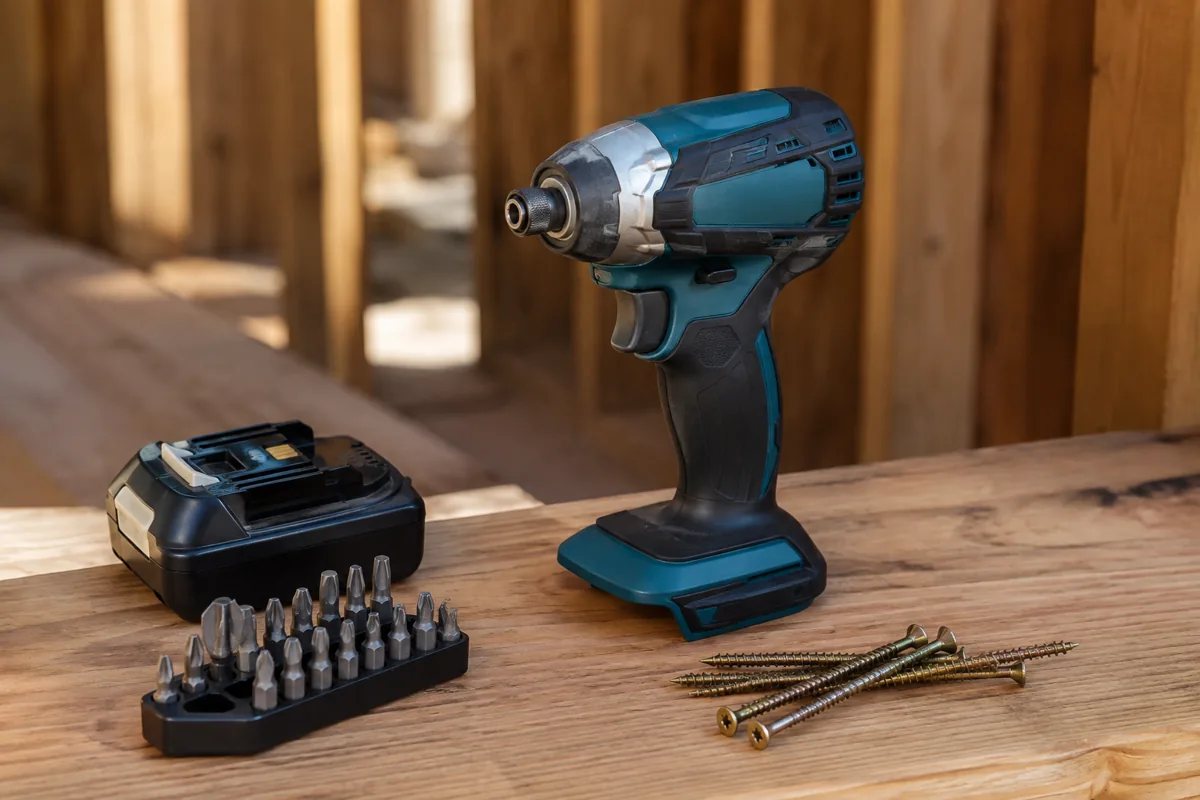
Check that the bit is fully seated and not visibly rounded or chipped. A worn bit can slip even when it looks close enough. For frequent driving, use impact-rated bits; they are designed to tolerate repeated twisting loads better than ordinary bits. A small impact-rated bit set with common Torx and Phillips sizes is a practical upgrade if your current bits are worn or incomplete. You do not need an expensive assortment if you only drive a few types of screws.
Set up the driver before driving
If your driver has speed settings or a trigger mode, begin on the lowest setting. Use a moderate trigger pull to start the screw, then increase speed only after the threads have engaged. Full trigger from the first turn makes it easier for the bit to bounce out of the recess, particularly on short screws or soft materials.
Keep the driver straight in line with the screw. Push firmly enough to keep the bit seated, but do not lean so hard that you lose control or bend the screw. Hold the tool with two hands when practical: one on the handle and one supporting the body. Keep fingers clear of the rotating chuck and the workpiece.
A fully charged battery can help the driver run consistently, but a larger or higher-voltage battery will not fix a poor bit fit or excessive speed. Use a battery that is compatible with your tool’s platform and in good condition. If you are buying a first driver, a cordless impact driver kit with a battery and charger avoids the extra cost of sourcing those separately. If you already own compatible batteries and a charger, a bare tool is often the cheaper choice.
Drive in stages and stop early
Start the screw slowly until it catches and advances a few turns. If it wobbles, backs out, or immediately slips, stop. Pull it out, check the bit and screw head, and start again with the tool square. Driving through a bad start can ruin the recess or split the material.
As the screw nears the surface, ease off the trigger. Stop when the head is seated as intended; do not keep hammering after it bottoms out. Overdriving can strip the head, crush soft wood, break the screw, or pull threads out of a thin workpiece. For cabinet hardware and other delicate work, use a drill/driver with a clutch instead of an impact driver. The clutch can limit torque; most impact drivers do not offer the same reliable cutoff.
For a long screw or dense wood, a pilot hole reduces the load. Check the screw maker’s instructions when available. As a general starting point in wood, choose a pilot drill close to the screw’s core diameter—not the full thread diameter—and test on scrap. Near board ends, pilot holes are especially useful for reducing splits. Avoid forcing a screw if it stops advancing: the bit may strip, the screw may snap, or the driver may overheat.
Match the tool to the job
| Job | Best starting approach | Main trade-off |
|---|---|---|
| Short screws in soft wood | Low speed, light pressure, stop as the head seats | An impact driver is quick but can overdrive easily. |
| Long screws in framing lumber | Correct impact-rated bit; pilot hole if resistance is high | Fast driving puts more stress on the screw and workpiece. |
| Small screws or cabinet hardware | Hand screwdriver or drill/driver with clutch | Slower, but easier to control near the final depth. |
| Repeated driving in hardwood | Pilot hole and a sharp, correctly sized bit | Extra setup takes time but helps prevent cam-out and splitting. |
A cordless drill/driver with an adjustable clutch is a better buy than a second impact driver if most of your work involves small fasteners, furniture, or controlled-depth driving. For construction screws and repeated fastening, an impact driver is more convenient. Neither tool replaces choosing the correct screw for the material.
If a screw head starts to strip
Stop as soon as the bit begins to slip. Continuing usually rounds the recess until ordinary bits cannot grip it. Try a fresh bit of the exact size, press it firmly into the head, and use a slow trigger pull. If the screw is partly exposed, locking pliers may grip the head or shank. For a badly damaged recess, a screw extractor may help, but it can take longer than replacing the fastener.
Inspect the driver bit after a slip and replace it if its edges are rounded. Also check whether the screw is binding against a knot, a misaligned pilot hole, or a material that is too dense for the chosen fastener. Persistent slipping is a signal to stop and fix the cause—not to apply more trigger.
Related guides
- Longest Lasting Lawn Mower Battery: AGM vs Lithium vs Flooded Lifespan and Cost per Season
- Duralast Gold Lawn Mower Battery Review: U1 Fit, CCA and When to Pay for AGM
- Greenworks Pro 80V 21-Inch Mower Review: Runtime Math, Push vs Self-Propelled and Yard Fit
- Bosch High Pressure Washer Gun Replacement: Fittings, Adapters and What Fits Your Model