
Our Top Picks
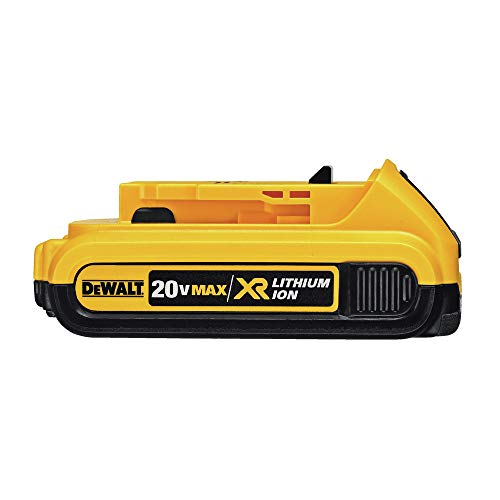
 DEWALT 20V MAX* XR Battery9.20in. x 7.00in. x 3.55in.4.5 x 3.13 x 2.63 Inches2.9 poundsCheck on Amazon
 DEWALT FLEXVOLT 20V/60V MAX Lithium-Ion 9.0Ah Battery DCB6091 battery6 x 3 x 5.5 inches2.8 poundsCheck on Amazon

What's inside
As an Amazon Associate I earn from qualifying purchases. This post may contain affiliate links at no extra cost to you.
Adding tools to a cordless collection gets expensive when every purchase comes with another charger. In most cases, you can buy a bare tool—one sold without a battery or charger—and use the batteries and charger you already own. The catch is that “18V,” “20V MAX” and similar labels do not tell you whether two products fit the same battery platform. Check the exact battery family before you buy.
As an Amazon Associate we earn from qualifying purchases at no extra cost to you.


Start with the battery platform
A tool’s voltage label is not enough to establish compatibility. Battery shape, contacts, electronics and mounting rails are specific to a brand’s platform, and sometimes to a product generation or subfamily. A 20V MAX battery from one manufacturer will not normally fit another brand’s 20V MAX tool. Even batteries from the same brand may not work across every tool line.
Find the platform name on your battery, then check the tool manufacturer’s compatibility chart or product page. Confirm the exact battery family and any stated exceptions. Don’t rely on a retailer’s broad “compatible with” filter or a photo that looks similar.
Before purchasing, confirm that the tool is sold as a bare tool, that your battery fits it, and that your existing charger supports that battery. A bare tool is usually the simplest way to avoid duplicating both items. If a kit costs only slightly more than the bare tool, compare what is included—but don’t pay for another charger you have no use for.
Compare your options
| Option | Best for | Main trade-off |
|---|---|---|
| Bare tool on your current platform | Adding a tool when you already own compatible batteries and a charger | May leave you short on batteries during back-to-back work |
| Tool kit with battery and charger | Starting a platform or adding capacity at a good sale price | Can duplicate a charger; kit battery size may not suit every job |
| Battery adapter | Occasional use when there is no practical native tool option | Extra bulk and possible limits on fit, protection or warranty |
| Second platform | Access to tools your current brand does not offer or a better deal on a complete line | Requires its own batteries and charging setup |
If you’re expanding an established collection, search for a bare cordless tool in your exact battery platform. Check the listing’s “included components” section: some sellers bundle a battery even when the product title is unclear.
Plan battery capacity, not just tool count
A compact 2.0Ah battery can be handy in a drill or impact driver because it keeps the tool lighter. The same battery may feel inadequate in a high-draw tool such as a circular saw, grinder or leaf blower, particularly during sustained cutting or heavy material removal. A higher-capacity battery can extend runtime, but it also adds weight and cost. Look at the tool maker’s recommended battery range rather than assuming the largest pack is automatically best.
Think about the work cycle. If one battery runs a tool while another charges, a single charger may be enough for occasional tasks. For a full day of repeated cutting, drilling or outdoor cleanup, you may need a spare battery or a faster charger—not necessarily a second platform. A charger’s advertised charging time depends on battery capacity and pack temperature; a hot pack may pause before charging to protect itself.
For a mixed collection, a compatible spare battery can be a better purchase than another charger. Buy only packs listed for your platform and tool. Very cheap third-party batteries may have uneven capacity, poor cell quality or protection circuitry that does not behave like the original. That can mean less runtime, unexpected shutdowns or a pack that will not charge correctly.
Use adapters cautiously
Adapters can let a battery power a tool from another brand, but they are not a universal shortcut. They add length and weight, can interfere with the tool’s balance or battery lock, and may not pass through all the temperature, overcurrent or low-voltage protections used by the original system. On a high-current tool, a poor connection can overheat; on any tool, a battery that is run too low may be damaged.
Check both manufacturers’ guidance and the adapter maker’s stated compatibility. Avoid adapters that require modifying the battery or tool, and don’t use one if the pack wobbles, the contacts get hot, or the tool cuts out under load. For routine work, a native bare tool is usually the safer and tidier solution. An adapter is most defensible for occasional, supervised use when buying a second platform would cost more than the convenience is worth.
When a second platform makes sense
Keeping everything on one platform reduces charger clutter and makes batteries easier to share. But that isn’t always the cheapest or most useful choice. A second platform can make sense if your current brand lacks a specialized tool, if a competing kit is substantially cheaper, or if you need separate batteries for work and home. Count the full cost: tool, at least one suitable battery, charger, and any additional packs needed for your workload.
If you do add another platform, choose a starter kit with a battery size you will actually use. A kit with a small pack and charger can be worthwhile when its price is only modestly above the bare tool; compare local prices rather than assuming the bundle is a bargain. Keep chargers labeled and use each one only with the battery families it is designed to charge.
Check before checkout
Read the tool’s included-items list, verify the exact battery family, and confirm your charger supports that pack. Check whether your existing batteries have enough capacity for the new tool’s current draw. If a listing is vague about compatibility, look up the manufacturer’s documentation or ask the seller before ordering. That few-minute check is cheaper than discovering that a battery fits the shelf but not the tool.
Related guides
More from Amazon
Programs that pair well with the guide above. Offers and eligibility are set by Amazon and may change.
A free business account with business pricing and bulk-buying tools for work, shop or home office.
Create a business accountFree shipping on eligible items, Prime Video and more. Eligible new members can start with a free trial.
Start a Prime free trialAudiobooks and podcasts to listen to on the go. Eligible new members can start with a free trial.
Try Audible freeAd-free music streaming. Eligible new subscribers can start with a free trial.
Try Music Unlimited freeAs an Amazon Associate we earn from qualifying purchases.

Write Your Review
No reviews yet. Be the first to share your experience!