
What's inside
As an Amazon Associate I earn from qualifying purchases. This post may contain affiliate links at no extra cost to you.
Buying a cordless tool charger is not as simple as matching the battery’s voltage. Chargers are designed for a specific battery platform, and two packs with the same nominal voltage may use different terminals, electronics, and charging protocols. Before ordering, verify the platform, battery chemistry, charger input, and the way the charger manages temperature and cell balance.
As an Amazon Associate we earn from qualifying purchases at no extra cost to you.


Our Top Picks
 DEWALT 20V MAX* XR Battery9.20in. x 7.00in. x 3.55in.4.5 x 3.13 x 2.63 Inches2.9 poundsCheck on Amazon
 DEWALT FLEXVOLT 20V/60V MAX Lithium-Ion 9.0Ah Battery DCB6091 battery6 x 3 x 5.5 inches2.8 poundsCheck on Amazon

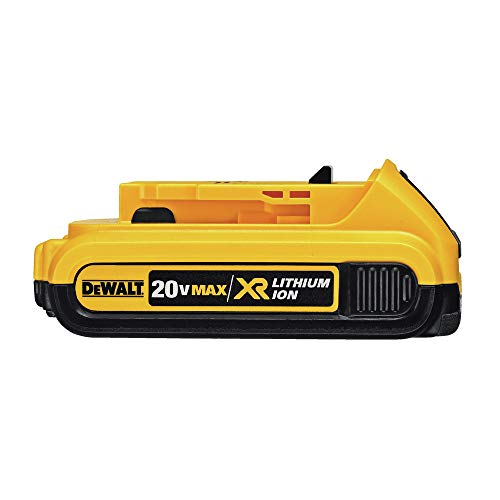
Start With the Battery Platform
The brand name is only the first check. Most manufacturers sell several incompatible battery families, often with similar-looking packs. A compact 12-volt system, an 18-volt or 20-volt system, and a high-output 36-volt system will normally require different chargers.
“20V” and “18V” are often marketing differences rather than a practical compatibility difference. A five-cell lithium-ion pack is commonly called 18 volts nominal and 20 volts maximum. That does not mean an 18V battery from one brand can use a 20V charger from another. The physical rails, contacts, communication pins, and charging controls still have to match.
Read the label on the battery and charger, not just the tool listing. Look for the exact platform name, voltage family, and battery type. If you are replacing a lost charger, searching for cordless tool battery charger replacement is a starting point, but confirm the listing against your battery’s markings before buying.
Check Physical and Electronic Fit
A charger must fit the battery mechanically, but a battery can sometimes slide into a charger and still be unsafe or unusable. Lithium-ion packs may have extra terminals for temperature sensing, cell balancing, identification, or data communication. The charger uses this information to control current and stop charging at the right point.
Do not force a pack into a charger, file plastic rails, or rely on a simple contact adapter unless the manufacturer specifically supports it. A modified connection can reverse polarity, bypass temperature protection, or leave the pack charging without proper cell monitoring. That can cause overheating, pack damage, or fire.
Battery adapters that let one brand’s pack power another brand’s tool are a separate issue. Some are passive plastic-and-contact adapters; others contain electronics. They may be useful for occasional work, but they do not automatically make the other brand’s charger compatible. Charge the battery only with a charger intended for that battery platform.
Compare Charger Types
| Charger type | Typical use | Main advantage | Trade-off |
|---|---|---|---|
| Standard single-port charger | One or two batteries used in normal DIY work | Lowest cost and simple storage | Charging may take several hours |
| Rapid charger | Frequent drilling, cutting, or jobsite use | Shorter charging time | Higher price, more heat, and greater demand on the battery |
| Dual-port charger | Users rotating multiple batteries | Convenient battery management | Some charge sequentially rather than simultaneously |
| Multi-voltage charger | Several battery sizes within one manufacturer’s system | Replaces multiple chargers | Still limited to the stated platform and supported packs |
| Vehicle or USB charger | Remote work and travel | Useful away from an outlet | Usually slower and may require a suitable power source |
For occasional home repairs, a standard charger is usually the sensible choice. Paying extra for a rapid charger makes more sense when downtime costs more than the price difference, such as when one battery is powering a saw or grinder throughout the day. Rapid charging can also generate more heat, so it is not automatically better for long-term battery life.
Verify Charging Speed and Battery Size
Charging time depends on battery capacity, charger output, pack temperature, and the battery’s internal limits. A rough comparison is useful: a charger delivering about 2 amps may need several hours for a 5.0Ah pack, while a higher-output charger may reduce that substantially. The actual time is rarely calculated by simply dividing amp-hours by charger amps because charging slows near full capacity.
Check whether a charger’s advertised speed applies to a small battery rather than the larger pack you own. A charger may be described as “fast” but still take a long time with a 8.0Ah or 12.0Ah pack. If you regularly use large batteries, consider buying an additional pack instead of the most aggressive charger. Two batteries often provide more usable work time and less interruption than one battery repeatedly charged at high speed.
Also check the power source. Some high-output chargers draw enough power that a small inverter, weak extension cord, or vehicle outlet may not support them. For workshop use, a properly rated wall outlet is usually preferable.
Inspect Safety and Condition
Buy from a seller with a clear return policy, especially when choosing a third-party charger. Look for correct input voltage, recognized safety markings, strain relief on the cord, and clear instructions. Avoid listings that show several brands as compatible without naming the exact battery series. A low price is not useful if the charger overheats, stops early, or damages a battery that costs $50 to $200 to replace.
Used chargers can be a good bargain when the connector and housing are undamaged. Inspect the cord for cuts, check that the cooling vents are clear, and test whether the charger gives a normal charge indication. Do not use a charger that smells burnt, has melted plastic, sparks at the contacts, or repeatedly reports a fault with known-good batteries.
For a replacement from the original ecosystem, search for OEM cordless tool charger. For a second charger at a bench or in a vehicle, a compatible third-party unit can be reasonable if its specifications and return support are clear.
Avoid Common Buying Mistakes
Do not buy based on voltage alone, assume a charger works across every product from the same brand, or confuse a battery adapter with a charging adapter. Do not charge a visibly swollen, cracked, wet, or unusually hot pack. If a battery has been stored below freezing, allow it to warm to room temperature before charging; many systems will pause charging outside a safe temperature range.
Before placing the order, match four things: the exact battery platform, the supported voltage range, the battery chemistry and capacity, and the charger’s input and output specifications. If all four agree and the physical contacts are undamaged, the cheaper standard charger is often the right purchase. Spend more on speed or extra ports only when your work schedule will actually use them.
Related guides
More from Amazon
Programs that pair well with the guide above. Offers and eligibility are set by Amazon and may change.
A free business account with business pricing and bulk-buying tools for work, shop or home office.
Create a business accountFree shipping on eligible items, Prime Video and more. Eligible new members can start with a free trial.
Start a Prime free trialAudiobooks and podcasts to listen to on the go. Eligible new members can start with a free trial.
Try Audible freeAd-free music streaming. Eligible new subscribers can start with a free trial.
Try Music Unlimited freeAs an Amazon Associate we earn from qualifying purchases.







Write Your Review
No reviews yet. Be the first to share your experience!