What's inside
As an Amazon Associate I earn from qualifying purchases. This post may contain affiliate links at no extra cost to you.
How the motors differ
A brushed cordless motor uses carbon brushes to carry current to a spinning commutator. A brushless motor replaces that contact with electronic controls that switch current through the motor’s coils. Both types can drive drills, saws and impact drivers well. Brushless tools usually cost more, but the difference matters most under heavy use—not on every job.
For occasional assembly, small repairs or a few holes in wood, a brushed cordless drill can be a sensible buy. For repeated drilling, cutting or driving under load, brushless models often make better use of each battery charge and avoid brush wear.
As an Amazon Associate we earn from qualifying purchases at no extra cost to you.


Battery use: more work per charge, not a different battery
Brushless tools are often more efficient because they avoid the friction and electrical losses at the brushes. In practice, that can mean more cuts or fasteners from the same battery, especially when the tool is working hard. There is no reliable percentage that applies across brands and jobs: a drill in softwood, an impact driver in structural screws and a circular saw cutting thick lumber place very different demands on a motor.
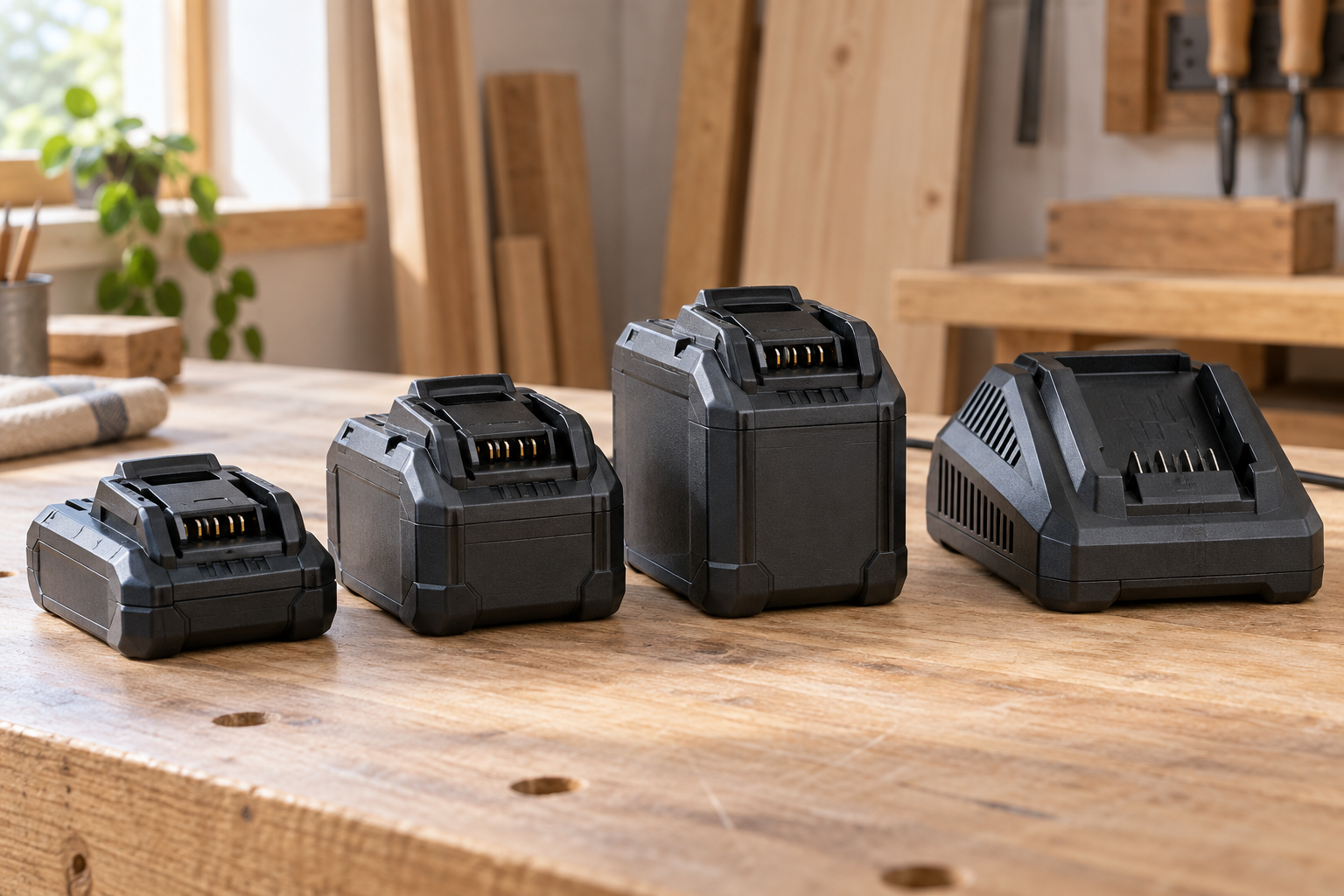
The battery itself does not become more capable just because the motor is brushless. Runtime still depends on battery capacity, tool settings, material and technique. A 2.0Ah pack stores less energy than a 5.0Ah pack of the same voltage, though the larger pack adds weight and cost. A high-demand saw may slow or trigger protection with a small pack; a light drill may work comfortably with it.
Do not choose a platform based only on a brushless label. If you already own compatible batteries and chargers, staying in that ecosystem can save more than a small runtime gain. Check whether the tool is sold bare or with a battery, and whether your existing pack is recommended for the tool’s workload.
Heat and sustained workloads
Brushed motors lose some energy as heat at the brush contacts, and the brushes and commutator wear as they rub together. Brushless motors eliminate that contact, but they still generate heat in the windings, battery and electronic controls. A brushless tool is not immune to overheating.
Heat rises quickly when a tool is stalled, forced through material, run continuously at a high load or used with an undersized battery. For example, leaning hard on a circular saw to keep it from slowing can heat the motor and pack faster than letting the blade cut at its own pace. If the tool gets unusually hot, smells burnt, slows repeatedly or shuts down, stop and let it cool. Repeated thermal shutdowns are a sign to change the technique, use a suitable battery or step up to a more capable tool.
For occasional short bursts, heat differences may not affect the purchase decision. For long cuts, production work or repeated heavy fastening, brushless is generally the safer bet for sustained performance. It may also maintain speed better under load, but gearing, cooling, electronics and battery choice matter too.
Maintenance, wear and repair
Brushed tools have a consumable part: carbon brushes. With enough use, brushes wear down and may need replacement. Some tools make that service straightforward; others are not designed for convenient repair. Dust, rough handling and heavy workloads can shorten the life of the motor or tool regardless of motor type.
Brushless tools have no brushes to replace, so they avoid that maintenance item. Their electronic controls add complexity, however. If a control board or motor fails, repair can be more involved and may not be economical on a budget tool. Neither design guarantees a longer-lived tool: tool quality, service support and how it is used matter.
For a homeowner who uses a drill a few times a month, brush wear may take years to become relevant—or never become an issue before another part fails. For a tradesperson running the same tool daily, fewer wear parts and less downtime can justify the higher price.
Quick comparison
| Factor | Brushed | Brushless |
|---|---|---|
| Purchase price | Usually lower | Usually higher |
| Battery use | Often uses more energy for the same work | Often more efficient, especially under load |
| Heat | Brush friction adds heat | No brush friction, but motor and electronics can still overheat |
| Maintenance | Brushes wear and may need replacement | No brush replacement; electronics can be costly to repair |
| Best fit | Light, occasional jobs and tight budgets | Frequent use, heavy workloads and longer sessions |
What to buy for the job
If you want one tool for routine household jobs—hanging shelves, assembling furniture and drilling modest holes in wood—a good brushed drill is often enough. Put the savings toward a second battery or a useful accessory. Avoid paying extra for brushless if the tool will see little use and its workload is light.
For repeated work with a saw, grinder or impact driver, consider a brushless cordless impact driver or the equivalent brushless tool for your job. These tools see higher loads than a drill used for small pilot holes, so better efficiency and reduced brush wear are more likely to pay off. If you make frequent long cuts, compare brushless saws and check the battery capacity the manufacturer recommends; a compact pack may be convenient but can limit sustained output.
Price the whole kit before deciding. Compare bare-tool and starter-kit costs, battery capacity, charger compatibility and warranty support. A brushless bare tool is not a bargain if you need to buy a battery and charger separately, while a discounted brushed kit may be the better value for light use.
Get better results from either type
Use a sharp, appropriate accessory and let the tool work without forcing it. Match the battery to the job: a small pack suits lighter tasks, while demanding tools often benefit from a higher-capacity pack if the platform supports it. Let hot batteries and tools cool before charging or continuing. These habits reduce heat and improve performance on brushed and brushless tools alike.
Related guides
- Longest Lasting Lawn Mower Battery: AGM vs Lithium vs Flooded Lifespan and Cost per Season
- Duralast Gold Lawn Mower Battery Review: U1 Fit, CCA and When to Pay for AGM
- Greenworks Pro 80V 21-Inch Mower Review: Runtime Math, Push vs Self-Propelled and Yard Fit
- Bosch High Pressure Washer Gun Replacement: Fittings, Adapters and What Fits Your Model