What's inside
As an Amazon Associate I earn from qualifying purchases. This post may contain affiliate links at no extra cost to you.
A small electrical service crew has different battery needs from a framing crew. Most days call for drilling, fastening, cutting conduit and opening access panels—not running several high-draw tools all day. The right platform is the one that keeps the crew working with the fewest charging delays, awkward adapters and duplicate purchases.
Start with the work, not the tool count
List the cordless tools the crew actually uses, then note how often each is used and whether it needs sustained power. A drill, impact driver, inspection light and compact bandsaw may cover most service calls. A rotary hammer or large grinder might come out only occasionally. Those occasional tools should not dictate the whole battery investment unless downtime when they are needed is costly.
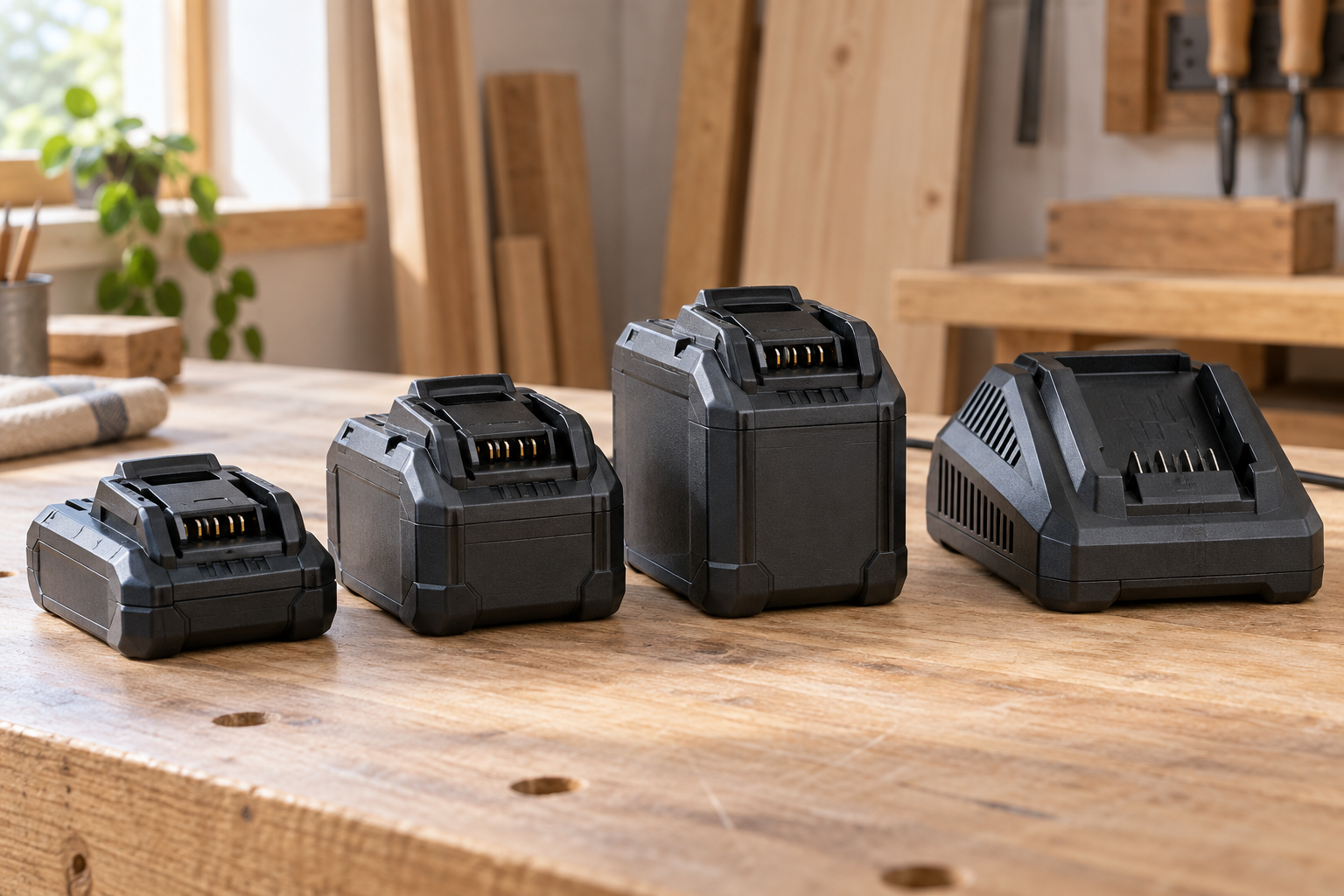
Battery capacity is measured in amp-hours (Ah), but Ah alone does not tell you how much power a pack can deliver under load. Voltage, cell design and the tool’s electronics matter too. A compact 2.0Ah pack is usually easier to handle overhead; a 5.0Ah pack can reduce swaps during heavier work but adds weight. On a drill used for cabinet screws or device work, the bigger pack may be needless bulk.
Check platform fit and tool availability
Compare the tools the crew needs today with the manufacturer’s current cordless range. Look for electrical-service staples: drill and impact driver, compact reciprocating saw or bandsaw, oscillating tool, vacuum, work light and a suitable rotary hammer if the crew drills masonry. Check that the exact tool is sold as a bare tool and that compatible batteries are readily available. A broad catalog is useful only if it includes the tools the crew will actually carry.
Also check whether the platform has multiple battery formats. Some brands offer compact packs, larger high-output packs and a separate higher-voltage system. Do not assume packs are interchangeable just because the brand name matches. Confirm compatibility on the tool and battery documentation before buying.
Compare platforms by crew needs
| What to compare | Why it matters to a service crew | What to verify |
|---|---|---|
| Core tool selection | A missing specialty tool can force a second battery system or a corded workaround. | Availability of the tools used weekly, not just headline catalog size. |
| Battery options | Small packs reduce weight; larger packs extend runtime on saws and vacuums. | Pack compatibility, weight and manufacturer-rated capacity. |
| Charging | One slow charger can leave a shared pack unavailable at the start of a call. | Charge time for the crew’s common pack sizes and whether a multi-port charger fits the workflow. |
| Replacement access | A damaged or aging pack is a work interruption. | Local availability, warranty terms and service options. |
| Up-front cost | Starter kits can be good value, but may include packs too large or too small for the work. | Total cost of tools, enough batteries, chargers and any needed specialty packs. |
Size the battery pool for the day
Count packs by the crew’s routine, not by a rule of thumb. For a two-person crew sharing several tools, a practical starting point might be four to six packs: two compact packs for drills and lights, plus two or more larger packs for saws and other demanding tools. The right number depends on shifts, charging access and how much the crew uses high-draw tools. Keep one charged spare available rather than assuming a pack will finish charging between calls.
Charger speed matters most when the crew depends on a small number of packs. A fast charger can shorten a wait, but charging times vary by pack, charger and temperature. Check the maker’s published figures for the exact combination. Batteries can also run hot after heavy use; if a charger pauses to cool a pack, forcing the schedule with extra packs is safer than trying to defeat the protection.
Avoid common buying and job-site failures
Do not buy every pack in the highest capacity. Large batteries can make a drill tiring overhead and may not fit compact tools comfortably. Conversely, a small pack on a high-draw saw may run down quickly or trigger a low-voltage shutdown under load, even if its charge indicator looked healthy. Match pack size to the tool and task, and keep high-output packs for tools that need them.
Adapters that let one brand’s battery run another brand’s tool can look like a cheap shortcut. They may not pass through all protection or communication features, can affect warranty coverage and can create a poor fit. For a crew relying on tools daily, standardizing on compatible batteries is generally less trouble. If an adapter is used for a seldom-needed backup tool, confirm the adapter maker’s limits and never treat it as a substitute for a correctly matched pack.
Heat, cold, dirt and drops shorten battery life. Keep packs out of a hot van where possible, wipe contacts clean and inspect housings for cracks or swelling. Stop using a visibly damaged pack. Label crew packs so they do not disappear between vans, and rotate them instead of repeatedly draining the same one. Follow the manufacturer’s instructions for storage and charging rather than leaving packs on a charger indefinitely.
Make the purchase in stages
If the crew is starting from scratch, compare a kit with two batteries and a charger against buying tools and packs separately. A kit is often the cheaper route when its tools and pack sizes fit; it is less attractive if it bundles a tool nobody needs. For a first system, compare cordless drill and impact driver kits by included battery capacity, charger and warranty, not just the number of pieces.
For an established platform, buying bare tools can avoid paying for batteries the crew already owns. Add packs only when a simple tally shows charging bottlenecks or when a new tool draws more power than the current pool can comfortably supply. A battery-and-charger bundle can be worthwhile when replacing aging packs, but check that the batteries match the crew’s tools and that the charger is useful for its usual pack sizes.
Finally, try the platform’s drill and impact driver in hand if possible. Grip, balance, trigger control and belt-clip placement affect a service call more than small differences in advertised specifications. Choose the ecosystem that covers the crew’s regular work, keeps packs moving through the day and has dependable replacements nearby. A cheaper platform is fine when it meets those needs; paying more for unused tools or oversized batteries is not a productivity upgrade.
Related guides
- Longest Lasting Lawn Mower Battery: AGM vs Lithium vs Flooded Lifespan and Cost per Season
- Duralast Gold Lawn Mower Battery Review: U1 Fit, CCA and When to Pay for AGM
- Greenworks Pro 80V 21-Inch Mower Review: Runtime Math, Push vs Self-Propelled and Yard Fit
- Bosch High Pressure Washer Gun Replacement: Fittings, Adapters and What Fits Your Model