What's inside
As an Amazon Associate I earn from qualifying purchases. This post may contain affiliate links at no extra cost to you.
Battery platform comparisons usually focus on voltage, runtime, and tool count. Those matter, but service parts availability often determines whether a cordless tool remains useful after the warranty expires. A platform with widely available batteries is not necessarily a platform with accessible switches, chucks, chargers, brushes, covers, and electronic controls.
Before buying into an ecosystem, check whether you can get the parts most likely to fail, how long they remain available, and whether an ordinary owner can install them. The cheapest tool is only a bargain if a failed $20 part does not turn it into a $150 replacement.
What Counts as a Service Part?
Service parts are the replaceable components that keep a tool working after normal wear, accidental damage, or electrical failure. For cordless tools, the practical list includes batteries, chargers, battery contacts, trigger switches, electronic control boards, motors, gear assemblies, chucks, collets, brushes where fitted, belts, guards, handles, and fasteners.
Some parts are consumables. Reciprocating saw blades, grinder wheels, driver bits, sanding discs, and drill chucks are usually easy to source regardless of platform. Other parts are proprietary. A replacement battery may contain communication electronics that prevent a generic pack from working, while a brushless motor controller may only be available as part of a complete assembly.
Look for an exploded parts diagram before buying. It should identify individual components with part numbers rather than listing the entire tool as one service assembly. A diagram that shows a switch, gear case, and battery terminal separately is a better sign than one that only lists a housing and motor module.
Compare Availability Before Comparing Prices
Search for the exact tool model followed by “parts,” “exploded view,” and “manual.” Check the manufacturer’s parts store, authorized distributors, and independent repair suppliers. Do not assume that a part appearing in a web search is currently orderable. Some listings are old catalogs, backordered items, or parts shared by a third-party seller without reliable stock.
| What to check | Strong ecosystem | Warning sign |
|---|---|---|
| Battery replacement | Current packs sold separately through several channels | Only the original pack is listed, or stock is inconsistent |
| Charger replacement | Separate chargers with clear model compatibility | Charger is bundled only with starter kits |
| Mechanical parts | Gears, chucks, switches, and housings have part numbers | Only complete motor or gearbox assemblies are available |
| Electronics | Controller and trigger assemblies are listed and documented | Electronics are unavailable or permanently paired without service support |
| Documentation | Exploded diagrams, repair instructions, and torque information | Only a short user manual and no parts diagram |
| Long-term support | Parts remain listed for older generations | Older tools disappear soon after a platform update |
Batteries and Chargers Need Separate Attention
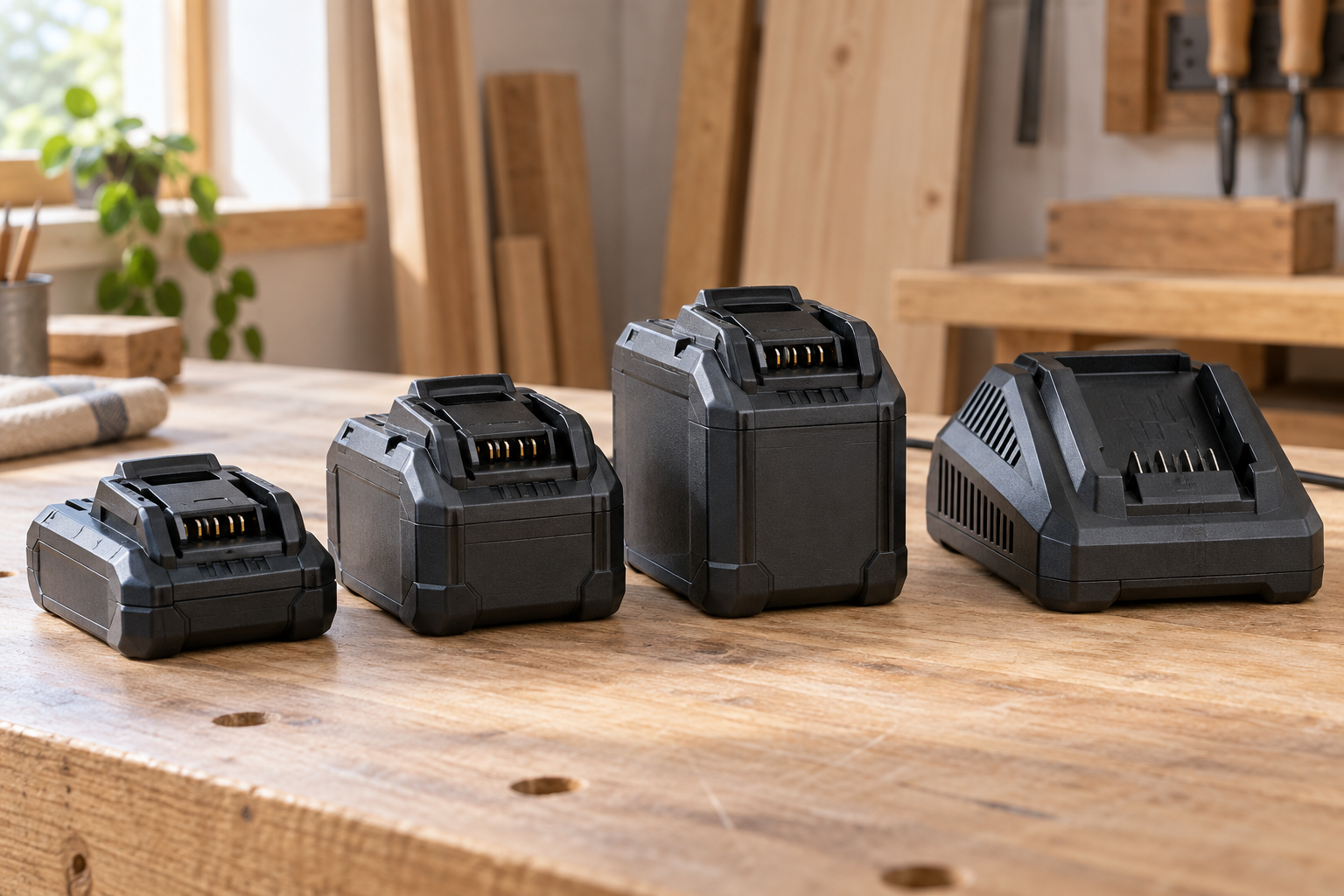
Batteries are usually the most expensive recurring part in a cordless system. A typical lithium-ion pack may cost roughly $50 to $200, depending on capacity and voltage. That makes battery pricing and availability more important than a small difference in the original tool price.
Check whether the platform sells compact packs as well as high-capacity packs. A 2.0Ah or 2.5Ah pack is often more practical for a drill or impact driver, while a 5.0Ah or larger pack suits a saw or outdoor tool. Larger batteries add weight and may make a compact tool tiring to use. Having several capacity choices also reduces the temptation to use an oversized pack on every tool.
Chargers fail less often than batteries, but they can still be damaged by heat, dust, or power surges. A platform with only one expensive rapid charger has more downtime risk than one offering basic and fast chargers separately. For a single-tool owner, a replacement cordless tool charger may be a sensible backup. Avoid third-party batteries unless the supplier provides credible protection, cell information, and a clear return policy. Poorly built packs can shut down under load, overheat, or damage the tool.
Prioritize the Parts That Actually Fail
Drills and impact drivers commonly suffer from worn chucks, trigger switches, stripped gear teeth, and damaged battery contacts. Reciprocating saws often wear at the blade clamp and shoe assembly. Angle grinders see failures in switches, bearings, guards, and gear sets. Outdoor tools add line heads, drive shafts, trigger assemblies, and debris-related damage.
Ask what happens if each part fails. A replaceable chuck costing $25 to $60 is manageable. A sealed gearbox that requires a $100 assembly plus labor may not be. If a controller board costs close to the price of a new bare tool, service support exists technically but has little economic value.
Brushless tools are not automatically easier to repair. They eliminate carbon brushes, but their electronic controllers can be expensive and model-specific. Brushed tools may have simpler motors and cheaper switches, although brushes and commutators eventually wear. For occasional household use, a cheaper brushed platform can be perfectly reasonable if replacement batteries and common mechanical parts are easy to find.
Separate Warranty Support from Paid Repair
A long warranty does not guarantee long-term parts availability. Warranty service may replace the whole tool, while paid repair after the warranty depends on parts that the manufacturer no longer stocks. Check the warranty period, exclusions for commercial use, battery coverage, and who pays shipping.
Also check whether opening the tool affects warranty coverage. Some manufacturers permit owner repairs; others expect service through an authorized center. A repair network is useful for electronic faults, but shipping a tool can cost $20 to $50 each way and add weeks of downtime. For a professional, that may cost more than the failed component.
Use a Platform-Specific Buying Strategy
Start with the tool you will use most, then inspect the rest of the ecosystem. Buy a bare tool only when you already own compatible batteries in good condition. If you are starting from zero, compare the kit price with the cost of two replacement batteries and a charger. A discounted kit can be the cheapest way to establish a platform, but do not buy several tools merely to obtain batteries you do not need.
For a homeowner who uses tools a few times each month, prioritize affordable replacement batteries, common chucks and switches, and local availability. A cordless drill driver kit from a large, established platform is often enough; paying extra for the largest professional ecosystem may not produce a real benefit.
For daily trade use, favor platforms with published parts diagrams, multiple battery capacities, authorized repair centers, and a history of supporting older tools. Keep one spare battery and, if the tool is critical, a backup charger. Replacing a $70 battery before it fails is cheaper than losing a workday, but storing lithium-ion packs fully charged in high heat accelerates aging.
Finally, record the tool model and battery family when you buy. Platform names can cover several incompatible generations. A serviceable ecosystem is not just one with many tools on a shelf; it is one where the specific tool you own can still be diagnosed, supplied with parts, and repaired at a sensible cost.
FAQ
What Counts as a Service Part?
Related guides
- Longest Lasting Lawn Mower Battery: AGM vs Lithium vs Flooded Lifespan and Cost per Season
- Duralast Gold Lawn Mower Battery Review: U1 Fit, CCA and When to Pay for AGM
- Greenworks Pro 80V 21-Inch Mower Review: Runtime Math, Push vs Self-Propelled and Yard Fit
- Bosch High Pressure Washer Gun Replacement: Fittings, Adapters and What Fits Your Model