What's inside
As an Amazon Associate I earn from qualifying purchases. This post may contain affiliate links at no extra cost to you.
Cordless polishers are useful when the work is spread across a vehicle, a large panel, or several jobs where dragging a cord is awkward. The right choice depends less on headline speed than on the finish you need, how much paint you will cover, and which battery platform you already own.
As an Amazon Associate we earn from qualifying purchases at no extra cost to you.



Choose the motion before the battery
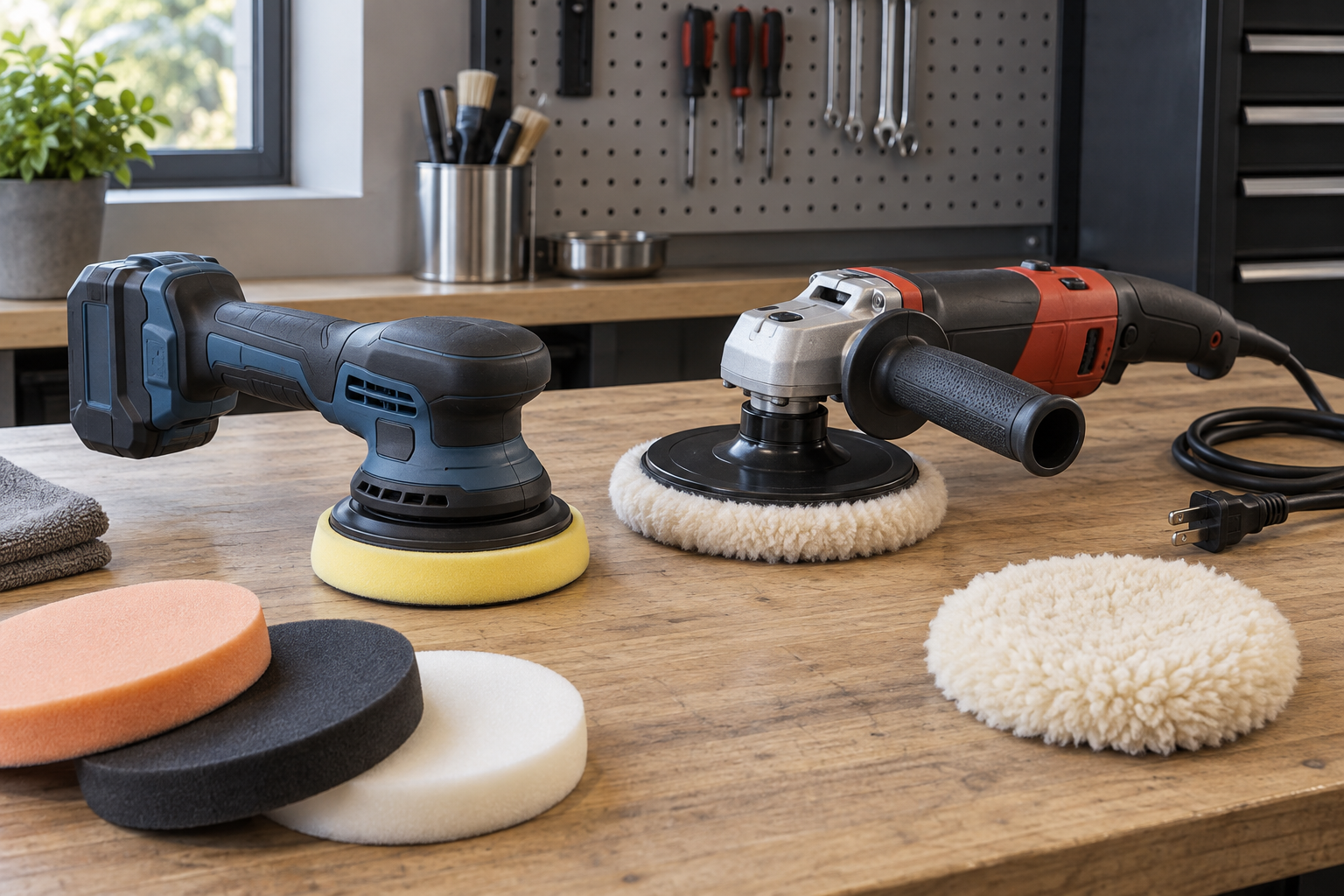
A random-orbit polisher is the safer choice for most paint correction and finishing. Its pad both spins and oscillates, which reduces the chance of leaving concentrated heat or visible rotary marks. A 5-inch backing plate is a practical all-round size: it reaches moderate curves and uses widely available pads. A 6-inch pad covers broad, flat panels faster but is harder to control on tight contours.
A rotary polisher spins in one direction. It can remove defects quickly, especially with wool or a firm foam pad, but it can also burn edges, haze paint, or leave swirl marks if pressure and movement are poor. Buy one for experienced correction work, not simply because its advertised speed looks impressive. For a first machine, compare 5-inch cordless random-orbit polishers.
Compare the main options
| Type | Best use | Trade-off | Battery-platform fit |
|---|---|---|---|
| Random-orbit, 5-inch | General paint finishing and moderate correction | Slower than a rotary on severe defects | Good all-round choice if your platform offers one |
| Random-orbit, 6-inch | Large, mostly flat panels | Less nimble around mirrors, edges, and narrow sections | Check that replacement pads and batteries are easy to find |
| Rotary | Fast correction by a skilled operator | Higher risk of heat, holograms, and edge damage | Worth considering when the platform has a suitable tool and spare packs |
| Compact cordless detail polisher | Small areas, headlights, and tight trim | Not a substitute for a full-size machine on a whole vehicle | May use a dedicated battery rather than your main tool packs |
Treat the battery as part of the tool
If you already own cordless tools, staying on that battery platform can make sense: you may avoid buying another charger and a starter battery set. But do not assume a familiar brand name means the polisher is the better buy. Compare the complete kit price, battery capacity, charger, warranty, and whether the pack fits your other tools.
Polishing is a sustained load, and a small pack can run down quickly. A 2.0Ah battery is lighter, but it may require frequent changes; a 4.0Ah pack generally gives more working time at the cost of weight. Actual runtime varies with pad size, pressure, paint condition, and speed, so treat manufacturer runtime claims as estimates rather than guarantees. Two compatible packs let you work while the second charges. If you have no batteries yet, compare the price of a tool, charger, and two packs—not just the bare-tool listing.
Some cordless polishers slow down under pressure or struggle to keep pad motion on curved panels. That is a practical limitation, not a defect you can fix by leaning harder. Excess pressure can stall the orbit, warm the finish, and drain the battery faster. A corded machine is often the cheaper, more dependable choice for long sessions in a fixed garage; cordless earns its keep where access and mobility matter.
What to check before buying
Look for a variable-speed trigger or clear speed settings, a comfortable grip, and a backing plate that takes common pads. A soft-start feature helps avoid slinging compound at startup. A lock-on switch is useful for long panels, though a responsive trigger can be easier to control in tight areas. If the manufacturer lists orbit size, remember that a larger throw can increase correction speed but may feel less controlled on narrow contours.
Check the tool’s weight with the battery fitted. A bare-tool weight can conceal a tiring setup, particularly when working on a roof or hood. Also check whether the kit includes a backing plate, side handle, and storage case; these can change the real price. A cordless polisher kit with battery and charger is convenient, but it may be poor value if you already own compatible packs.
Use it without damaging the finish
Wash and dry the surface first. Dirt trapped under a pad can scratch paint, and polishing over grit makes the problem worse. Test your compound and pad on a small area before treating the whole panel. Start with the least aggressive combination likely to work; stronger compounds remove material faster, but repeated correction reduces clear-coat thickness.
Keep the pad flat and moving. On a random-orbit machine, use light to moderate pressure and check that the pad continues to orbit rather than merely vibrating in place. Do not polish sharp edges or body lines with the same pressure used on a broad panel. These areas have less paint and heat up faster. Clean the pad regularly: loaded foam cuts poorly and can leave residue or uneven gloss.
Stop if the tool smells hot, the battery or housing becomes unusually warm, or the pad repeatedly stalls. Let the tool and pack cool, inspect the pad, and reduce pressure. Use eye protection, and avoid loose sleeves or jewelry near the moving pad.
When a cheaper option is enough
For occasional waxing, light gloss enhancement, or a small number of household projects, an entry-level random-orbit model can be fine. You do not need a premium rotary to apply sealant or tidy a lightly marked panel. Spend more when you will use the tool often, need dependable speed under load, or plan to correct significant defects. If you only need to polish one vehicle, renting or borrowing a machine—and buying quality pads and compound—may cost less than adding a battery platform.
For most buyers already invested in cordless tools, the sensible target is a 5-inch random-orbit polisher compatible with their packs, ideally with a second battery available. Choose a rotary only when you have the control and experience to use it safely; choose corded when hours of continuous work matter more than freedom from the outlet.
Related guides
- Longest Lasting Lawn Mower Battery: AGM vs Lithium vs Flooded Lifespan and Cost per Season
- Duralast Gold Lawn Mower Battery Review: U1 Fit, CCA and When to Pay for AGM
- Greenworks Pro 80V 21-Inch Mower Review: Runtime Math, Push vs Self-Propelled and Yard Fit
- Bosch High Pressure Washer Gun Replacement: Fittings, Adapters and What Fits Your Model