What's inside
As an Amazon Associate I earn from qualifying purchases. This post may contain affiliate links at no extra cost to you.
Why a cordless blower beats canned air and cords
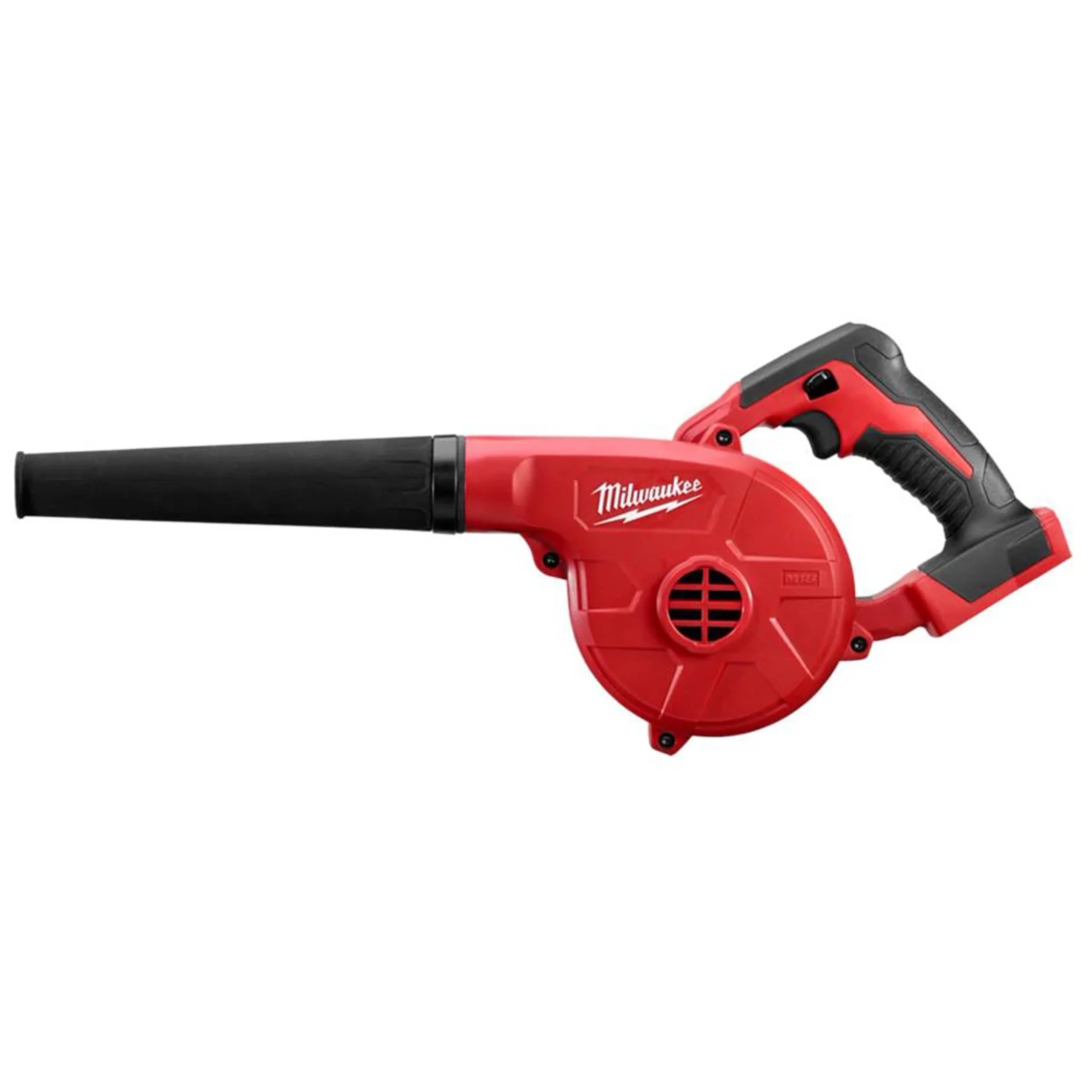
If you clean tools, benches, miter saw stations, or a small shop with any regularity, a cordless dust blower pays for itself fast. Canned air is $8 to $12 per can and lasts a few minutes of actual trigger time. A corded shop vac in blower mode works, but dragging a hose around to blow dust off a drill press or out of a toolbox is slow and awkward. A battery blower gives you 100 to 300 CFM in a package you can grab one-handed, with no warm-up and no cord to snag.
The use case here is not clearing a driveway. That takes 400+ CFM and a big axial fan. For cleaning tools and work areas, you want focused airflow at moderate volume to lift fine sawdust, metal filings, and concrete dust out of crevices without scattering everything across the shop. Most 18V/20V compact blowers do this better than full-size leaf blowers because they run smaller nozzles and lower, more controllable output.
As an Amazon Associate we earn from qualifying purchases at no extra cost to you.


What actually matters for shop cleaning
Forget max MPH claims on the box. For bench and tool cleaning, usable airflow and control matter more than top speed.
Air volume and speed: Look for 120 to 250 CFM with 100 to 180 MPH through a taper nozzle. Below 100 CFM, you will be making multiple passes to clear a table saw top. Above 300 CFM, you start blowing dust into every drawer and shelf.
Trigger control vs. on/off: A variable-speed trigger or at least 2-stage speed selector is essential. You need low speed for blowing dust off a sander’s vents or a tool chest, high speed for clearing a router table or floor corner. Single-speed blowers at full blast are frustrating indoors.
Nozzle design: A wide flat nozzle clears benches fast. A narrow rubber-tipped nozzle is what you want for tool housings, battery contacts, and tight spots. If the blower only comes with a wide leaf-blower nozzle, you will lose a lot of effectiveness on tools. Some compact blowers accept inflator/deflator adapters, which is useful for blowing out a jobsite radio or air filter.
Weight and balance: A compact blower should be 2.5 to 4.5 lb bare tool. Add a 2.0Ah battery and you are at 3.5 to 5.5 lb, which is comfortable for one-handed overhead use. Full-size blowers with a 5.0Ah or 6.0Ah pack can hit 7 to 8 lb and get tiring if you are detail-cleaning for 10 minutes.
Noise and dust: Expect 76 to 88 dB at operator’s ear on high. In a garage that is loud enough to need hearing protection if you run it more than a minute or two. Also, any blower just moves dust. Without dust collection or an open door, you are resettling fines. Blow from one direction toward an open door or a running air filtration unit, and wear a P2/N95 mask for MDF or concrete dust.
Battery platform is the real decision
The blower itself is simple – a brushless motor and a fan. The battery you already own should drive your choice. A bare tool is typically $90 to $150 for a compact blower on a major 18V/20V platform. A kit with a 4.0Ah or 5.0Ah battery and charger can be $180 to $260. If you buy outside your existing system, you are buying into another charger and future battery costs.
For cleaning duty, battery size is a trade-off between runtime and weight. Real-world numbers from teardown and runtime tests:
2.0Ah compact pack: 10 to 18 minutes on low/medium, 6 to 9 minutes on full. Plenty for wiping down two or three tools and a bench between cuts.
4.0Ah – 5.0Ah pack: 22 to 40 minutes mixed use. Better if you also use the blower to clear a small floor area or blow off a work van at the end of the day. Heavier, but you swap less.
6.0Ah+ / High Output packs: only worth it if you already use them for saws. On a compact blower they add weight without much cleaning benefit and run hotter due to higher sustained amp draw on high.
Voltage matters less than you think for this job. 12V compact blowers are light and cheap and work fine for electronics, keyboards, and light tool dusting at 80 to 130 CFM. 18V/20V is the sweet spot for mixed shop cleaning. 40V blowers are overkill indoors unless you want one tool to also handle yard work.
If you are still choosing a platform, staying inside one cordless blower bare tool ecosystem keeps batteries interchangeable for your drill, driver, and sander. That interchangeability is more valuable than a 10% difference in CFM.
Comparison: compact blowers vs. full-size blowers
| Type | Typical Airflow | Weight (with 4.0Ah) | Best For | Drawback |
|---|---|---|---|---|
| 12V Compact Blower | 80-130 CFM, 90-130 MPH | 2.8-3.8 lb | Tool vents, drawers, light bench dusting | Too weak for floor piles or damp sawdust |
| 18V/20V Compact Blower | 120-250 CFM, 100-180 MPH | 4.5-6.0 lb | Daily shop cleaning, jobsite cleanup | Small dust cloud indoors without ventilation |
| 18V/20V Full-Size Blower | 300-450 CFM, 110-130 MPH | 6.5-8.0 lb | Floor, garage, van, plus yard use | Heavy, too much air for detail work |
| 40V Blower | 400-600 CFM, 120-155 MPH | 7.0-9.5 lb | Large shop and outdoor cleanup | Expensive, loud, separate battery system |
For most people cleaning tools and a 1- to 2-car work area, the 18V/20V compact category is the right compromise. Full-size blowers move more air but with a wider column that is harder to aim into a miter saw housing or a toolbox.
What to buy based on how you work
If you want the cheapest effective option: A 12V or 18V compact blower on your current platform with the narrow nozzle is fine. You do not need brushless for occasional use, though brushless runs cooler and extends runtime about 15 to 20% on the same battery. Brushed motors also let more fine dust past the shaft seal over time. For $30 to $50 less, a brushed unit is acceptable if you only blow off a bench a few times a week and store it in a case.
If you clean daily or work on site: Go brushless, variable speed, and make sure it has a trigger lock. Locking the trigger on low lets you hold the tool steady with two hands while you manipulate a workpiece or vacuum hose with the other. Check that the nozzle locks positively – friction-fit nozzles that pop off when hot are a common annoyance on budget models.
If you need one blower for shop and yard: Consider a full-size 18V blower and add an aftermarket stubby nozzle for indoor control. You will sacrifice some finesse, but you avoid owning two blowers. Just expect shorter runtime; a full-size blower on high can pull 25 to 40A and sag a 2.0Ah pack in under 6 minutes.
Shoppers who are platform-agnostic often compare compact cordless workshop blowers side-by-side to see which kits include both wide and detail nozzles. A kit that includes both saves you $15 to $25 versus buying nozzles separately.
Failure modes and limits
Cordless blowers are reliable, but they fail in predictable ways in dusty environments. Motor bearings ingest fines if you regularly blow concrete or drywall dust without cleaning the intake. Tap out the intake screen and blow it backward briefly after each heavy session. Do not use a blower to clear metal shavings directly into the motor intake of another tool.
Heat is the second killer. Running on high for 8 to 10 minutes straight, especially with a small 2.0Ah pack, can trip thermal protection on both the tool and the battery. The pack will then refuse to charge for 20 to 30 minutes until it cools. If you need longer runtime, use medium speed and step to high in bursts.
Do not expect a blower to replace a vacuum for fine dust control. A blower does not capture anything. For health and finish quality, pair it with a shop vac or dust extractor for the floor and a low-cost cordless shop vacuum or extractor for sanding. Use the blower to dislodge dust from tools, then vacuum it up. That two-step sequence keeps airborne concentration much lower than blowing alone.
How to get better results indoors
Work top-down. Blow dust off the highest shelf or tool first, then the bench, then the floor, so you are not re-dirtying what you just cleaned. Crack a door or run a dust collector on exhaust to create airflow in one direction.
Keep batteries warm in winter. A lithium pack at 35°F can lose 15 to 25% of usable capacity and hit voltage cutoff earlier on high draw. If the blower surges or cuts out early, warm the pack indoors before recharging.
Finally, store the blower with the nozzle off and the intake covered. A simple plastic bag over the intake keeps sawdust from settling in the fan while it sits on a shelf. That one habit extends bearing life more than any other maintenance, especially in a small shop where fine dust hangs in the air for hours after cutting.
Related guides
- Longest Lasting Lawn Mower Battery: AGM vs Lithium vs Flooded Lifespan and Cost per Season
- Duralast Gold Lawn Mower Battery Review: U1 Fit, CCA and When to Pay for AGM
- Greenworks Pro 80V 21-Inch Mower Review: Runtime Math, Push vs Self-Propelled and Yard Fit
- Bosch High Pressure Washer Gun Replacement: Fittings, Adapters and What Fits Your Model