What's inside
As an Amazon Associate I earn from qualifying purchases. This post may contain affiliate links at no extra cost to you.
A cordless leaf blower makes sense when you already own compatible batteries and need to clear a driveway, patio, or small yard. The catch is that “same brand” does not always mean “same battery system”: manufacturers sell multiple voltage platforms, and some batteries fit physically but cannot deliver enough current for a blower to run well.
Choose by platform first, then by job. A compact 18V blower is convenient for dry leaves and quick cleanups. For a larger yard or damp, matted debris, a 36V, 40V, or 56V tool is generally more capable—but it may need a second battery system or a costly high-capacity pack.
As an Amazon Associate we earn from qualifying purchases at no extra cost to you.

Match the battery platform
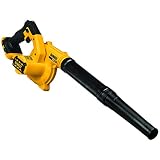
Check the voltage and battery family printed on your existing pack, then confirm the blower’s compatibility list. An 18V tool typically takes that brand’s 18V packs, while a 40V tool takes a separate 40V battery. Even within one brand, packs for different platforms are not interchangeable unless the manufacturer specifically says they are.
Also check the battery’s condition and capacity. A worn, low-capacity pack may run a blower briefly or trigger its overload protection under full throttle. High-output tools can benefit from packs designed to supply more current; a compact battery that works well in a drill may feel underpowered in a blower. Do not assume an adapter solves this: adapters can defeat protection features, and they do not increase the battery’s capacity or output.
Compare blower types
| Type | Best for | Main trade-off |
|---|---|---|
| Compact 18V | Decks, patios, garage floors, and dry leaves | Shorter runtime and less power for wet debris |
| High-output 18V or 20V-class | Regular home cleanup when you own suitable batteries | Runtime depends heavily on pack capacity and tool settings |
| 36V, 40V, or 56V | Larger lawns, heavier leaf piles, and longer sessions | Requires a matching battery platform, often at added cost |
| Two-battery blower | Longer work or higher sustained output | Uses two packs at once, so it can drain your spare batteries quickly |
Use the maker’s air-volume and air-speed figures as rough comparisons, not a guarantee of yard performance. Air volume helps move broad piles; air speed can help loosen leaves stuck in corners. Test the blower with the nozzle supplied, since nozzle shape affects the feel of the airflow. For a modest yard and dry leaves, the compact 18V blower category is often the sensible choice if you already have its batteries.
Runtime and battery size
Blower runtime varies sharply with throttle. Full power can empty a battery in a fraction of the time you get while clearing light dust at a low setting. A 5.0Ah pack stores more energy than a 2.0Ah pack at the same voltage, but it is also heavier. That extra weight matters when you hold the tool at arm’s length for 15 or 20 minutes.
For a rough planning check, multiply battery voltage by amp-hours to compare nominal energy: a 18V, 5.0Ah pack is about 90 watt-hours. This is not a runtime promise; tool efficiency, battery age, temperature, and throttle all matter. If you have one small pack, plan on short bursts and pauses rather than assuming it will handle a whole property in one charge.
High-output 18V blowers can be a good middle ground for people invested in a common tool platform. Look for a bare tool if you already own compatible, healthy batteries. If you need to buy a battery and charger, compare the bundle price against a larger-voltage blower kit rather than treating the tool-only price as the whole cost.
When to step up in power
Move to a larger platform if you routinely clear a large lawn, deal with wet leaves, or need to move debris across gravel or long distances. A 40V blower kit can make sense when your current 18V packs run out too quickly or the blower struggles with the work. The trade-off is buying into another battery and charger system if you do not already own one.
For big properties, a higher-voltage cordless blower may provide more sustained clearing power, but it is not automatically the best buy. Compare the complete cost, battery availability, pack weight, and whether you can use those batteries in other tools. A powerful blower is still a poor value if its expensive pack sits idle the rest of the year.
Common buying mistakes
Do not choose by voltage alone. Different tools and battery designs deliver different output, and a well-matched 18V blower may be more useful than a weak or poorly balanced higher-voltage model. Check the tool’s weight with the battery installed, especially if you will be working overhead or making repeated passes around a garden.
Expect less performance in cold weather and with old batteries. If the tool cuts out at full throttle, let the pack cool, check that its contacts are clean and dry, and try a healthy battery approved for that platform. Repeated shutdowns can point to an aging pack, an overloaded tool, or a battery that is not suited to the blower’s current demand.
Finally, a blower is not a leaf vacuum or a substitute for a rake in every situation. It can scatter mulch, dust, and gravel if you use full power close to the ground. Start at a low setting, angle the airflow along the surface, and work leaves into manageable piles. For occasional cleanup around a small home, the cheapest compatible tool that handles dry debris is usually enough; pay for a larger platform only when your yard and runtime demands justify it.
Related guides
- Longest Lasting Lawn Mower Battery: AGM vs Lithium vs Flooded Lifespan and Cost per Season
- Duralast Gold Lawn Mower Battery Review: U1 Fit, CCA and When to Pay for AGM
- Greenworks Pro 80V 21-Inch Mower Review: Runtime Math, Push vs Self-Propelled and Yard Fit
- Bosch High Pressure Washer Gun Replacement: Fittings, Adapters and What Fits Your Model