
Our Top Picks

What's inside
As an Amazon Associate I earn from qualifying purchases. This post may contain affiliate links at no extra cost to you.
The Basic Difference
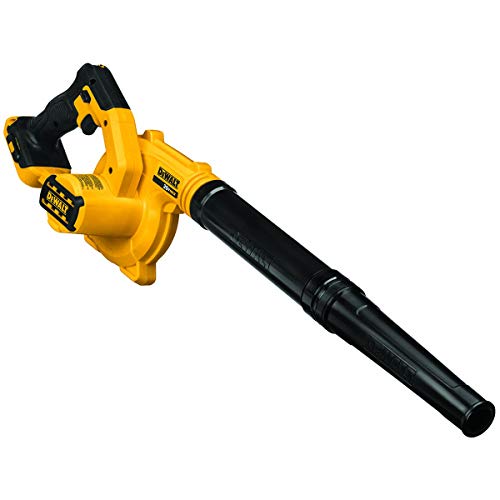
A cordless blower moves a large volume of air at relatively low pressure. Compressed air delivers a smaller stream at much higher pressure. That difference determines what each tool can clean safely and effectively.
For routine maintenance on cordless drills, impact drivers, saws, sanders, batteries, and chargers, a blower is usually the better first purchase. It clears sawdust from vents, battery rails, charger slots, and work surfaces without putting extreme force on seals or bearings. Compressed air is more effective for packed debris in tight recesses, but it needs more care and usually costs more to operate.
As an Amazon Associate we earn from qualifying purchases at no extra cost to you.

A typical compact cordless blower may produce roughly 100 to 500 CFM, depending on its design and speed setting, with an air velocity commonly advertised around 100 to 180 mph. A shop compressor may supply 3 to 10 CFM through a blow gun at 90 PSI. The compressor has far less volume, but the pressure can force air into places a blower cannot reach.
Where a Cordless Blower Wins
Use a blower for loose dust and chips. It is particularly useful after cutting lumber, drilling masonry, sanding, or trimming metal. Hold the tool so debris exits away from you, then sweep air across the tool rather than aiming directly into every opening.
A blower also works well for cleaning cordless tool batteries and chargers. Blow across the battery contacts and cooling vents from several angles, then inspect them under good light. Do not scrape contacts with metal or use the blower so close that grit is driven deeper into the connector.
The main advantage is convenience. A cordless blower starts immediately, needs no hose or compressor tank, and uses the same battery platform as your other tools. If you already own batteries from a major system, a cordless blower tool-only can be cheaper than buying a compressor, hose, fittings, and blow gun.
Choose a variable-speed model if possible. Full power is useful for clearing a workbench, but a lower setting gives better control around battery contacts, trigger switches, and partially disassembled tools. A narrow nozzle increases velocity but also makes it easier to scatter debris into vents or damage a fragile component.
Where Compressed Air Wins
Compressed air is better for small, enclosed areas where a blower’s broad stream cannot reach. It can clear packed dust from a jigsaw shoe, a drill’s chuck area, a circular saw’s guard mechanism, or the narrow slots around a reciprocating saw blade clamp.
It is also useful when you are servicing a tool on a workbench and need a precise stream. A blow gun with a rubber-tipped nozzle gives better control than a high-output blower. For occasional cleaning, a small portable compressor is often enough; you do not need a large contractor-grade tank unless you also plan to run impact wrenches, nailers, or spray equipment.
The downside is moisture. Compressing humid air creates condensation in the tank and hose. That water can reach tool electronics or leave corrosion on battery terminals. Drain the compressor tank regularly, use a clean hose, and avoid blowing directly into openings when the air line is producing visible mist. An inline water separator helps, but it is not a substitute for draining the tank.
Cordless Blower vs. Compressed Air
| Factor | Cordless blower | Compressed air |
|---|---|---|
| Best for | Loose dust, chips, benches, vents, and batteries | Packed debris and narrow recesses |
| Typical output | About 100–500 CFM, low pressure | About 3–10 CFM at 90 PSI from common shop compressors |
| Setup | Insert a charged battery and pull the trigger | Compressor, hose, fittings, and blow gun |
| Main risk | Scattering debris or exhausting a battery | Moisture, over-speeding bearings, and forcing grit into seals |
| Running cost | Battery charging and eventual replacement | Electricity, maintenance, fittings, and possible moisture control |
| Noise | Often roughly 75–100 dB at the operator | Compressor noise plus a sharp blow-gun stream |
A Safer Cleaning Procedure
Remove the battery before cleaning the tool. This prevents an accidental start and ensures that dust or metal chips cannot bridge energized contacts while you work. For tools with removable accessories, take out the bit, blade, sanding disc, or battery first.
Start with a soft brush or vacuum to remove loose material. Then use the blower at low or medium speed, holding it several inches away. Work from the outside toward an opening so debris leaves the tool instead of moving farther inside. Wear eye protection; a small steel chip can travel much farther than expected. Hearing protection is sensible with either method, especially in a confined shop.
Do not use compressed air to spin a tool’s motor, fan, chuck, or other bearing at high speed. Overspeeding can damage bearings and spread grease. Never aim high-pressure air at your skin, clothing, or another person. Air forced through a puncture or cut can enter tissue and cause a serious injury, even when the wound looks minor.
For battery packs, keep air pressure modest and avoid forcing dust into the pack’s seams. Never open a battery just to clean it unless you are trained to work around lithium-ion cells. A swollen, cracked, hot, leaking, or unusually smelly battery should be removed from service rather than blown out and reused.
What to Buy
Buy a cordless blower if your main jobs are sawdust removal, bench cleanup, and routine tool maintenance. Match the blower to your battery ecosystem rather than buying a second battery platform solely for cleaning. A blower compatible with your existing battery system is often the lowest-cost route.
Buy compressed air if you regularly service tools, clean machinery with tight passages, or already own a compressor for other work. A portable compressor and blow-gun kit is sufficient for many home workshops. Add a water separator if moisture is a recurring problem.
For most cordless-tool owners, the practical answer is not one or the other. Use a blower for the frequent, low-risk cleaning, and reserve controlled compressed air for occasional precision work. If the cheaper blower handles the dust you actually produce, spending more on a compressor will not make your tools last longer by itself.
Related guides
More from Amazon
Programs that pair well with the guide above. Offers and eligibility are set by Amazon and may change.
A free business account with business pricing and bulk-buying tools for work, shop or home office.
Create a business accountFree shipping on eligible items, Prime Video and more. Eligible new members can start with a free trial.
Start a Prime free trialAudiobooks and podcasts to listen to on the go. Eligible new members can start with a free trial.
Try Audible freeAd-free music streaming. Eligible new subscribers can start with a free trial.
Try Music Unlimited freeAs an Amazon Associate we earn from qualifying purchases.
Write Your Review
No reviews yet. Be the first to share your experience!