What's inside
As an Amazon Associate I earn from qualifying purchases. This post may contain affiliate links at no extra cost to you.
The short answer
For light-duty Craftsman V20 tools, the 2.0Ah pack is usually the better fit: it weighs less, takes up less space, and is enough for short jobs such as driving screws, trimming edges, or making a few cuts. Choose the 4.0Ah pack when the tool draws more power or you want to work longer between charges. The trade-off is straightforward: more capacity means more runtime, but also more weight and bulk.
Both packs are part of Craftsman’s 20V V20 battery system. A larger amp-hour rating does not make a compatible tool run at a higher voltage; it stores more energy. Actual runtime varies with the tool, material, workload, battery condition, and temperature, so there is no reliable universal claim that a 4.0Ah pack lasts exactly twice as long in every job.
2.0Ah vs 4.0Ah at a glance
| Factor | 2.0Ah pack | 4.0Ah pack |
|---|---|---|
| Capacity | 2.0 amp-hours | 4.0 amp-hours |
| Runtime | Less time between charges | More stored capacity for longer work |
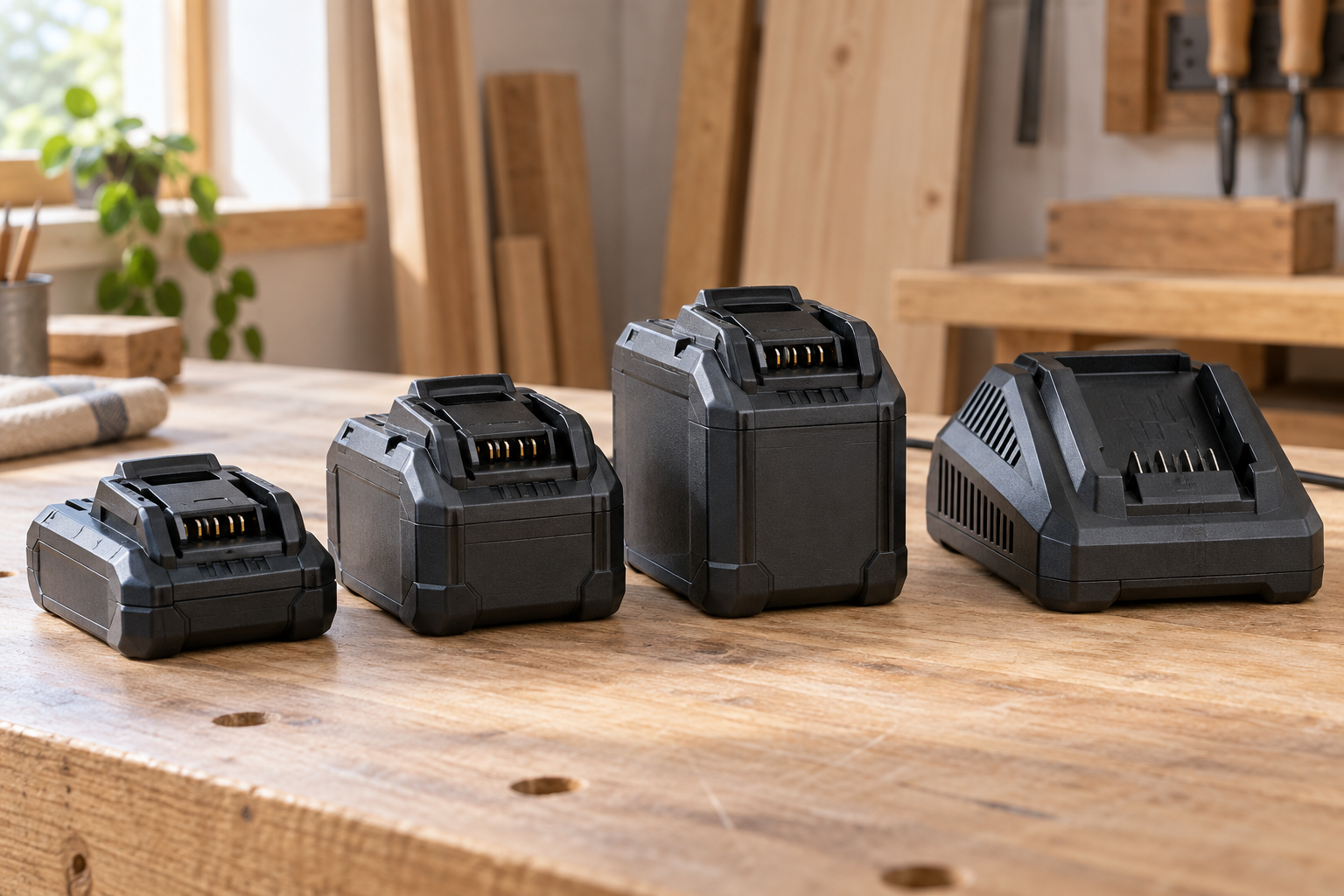
| Weight and size | Typically the lighter, more compact choice; check the pack’s listed dimensions and weight | Typically heavier and bulkier |
| Best fit | Short jobs and tools where balance matters | Longer sessions and tools that use battery capacity quickly |
| Trade-off | More frequent charging or pack swaps | More weight in the hand and potentially less comfortable handling |
Amp-hours describe capacity, not guaranteed work output. Tool efficiency and load matter: drilling a small pilot hole uses less energy than driving large fasteners, and cutting dense material can drain a pack faster than trimming soft growth. A 4.0Ah pack offers twice the rated capacity of a 2.0Ah pack, but real-world runtime may not scale neatly to twice as long.
Which pack suits common small tools?
For a compact drill or driver used on occasional household fixes, the 2.0Ah battery is a sensible default. It keeps the tool easier to handle overhead and is well suited to a short list of pilot holes or screws. If you are assembling furniture or doing a few repairs, buying a larger pack solely for runtime may add weight without much benefit.
For a trim router, oscillating tool, small saw, or other tool that runs continuously or cuts under load, the 4.0Ah pack is often more practical. It can reduce interruptions for battery changes, especially on a longer project. Those tools can also make the added weight noticeable, so consider how long you’ll be holding the tool and whether it supports the larger pack without interfering with your grip or work area.
On a compact impact driver, either size can make sense. The 2.0Ah pack is easier to maneuver for short fastening jobs; the 4.0Ah pack is a better choice for a long run of fasteners. If the tool slows, stops, or triggers its protection during demanding work, do not assume a bigger battery is the only fix. The fastener, bit, material, tool setting, and battery condition can all be factors.
Weight can matter more than runtime
With a handheld tool, the pack is part of the tool’s balance. Added battery weight can strain your wrist during overhead work, make a compact drill feel less nimble, or make one-handed use tiring. A smaller pack is especially useful for cabinet work, light assembly, and other tasks where control matters more than uninterrupted runtime.
For work at bench height or a long cutting session, the weight penalty may be less important than avoiding a pack swap. If you are unsure, try the tool with both pack sizes before committing, or check the listed pack weights and dimensions against the tool’s balance. Manufacturer bundles can vary, so verify exactly which capacity is included rather than relying on a kit photo.
Charging, storage, and pack swaps
A 4.0Ah pack generally takes longer to recharge than a 2.0Ah pack on the same charger because it holds more energy. Actual charge time depends on the charger and the battery’s temperature and condition; check the battery and charger instructions for compatibility and charging guidance. If a project involves repeated short jobs, owning two smaller packs may be more convenient than waiting for one larger pack to recharge.
Do not force a V20 battery into a tool or charger it is not designed to fit. Keep contacts clean and dry, and let a hot battery cool before charging if the instructions call for it. If a pack repeatedly cuts out, will not hold charge, or has visible damage, stop using it and follow Craftsman’s safety and replacement guidance. Cold weather can also reduce available performance temporarily.
What should you buy?
Choose a Craftsman V20 2.0Ah battery if your priority is a lighter setup for quick jobs, or if your tool spends much of its time in a drawer between uses. It is also the sensible choice when the included battery already gets the work done and you would rather avoid paying for capacity you rarely use.
Choose a Craftsman V20 4.0Ah battery for longer sessions, repeated cutting or sanding, or fewer interruptions on jobs that consume power quickly. If you own several V20 tools, a second compatible pack can be more useful than replacing a working 2.0Ah battery with a larger one. Compare the price of individual packs with kits only after confirming the kit’s battery capacity and charger contents.
For many owners, the practical setup is one light pack for compact tools and one larger pack for sustained work. But if you mainly use a drill or driver for brief household tasks, the cheaper 2.0Ah option is fine. Buy the 4.0Ah pack for a specific runtime need, not just because the number is bigger.
FAQ
Which pack suits common small tools?
What should you buy?
Related guides
- Longest Lasting Lawn Mower Battery: AGM vs Lithium vs Flooded Lifespan and Cost per Season
- Duralast Gold Lawn Mower Battery Review: U1 Fit, CCA and When to Pay for AGM
- Greenworks Pro 80V 21-Inch Mower Review: Runtime Math, Push vs Self-Propelled and Yard Fit
- Bosch High Pressure Washer Gun Replacement: Fittings, Adapters and What Fits Your Model