Our Top Picks


What's inside
As an Amazon Associate I earn from qualifying purchases. This post may contain affiliate links at no extra cost to you.
Most trim carpentry problems are not skill problems. They are tool-choice problems. A framing-grade nailer blows through a piece of 3/4-inch casing, a brad nailer leaves a bead of caulk hiding a joint that never really closed, and a bargain gun that jams every fifth shot turns a two-hour baseboard run into an afternoon of clearing the nose. The best finish nailer for trim is the one that sinks a 16-gauge or 15-gauge nail flush in poplar, MDF, and oak without splitting the stock, without denting the face, and without you thinking about it.
This ranking is ordered by what to buy first, not by price. Each placement exists because it unlocks a specific job. If you only ever hang baseboard and door casing in a house you live in, the first pick is the end of the conversation. If you are running crown, building built-ins, or installing exterior trim, the list keeps going for a reason.
As an Amazon Associate we earn from qualifying purchases at no extra cost to you.
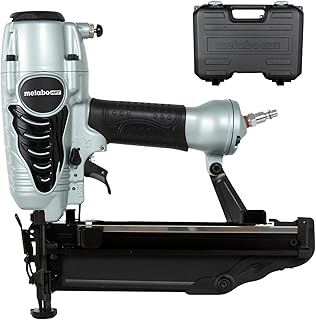
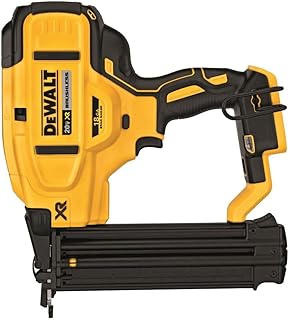

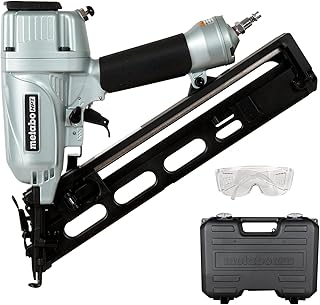

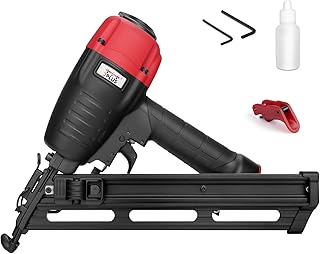

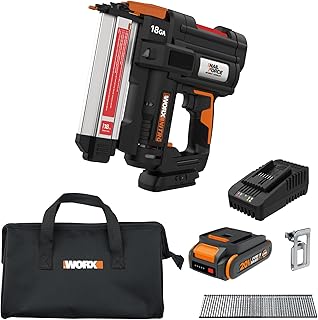
| Rank | Type | The job it unlocks | Who should stop here |
|---|---|---|---|
| 1 | 16-gauge cordless straight | Baseboard, casing, shoe, chair rail | Most DIYers and remodelers |
| 2 | 15-gauge angled pneumatic | Thick jambs, exterior trim, hardwood | Pros and high-volume installers |
| 3 | 18-gauge brad cordless | Shoe mold, small returns, cabinet trim | Second gun, not a first gun |
| 4 | 23-gauge pin nailer | Glue-ups, delicate profiles, no filler | Furniture and cabinet builders |
Why 16-gauge is the right first finish nailer for trim
Gauge is the whole argument, so settle it first. A 16-gauge nail is thick enough to hold 3/4-inch stock against a wall with real clamping force, and thin enough that it does not split the end of a piece of primed pine or blow out a mitered return. That is the sweet spot for the work that actually fills a punch list: baseboard, door and window casing, chair rail, shoe, and most crown.
An 18-gauge brad is a fastener you tack with. It holds trim in place while glue dries and it is excellent on small profiles, but on 5-1/4-inch baseboard over a slightly bowed wall it flexes and lets the board creep back off the drywall. A 15-gauge nail is stronger still and leaves a bigger hole, which is fine because you are filling it anyway, but it is more likely to split narrow stock and the guns are heavier.
Length range matters as much as gauge. Look for a 16-gauge gun that shoots from about 1 inch up to 2-1/2 inches. The short end lets you fasten shoe mold and thin returns; the long end reaches through 3/4-inch trim, 1/2-inch drywall, and still bites a stud with enough shank to matter. Guns that top out at 2 inches will frustrate you the first time you nail baseboard over thick plaster.
16-Gauge Cordless Straight Finish Nailer
If you own one finish nailer, this is it. Buy into the battery platform you already have, whether that is DeWalt XR, Milwaukee M18 FUEL, Makita LXT, or Ryobi ONE+, because the tool-only price is where cordless nailers stop looking expensive. Prioritize a tool-free depth dial, a dry-fire lockout so you stop marking trim with an empty gun, and a nose you can clear without a hex key. Expect a small ramp-up delay on the first shot compared to pneumatic. It is real, and it stops mattering within a day.
Cordless or pneumatic: pick based on how you work, not what is newer
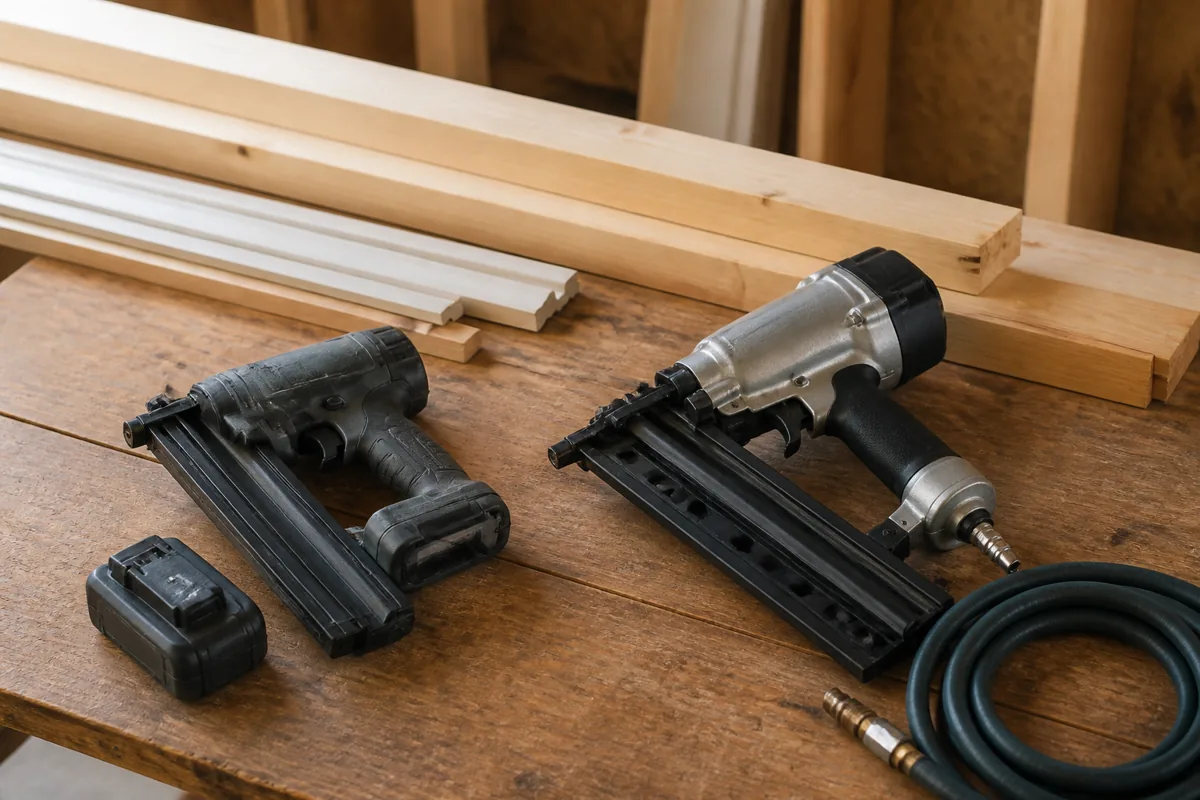
Cordless finish nailers won the remodeling market for one reason. Trim work happens in a finished house. Dragging a hose through carpeted bedrooms, around corners, and up stairs costs more time than the shooting does, and a compressor cycling in a hallway at 7 a.m. makes you unpopular. For punch lists, single rooms, closets, and anything above the first floor, cordless is the correct answer even though the tool is heavier and noticeably louder at the nose.
Pneumatic still wins on volume and on feel. A 15-gauge angled gun on a hose is lighter in the hand, fires instantly, costs a fraction of a comparable cordless tool, and will outlive the batteries of anything on this list. If you are trimming a whole house, or you already own a compressor and a hose reel, a pneumatic gun is not a compromise. It is the professional default.
The honest split: cordless for the trim you install in occupied spaces, pneumatic for the trim you install on job sites. Plenty of finish carpenters own both and do not consider that redundant.
- ✔ 16-gauge cordless: no hose, no compressor, ready in seconds
- ✔ Tool-free depth adjustment saves the piece you would otherwise dent
- ✔ Battery platforms you already own cut the real cost roughly in half
- ✔ Dry-fire lockout prevents blank shots that mar finished trim
- ✘ Cordless guns are nose-heavy and awkward on overhead crown
- ✘ Louder at the muzzle than pneumatic, ear protection is not optional
- ✘ First-shot ramp-up on some gas-spring designs
- ✘ Batteries and chargers add weight and eventual replacement cost
Second and third picks: what each one adds
A 15-gauge angled finish nailer earns the number two slot because it does the jobs the 16-gauge cannot. Thick exterior trim, solid oak stair parts, prehung door jambs that need to hold against a slamming door, and 5/4 material all want the extra holding power. The angled magazine is the underrated part. It reaches into inside corners and up under cabinet faces where a straight magazine simply will not fit. Angled guns also use collated nails with a slightly larger head, which resists pull-through in dense hardwood.
An 18-gauge brad nailer is third, not first, and the distinction matters. It is the gun you reach for when a 16-gauge nail would split the work: shoe mold, quarter round, mitered returns, cabinet face frames, back-band, and small applied moldings. It leaves a hole you can fill with a swipe of putty instead of a two-stage fill and sand. Buy it as a companion, and if you are cost-conscious, buy the brad nailer as the pneumatic in your kit since it does most of its work near a bench.
A 23-gauge pin nailer is fourth and it is a specialist. The pin is headless and holds almost nothing on its own, which is the point. It clamps a glue joint invisibly while the adhesive cures. If you build cabinets, furniture, or applied moldings on painted casework, it is the tool that eliminates filler entirely. If you install baseboard for a living, you can skip it for years without noticing.
15-Gauge Angled Finish Nailer (Pneumatic)
The value play in finish nailing. A quality pneumatic 15-gauge gun costs a fraction of a cordless equivalent, weighs less in the hand, and never waits on a battery. Look for a 360-degree adjustable exhaust so you are not blowing sawdust into your face on overhead work, a rear-loading magazine, and a swappable no-mar tip. If you already own a compressor rated for a finish nailer, this is the most capability per dollar on the list.
What to skip
Some categories look like the best finish nailer for trim on a spec sheet and are not. Skip these.
Skip 2-in-1 brad and stapler combo guns for trim. They exist to fasten upholstery and thin panel stock. The staple crown telegraphs through paint and the brad driving is a compromise on both sides.
Skip no-name cordless nailers with proprietary batteries. The gun may work fine for a season. When the battery fails, and it will, there is no replacement to buy and no charger to borrow. Stay on a platform sold at Home Depot, Lowe’s, or Amazon by a brand that will still be there in five years.
Skip gas-cartridge nailers for interior trim. Fuel cells are a consumable cost, they are temperature-sensitive, and they leave residue on the piston. Battery-only designs have made them unnecessary for finish work.
Skip buying a pancake compressor kit just for the nailer if all your trim work happens in occupied homes. The kit price looks great until you have run the hose upstairs three times.
Skip the extended magazine and the LED work light as deciding factors. Nail capacity is not the bottleneck in trim carpentry and the light is usually aimed at the wrong spot. Depth adjustment, nose access, and no-mar tip quality decide whether you like the gun.
Setup habits that matter more than the brand
Dial depth on a scrap of the actual trim before the first real shot, every time you change material. MDF, poplar, and red oak each want a different setting, and the difference between flush and blown-through is a quarter turn.
Nail into studs, not just drywall, on baseboard and casing. Two nails per stud, one high and one low, angled slightly toward each other, gives you a mechanical grip that survives seasonal movement. On casing, nail the outer edge into framing and the inner edge into the jamb.
Keep the no-mar tip clean and replace it when it hardens. A grit-loaded tip is the most common cause of the little crescent dents that show up after primer. Buy the spare tips when you buy the gun, because they are cheap and they always go missing.
Glue your miters. A finish nailer holds trim to the wall. Wood glue and a pin or brad hold the joint to itself, and that is what stops a mitered corner from opening in February.
FAQ
Is 16-gauge or 18-gauge better for baseboard? 16-gauge, in almost every case. Baseboard has to be pulled tight against walls that are rarely flat, and the thicker 16-gauge nail has the shank stiffness and holding power to do it. Use 18-gauge brads for the shoe mold or quarter round that goes on afterward, where a heavier nail would split the profile.
Do I need a compressor if I buy a cordless finish nailer? No, and that is the main reason to buy one. Modern battery finish nailers drive nails with a sealed gas spring or a flywheel, so there is nothing to charge except the battery. You may still want a small compressor eventually for a pin nailer or a blowgun, but the trim gun does not require it.
Can one nailer handle both trim and light framing? Not well. Finish nails top out around 2-1/2 inches and are far too thin for structural connections. If you need to fasten studs, blocking, or subfloor, that is a separate 15-degree or 21-degree framing nailer. Trying to substitute a finish nailer creates joints that look fastened and are not.
Buy the 16-gauge cordless first, add a 15-gauge angled pneumatic when volume or hardwood demands it, and treat the 18-gauge brad and 23-gauge pinner as the finish work companions they are. Match the platform to the batteries in your garage and you will spend less on the whole kit than most people spend guessing their way through two wrong guns.
Check prices on Amazon →