What's inside
As an Amazon Associate I earn from qualifying purchases. This post may contain affiliate links at no extra cost to you.
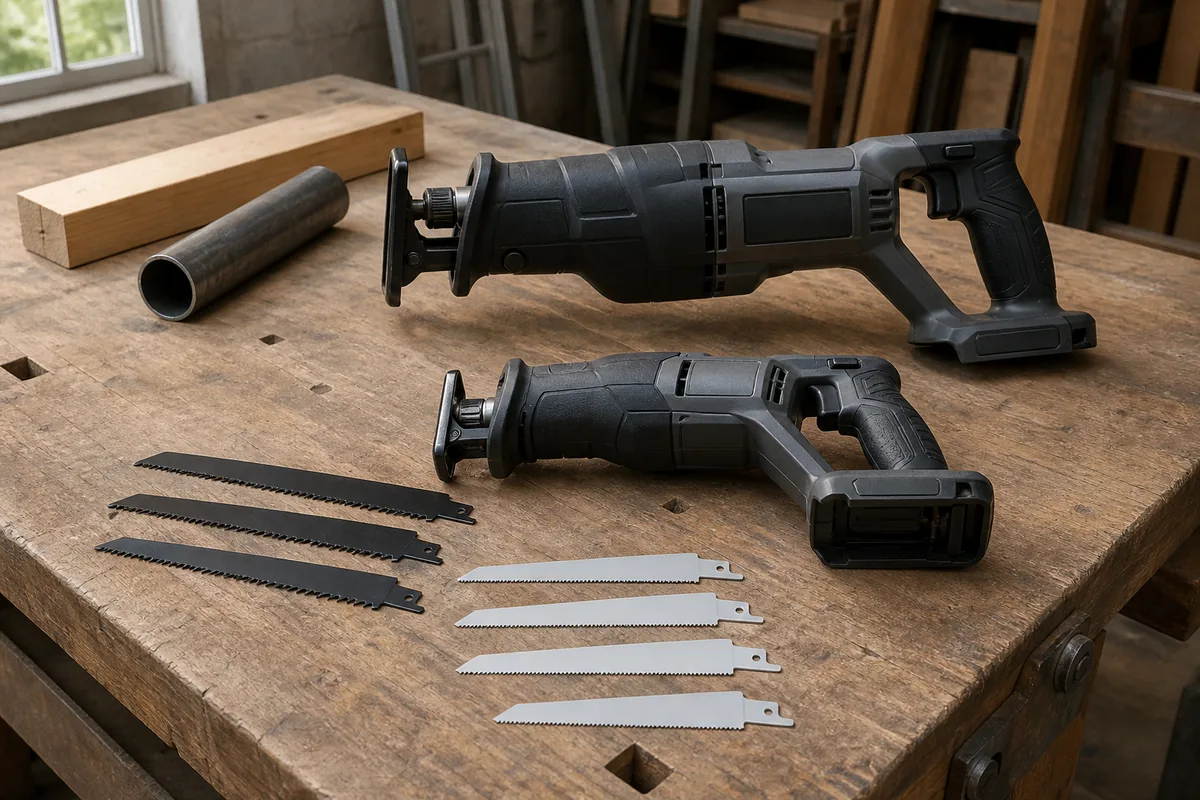
A cordless reciprocating saw is useful for demolition when a circular saw cannot make a controlled cut: opening a wall, trimming pipe, or cutting framing close to an obstruction. In a tight space, the best saw is not necessarily the one with the highest advertised speed. Length, blade choice, vibration, and the battery already in your kit often matter more.
As an Amazon Associate we earn from qualifying purchases at no extra cost to you.


What matters in tight spaces
Check the saw’s overall length and weight with a battery installed, not just the bare-tool specifications. Compact one-handed saws are easier to position between studs or above a ceiling, but they have less leverage and can feel rougher during long cuts. Full-size saws are generally steadier for cutting thick lumber, though their longer bodies can be awkward against a wall or in a cabinet.
Variable-speed triggers help start a cut without the blade jumping. A tool-free blade clamp makes blade changes faster, but it is still worth checking that the blade is fully seated before cutting. A pivoting shoe helps keep the blade stable against the work; it is not a substitute for supporting loose material. If a saw offers orbital action, switch it off for metal, plumbing, and careful flush cuts. Orbital motion cuts aggressively in wood but can make a blade harder to control.
Compare bare-tool prices with the cost of a battery and charger. If you already own compatible batteries, a tool-only saw is usually the economical choice. If you are starting from scratch, a kit may be cheaper than buying those items separately, and it gets you into a cordless platform for other tools.
Saw types compared
| Type | Best use | Main trade-off |
|---|---|---|
| Compact one-handed | Light cuts in confined areas; overhead access | Less control and endurance on heavy demolition |
| Compact two-handed | General renovation in tight rooms | Still less reach and cutting pace than a full-size saw |
| Full-size | Framing, thick lumber, and longer demolition cuts | More awkward around corners; heavier with a large battery |
Best buying choices
For most renovation work, a compact two-handed saw is the sensible middle ground. It is easier to place than a full-size model but usually offers a better grip and steadier cutting than a small one-handed tool. Look for a short body, variable speed, a pivoting shoe, and a blade clamp that accepts standard reciprocating-saw blades. Compare compact cordless reciprocating saws within your existing battery platform before buying.
Choose a full-size saw if you regularly cut studs, demolition lumber, or bundled material and have room to brace the shoe. A high-capacity battery can extend runtime, but it adds weight and can make overhead work tiring. A smaller battery is often more comfortable in a cramped room. If heavy cutting is occasional, a compact saw with a fresh, appropriate blade may be adequate; paying extra for a larger saw is not automatically worthwhile.
A one-handed saw makes sense for occasional pruning, short cuts, or jobs where access matters more than speed. It is not a magic replacement for a two-handed demolition saw: forcing a small tool through thick wood can cause wandering cuts, slow progress, and fatigue. Consider one-handed cordless reciprocating saws if those short, awkward cuts are your main task.
Brand loyalty is most useful when it avoids buying duplicate batteries and chargers. Before adding another platform, check whether your current batteries fit the tool and whether the platform has the other cordless tools you are likely to need. Battery adapters can create compatibility and warranty complications, so do not assume an adapter makes every battery-and-tool combination safe or supported.
Blades and cutting control
Blade choice has a big effect on speed and control. Use a wood blade for clean lumber cuts, a bi-metal demolition blade for mixed wood and nails, and a metal-cutting blade for pipe or sheet metal. A longer blade can reach behind material, but too much exposed blade flexes and can snag. For work in a wall, choose the shortest blade that clears the obstruction.
To reduce vibration and blade damage, brace the shoe firmly against the work and let the saw cut at its own pace. Pressing harder is not a reliable shortcut; it can bend the blade or stall the tool. If the cut slows, check for a dull blade, pinched material, or a battery that is nearly empty. Keep a second charged battery nearby for extended demolition, but avoid carrying extra weight on the saw unless runtime requires it.
Safe demolition in confined areas
Before cutting a wall, identify wiring, plumbing, gas lines, and the structure behind the surface. A reciprocating saw can reach hidden services before you see them. Turn off relevant circuits and water where appropriate, use a suitable inspection method, and make a shallow exploratory opening rather than plunging a long blade into an unknown cavity. Wear eye and hearing protection, and use respiratory protection when dust or old building materials may be hazardous.
Support the piece being removed so it cannot drop, twist, or pinch the blade. A pinched blade can stop suddenly and kick the tool back. In a tight opening, plan where the saw body, battery, and blade will travel before starting. If you cannot keep a stable grip or see the cut line, change the access plan instead of trying to force the tool into position.
Related guides
- Longest Lasting Lawn Mower Battery: AGM vs Lithium vs Flooded Lifespan and Cost per Season
- Duralast Gold Lawn Mower Battery Review: U1 Fit, CCA and When to Pay for AGM
- Greenworks Pro 80V 21-Inch Mower Review: Runtime Math, Push vs Self-Propelled and Yard Fit
- Bosch High Pressure Washer Gun Replacement: Fittings, Adapters and What Fits Your Model