
What's inside
As an Amazon Associate I earn from qualifying purchases. This post may contain affiliate links at no extra cost to you.
A single-bay charger makes sense when your cordless kit has one battery platform, a few packs and no need to keep several tools running all day. It costs less, takes up less space and is easier to bring to a job than a multi-port charger. The trade-off is simple: only one battery charges at a time, so a small kit can still run short if you use its packs faster than the charger can refill them.
As an Amazon Associate we earn from qualifying purchases at no extra cost to you.
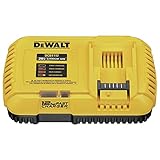


What to check before buying
Start with the battery platform, not the charger’s advertised speed. Chargers are generally made for a particular brand and battery family; a charger for one platform usually will not charge another brand’s packs. Check the exact battery series and voltage compatibility in the product specifications, especially if you own older or newer packs in the same brand’s lineup.
Next, compare charge time against your work pattern. Charging time varies with pack capacity, charger output, battery temperature and the charger’s control cycle. A 2.0Ah pack may refill much sooner than a 5.0Ah pack on the same charger. Treat advertised times as estimates for specified batteries, not a promise that every pack will charge at that rate.
Also consider where the charger will live. A compact unit is convenient on a crowded shelf or in a tool bag, while a larger fan-cooled charger may be louder and less pleasant in a small indoor space. Read the manual for operating temperature limits and ventilation requirements. Charging a cold battery straight from an unheated vehicle or a hot pack straight off a hard day’s work can delay charging or trigger a temperature warning.
Single-bay charger types compared
| Type | Best fit | Main trade-off |
|---|---|---|
| Basic standard charger | Homeowners and light-duty users with spare batteries | Lower cost, but longer waits on larger packs |
| Compact travel charger | Small kits, occasional repairs and limited storage | Convenient size; output and compatibility may be more limited |
| Rapid single-bay charger | Frequent use where a pack needs to return to service quickly | Higher cost and potentially more fan noise; check support for your pack size |
For an occasional DIY kit, a standard single-bay charger for your battery platform is often enough. If you own two batteries and can charge one while using the other, the slower refill may not matter. Paying extra for a rapid charger is hard to justify when the tool gets used for short tasks and then sits for weeks.
Match the charger to the kit
A minimal kit often works well with two batteries: one in the tool and one charging or ready as a spare. That arrangement is more resilient than buying one large-capacity battery and expecting a single charger to keep pace. If a battery takes several hours to recharge and your work consumes it in less time, a second pack gives you a buffer. If you routinely drain both packs before either is ready, the problem is no longer charger convenience; you may need a third battery, a faster compatible charger or a break in the work schedule.
Battery capacity changes the balance. A smaller pack is lighter and usually a good match for a drill used overhead or for short jobs. A larger pack can extend runtime on demanding tools, but it adds weight and generally takes longer to charge. For a compact kit built around a drill, driver or light, a compact single-port charger may be easier to store than a high-output unit. Check the charging specifications for your actual battery capacity before choosing on size alone.
If downtime has a real cost, look at a rapid single-bay charger compatible with your packs. It can reduce the gap between batteries, but “rapid” does not mean instant, and not every charger reaches its top rate with every battery. The battery’s temperature and built-in charge management can slow the process. A faster charger also cannot solve a shortage of packs if several tools are drawing from the same small supply.
Common buying and charging mistakes
The most costly mistake is assuming that a similar-looking battery will fit the charger. Verify the platform and battery series, and avoid relying on generic compatibility claims without clear documentation. A charger that physically accepts a pack is not automatically a safe or supported match.
Another common problem is buying for a best-case charge time rather than the battery you use most. Look for charge-time figures for both smaller and larger packs when available. If the maker lists a time only for a small battery, do not assume a large pack will charge at the same pace.
Keep the charger on a stable, dry surface with its vents unobstructed. Do not cover it with rags or leave it buried in a closed tool bag while charging. If the charger flashes a fault or temperature indicator, consult its manual rather than repeatedly removing and reinserting the battery. Let a hot or cold pack return to the permitted charging temperature, then try again. Persistent fault indications can point to a damaged battery, poor contacts or a charger issue; stop using suspect equipment.
A practical buying decision
Choose a basic single-bay charger if your kit is for home repairs, you already have a spare battery and a few hours of charging time is acceptable. Pick a compact unit when storage and portability matter more than turnaround speed. Spend more on a faster charger only when battery wait time regularly interrupts work, and confirm its performance with the capacity and series of packs you own.
For a minimal cordless kit, the best charger is usually the one that matches the platform you have, fits the batteries you actually use and can be left somewhere ventilated. Extra charging speed is useful only when it changes your workday; otherwise, a standard charger and a second battery are often the better-value combination.
Related guides
- Longest Lasting Lawn Mower Battery: AGM vs Lithium vs Flooded Lifespan and Cost per Season
- Duralast Gold Lawn Mower Battery Review: U1 Fit, CCA and When to Pay for AGM
- Greenworks Pro 80V 21-Inch Mower Review: Runtime Math, Push vs Self-Propelled and Yard Fit
- Bosch High Pressure Washer Gun Replacement: Fittings, Adapters and What Fits Your Model