Our Top Picks


What's inside
As an Amazon Associate I earn from qualifying purchases. This post may contain affiliate links at no extra cost to you.
A 16 gauge finish nailer is the gun that closes out a room. It drives a fastener stiff enough to pull 3/4-inch baseboard and door casing tight to framing, yet small enough that the hole disappears under one pass of filler. If you are shopping for the best 16 gauge finish nailer, the hard part is not brand loyalty. It is that most buyers choose the wrong power source for the work they actually do, then blame the tool when it sits on the shelf.
This list is ordered by what to buy first, not by price. Pick one is the tool that unlocks the most jobs for the most people. Everything under it is a specialist or a second gun. Already own something here? Jump to the section that fills your gap, then read the what-to-skip block before you spend anything.
As an Amazon Associate we earn from qualifying purchases at no extra cost to you.
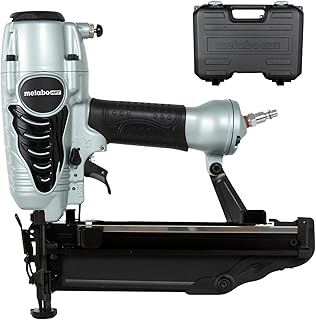
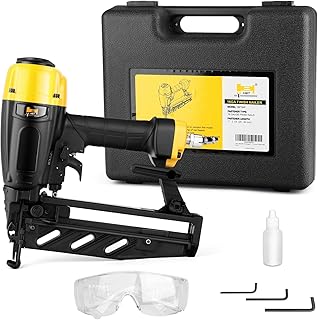

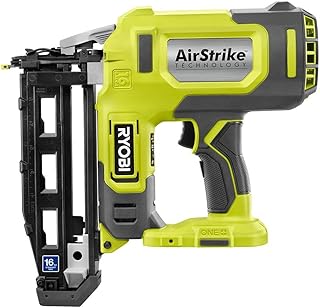


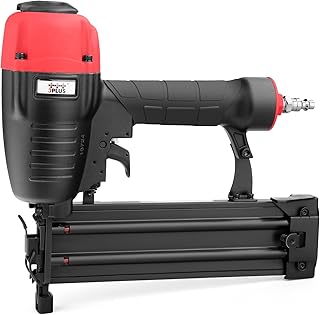
| Pick | Type | Job it unlocks |
|---|---|---|
| 1 | Cordless angled 16 gauge | Trim and punch-list work with no hose and no compressor |
| 2 | Pneumatic straight 16 gauge | All-day shop speed at the lowest cost of entry |
| 3 | Pneumatic angled 16 gauge | Stair skirts, cabinet interiors, tight inside corners |
| 4 | Cordless on a value platform | Hose-free trim for weekend and single-room projects |
| 5 | 16 gauge plus 18 gauge pair | Casing and base down to delicate stop, shoe, and scribe |
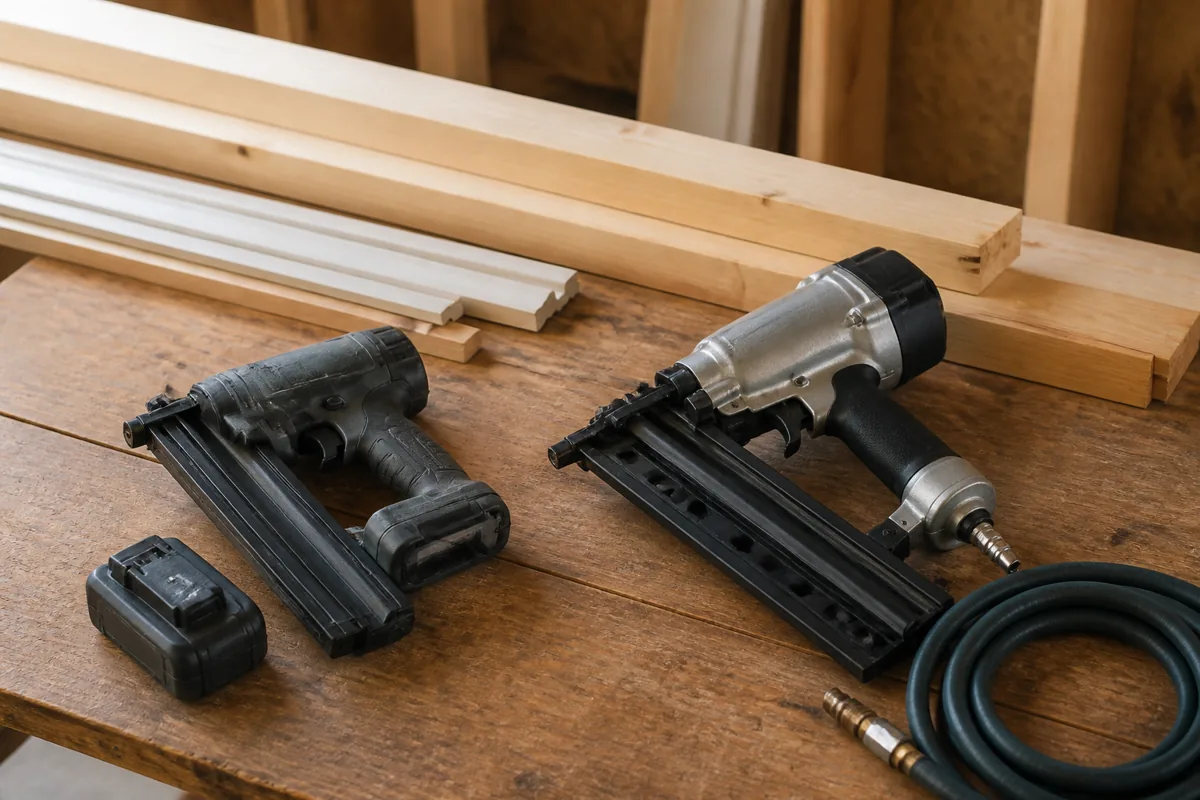
How I Rank the Best 16 Gauge Finish Nailer Options
Battery platform comes before brand. A cordless nailer that shares packs with your drill beats a slightly nicer gun on a platform you do not own. DeWalt 20V MAX XR, Milwaukee M18 FUEL, and Makita 18V LXT all field capable 16 gauge guns, so the battery already in your bag is a legitimate tiebreaker.
Nose profile and magazine angle. A slim nose sets a nail an inch from a mitered return without blowing out the joint. An angled magazine reaches inside corners and stair skirts where a straight magazine hits the wall first.
Tool-free depth adjust and jam clearing. Trim work moves between soft pine, MDF, and hard maple all day. A thumb dial and a latch you can open without a wrench matter more over a week than headline driving power.
Fastener supply. Nails from 1 inch to 2-1/2 inches should be a shelf item at every home center near you. Odd collation you can only order online is a strike.
The Ranking: Buy in This Order
1. Cordless angled 16 gauge from a platform you already own
This unlocks trim carpentry anywhere a hose is a liability: casing, crown, chair rail, closet shelving, exterior PVC on a ladder, and callbacks in finished houses where hauling a compressor upstairs is a losing trade. Premium cordless guns now use a sealed gas spring, so there is no fuel cell and no flywheel spool-up before the first shot. They run heavier at the nose and cost more, but a one-room job you can start in ninety seconds is worth the tax.
Cordless 16 Gauge Angled Finish Nailer (DeWalt XR, Milwaukee FUEL, Makita LXT)
Buy the bare tool if you already have batteries and a charger. Kits usually only pay off when you need the extra pack anyway.
2. Pneumatic straight 16 gauge plus a small compressor
This unlocks bench and shop production: face frames, cabinet boxes, jigs, drawer parts, and batches of trim cut on horses in the garage. Air guns are lighter at the nose, far cheaper, and never need charging. If your work happens within thirty feet of an outlet, this is the smarter first buy and the money saved covers a lot of nails.
Pneumatic 16 Gauge Straight Finish Nailer
Pair it with a quiet pancake or one-gallon compressor. Finish work needs enough air for one gun, not a big two-stage tank.
3. Pneumatic angled 16 gauge
The specialist. An angled magazine is what gets a nail into the tight side of a stair skirt, the back corner of a built-in, or up under a cabinet face frame where a straight magazine simply will not fit. Buy it as a second air gun once you have hit that wall on a real job, not before.
4. Cordless 16 gauge on a value platform
Ryobi ONE+ and Craftsman V20 both sell 16 gauge cordless nailers that will hang the trim in your own house perfectly well. They are heavier, slower to recover between shots, and less refined at the depth stop. For a homeowner doing one or two rooms a year, that is an easy trade for the price of admission.
16 Gauge Finish Nailer Kit for DIY and Homeowners
Good enough for baseboard, casing, and shelving in your own home. If you bill for trim every week, step up to a pro platform instead.
5. A 16 plus 18 gauge pair instead of one do-everything gun
Once the 16 is handled, the next dollar is better spent on an 18 gauge brad nailer than on a nicer 16. Sixteen gauge splits thin stop, shoe molding, and narrow scribe strips. The brad gun handles those, and between the two you can trim an entire house without reaching for a 15 gauge.
Cordless or Pneumatic: Decide by the Room, Not the Spec Sheet
Answer one question: do you set up in a spot and stay there, or do you move constantly? Shops, garages, and new construction reward air. Occupied houses, ladders, punch lists, and second floors reward cordless. Anyone doing both ends up with an air gun on the bench and a cordless in the truck, and that is a reasonable place to land.
- ✔ No hose, no compressor, no cord dragging across finished floors
- ✔ Ready to fire in seconds for a five-nail repair
- ✔ Sealed gas spring designs need no fuel cells
- ✘ Heavier and more nose-heavy than a comparable air gun
- ✘ Costs noticeably more, especially outside a kit
- ✘ Shot recovery still trails air on fast production runs[/afk_cons></p>
- ✘ <h2>What to Skip</h2>
- ✘ <p>Skip no-name cordless nailers built on batteries no other tool uses, because when the pack dies the gun is scrap. Skip 15 gauge as your first finish nailer unless you hang solid doors for a living, since the fatter nail leaves a hole that needs real filler on painted trim. Skip a big two-stage compressor bought to run one finish gun. Skip staple and flooring hybrids that claim four jobs and carry a nose too fat for clean trim. Skip paying up for 2-1/2 inch capacity if 2 inches is the longest nail you will ever set.</p>
- ✘ <p>
- ✘ Proprietary battery guns from brands with no other tools
- ✘ 15 gauge as a first nailer for painted trim
- ✘ Combo staple and nail hybrids with a bulky nose
- ✘ Oversized compressors for single-gun finish work
Frequently Asked Questions
Is 16 gauge or 18 gauge better for baseboard? Sixteen gauge, in most cases. The thicker nail has the holding power to pull 1/2-inch and 3/4-inch base tight to a slightly bowed wall. An 18 gauge brad is better for shoe, stop, and small returns where a 16 would split the wood.
Do I need an angled or a straight magazine? Straight is fine for base, casing, and general trim, and those guns usually cost less. Choose angled if stairs, built-ins, or cabinet interiors are a regular part of your work, because the angle buys corner access nothing else will.
Can a 16 gauge finish nailer replace a 15 gauge? For painted interior trim, yes. Fifteen gauge earns its keep on prehung door jambs, thick exterior trim, and hardwood where you need maximum grip. If that work is occasional, glue plus longer 16 gauge nails usually gets you there.
Buy in the order above and the tool matches the work instead of the marketing. Match the battery platform, pick the magazine angle your jobs demand, and keep 1-1/4, 2, and 2-1/2 inch nails on the shelf.
Check prices on Amazon →