What's inside
As an Amazon Associate I earn from qualifying purchases. This post may contain affiliate links at no extra cost to you.
A hole saw puts a different load on a drill than a small twist bit. Its wide cutting rim can grab as it breaks through, especially in thick wood, plywood, or plastic. For clean, controlled holes, choose a cordless drill driver with a low-speed gear, a firm side handle, and enough battery and motor capacity to keep turning without bogging down. You do not need the most powerful drill for occasional holes in thin material.
As an Amazon Associate we earn from qualifying purchases at no extra cost to you.


What matters for hole saws
Prioritize low-speed torque and control over top speed. A two-speed drill with a low range around 0–500 or 0–600 rpm is a useful starting point; larger hole saws generally call for slower cutting than small ones. Follow the hole-saw maker’s speed guidance, since tooth design and material make a difference. If the drill has a clutch, set it high enough not to slip during cutting, but do not assume the clutch will protect your wrist if the saw catches.
A side handle is valuable once the hole saw is roughly 2 inches or larger, and particularly for holes around 3 inches and up. It gives you a better grip if the teeth bind. Check that the handle is included or available for the drill you are considering. A 1/2-inch chuck is convenient for larger arbors; a 3/8-inch chuck can work for smaller hole saws, but limits arbor compatibility. Confirm the arbor’s shank size before buying.
Brushless motors can run more efficiently and maintain speed better under load, but they cost more. For a few holes in softwood or thin plastic, a brushed drill with a low-speed gear and good handling is often enough. Battery capacity matters too: a 2.0Ah pack keeps the drill lighter, while a 4.0Ah or larger pack typically lasts longer and can handle sustained cutting with fewer interruptions.
Which cordless drill type to buy
| Drill category | Best fit | Trade-off |
|---|---|---|
| Compact 3/8-inch drill driver | Small hole saws, thin material, occasional work | Lighter and cheaper, but less suitable for big arbors and extended cuts |
| Full-size 1/2-inch drill driver | Regular wood or plastic cutting, including larger hole saws | More weight, but broader arbor compatibility and usually better control under load |
| High-torque brushless drill driver | Frequent large holes or demanding work | Costs more; extra power does not prevent a jam or make poor technique safe |
For most homeowners buying specifically for hole saws, a full-size 1/2-inch drill driver is the balanced choice. If you already own a compatible compact drill, try it on smaller saws and thinner stock before upgrading. Buy a higher-torque model when you regularly cut large holes, work in thick hardwood, or need the drill for other heavy-duty jobs—not just because the largest number on the box sounds reassuring.
Choose a battery platform you will use
If you own cordless tools, staying within that battery system is often better value than buying an otherwise similar bare drill from another brand. A bare tool can be a good deal when you have compatible batteries and a charger. If you are starting from scratch, compare the cost of a kit, the size and weight of its included batteries, and whether the brand offers other tools you actually expect to use. A larger ecosystem is useful only if its tools suit your work.
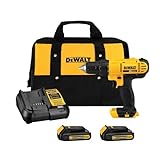
For a first purchase, compare 1/2-inch cordless drill-driver kits from the battery platforms you are considering. If you already have batteries, look for a compatible bare-tool 1/2-inch drill driver. Check the included accessories carefully: kits do not always include a side handle, hole-saw arbor, or the battery capacity you need.
Cutting wood and plastic without a bind
Clamp the work securely, mark the hole, and make sure there is clearance behind the cut. Set the drill to its low gear. Start with the pilot bit square to the surface and let the saw establish its track before applying steady pressure. Do not lean your full weight on the drill. If it slows sharply, chatters, or stops, ease off and clear the cut rather than squeezing the trigger harder. Packed sawdust can stall a hole saw; retract it periodically to clear chips, especially in deep cuts.
For a through-hole, cut until the pilot bit emerges on the far side, then stop. Finish from that side using the pilot hole as a guide. This helps reduce splintering and breakout. In plastic, use a sharp saw and light, consistent pressure; too much friction can melt or deform the edge. Let the teeth cut instead of forcing them. Wear eye protection, keep loose clothing away from the chuck, and hold the drill with both hands when using a large saw.
A drill that is struggling, heating up, or repeatedly stalling is a sign to stop and reassess the saw size, material thickness, speed, and chip clearing. A more powerful drill may help with a suitable setup, but it will not fix a dull hole saw, an undersized arbor, or an unsecured workpiece.
A practical buying checklist
Before ordering, check for a 1/2-inch chuck if you plan to use larger arbors, a low-speed gear suitable for hole-saw work, and a side handle for bigger cuts. Match the battery platform to tools you own or genuinely plan to buy. Choose a kit if you need batteries and a charger; choose a bare tool if your existing packs are compatible. For occasional small holes, a less expensive drill is fine. For repeated large holes, spend more on a full-size drill with strong low-speed performance and a handle you can grip securely.
Related guides
- Longest Lasting Lawn Mower Battery: AGM vs Lithium vs Flooded Lifespan and Cost per Season
- Duralast Gold Lawn Mower Battery Review: U1 Fit, CCA and When to Pay for AGM
- Greenworks Pro 80V 21-Inch Mower Review: Runtime Math, Push vs Self-Propelled and Yard Fit
- Bosch High Pressure Washer Gun Replacement: Fittings, Adapters and What Fits Your Model