What's inside
As an Amazon Associate I earn from qualifying purchases. This post may contain affiliate links at no extra cost to you.
Match the hose to the gun
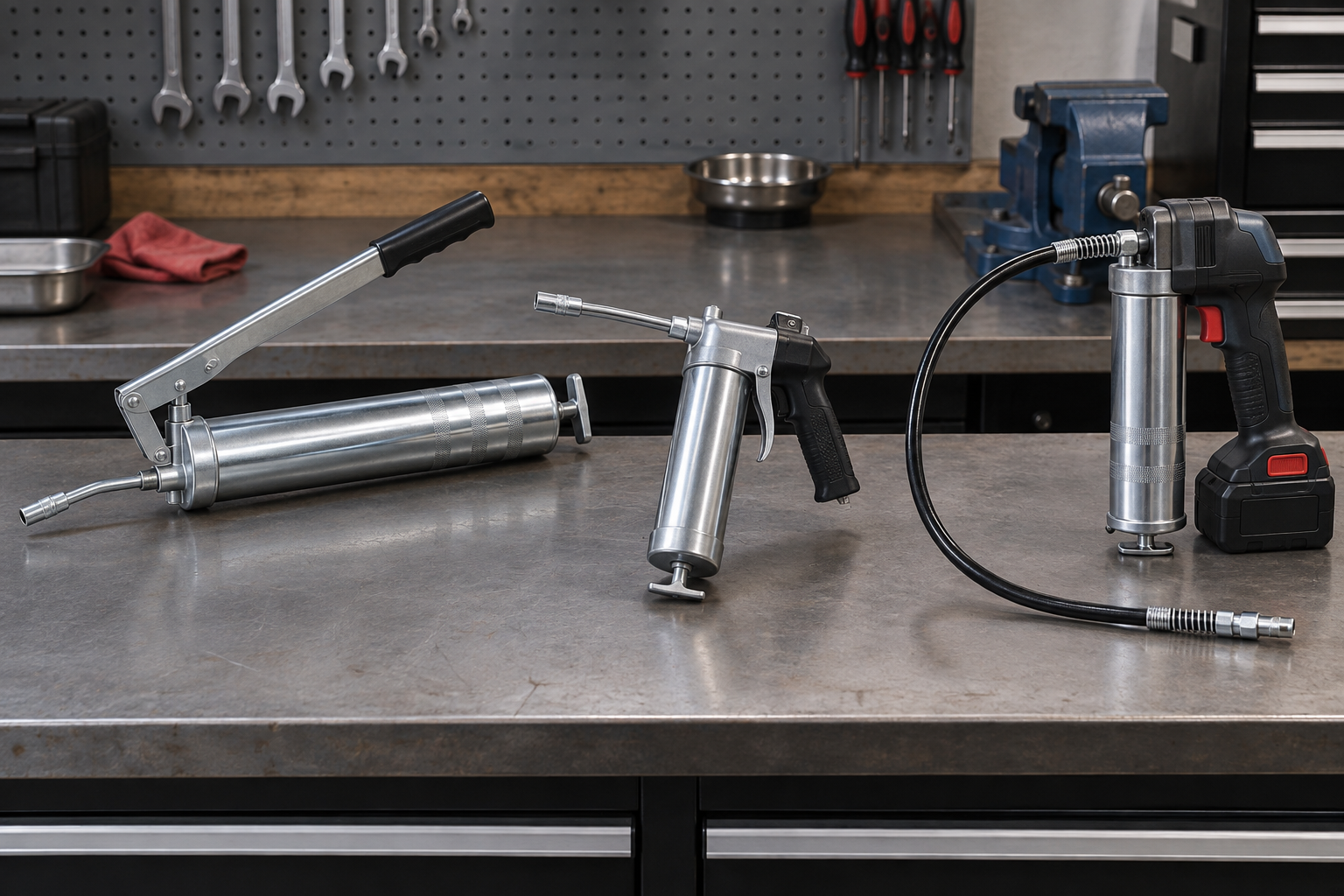
A cordless grease gun can develop enough pressure to make hose choice matter. Before buying a replacement, check the gun manual for its outlet thread, maximum working pressure, and any hose requirements. Do not assume that a hose fitting the thread is suitable for the pressure. A hose rated below the gun’s maximum can swell or burst, and a hose that does not match the outlet can leak or damage the threads.
Many grease-gun hoses use a 1/8-inch NPT connection, but that is common, not universal. NPT is a tapered pipe thread; metric and other fittings exist. Verify the actual thread and whether the connection needs a compatible seal or adapter. If you cannot confirm it from the manual, take the old hose or gun to a tool supplier rather than forcing a fitting that feels close.
For routine service, a high-pressure replacement grease-gun hose is a sensible starting point. Compare its working-pressure rating—not only its burst rating—with the gun specification. A burst rating describes a failure threshold, not a pressure at which the hose should be used.
Choose length and flexibility
Most standard hoses are around 12 to 18 inches long. That range works for many machines while keeping the hose manageable. A shorter hose is easier to control in an open, accessible fitting, but may force you to hold the gun awkwardly around a frame or wheel. A 24- to 36-inch hose reaches deeper fittings, at the cost of more hose to route, more chance of snagging, and less direct control of the coupler.
Flexibility matters as much as length. A stiff hose may resist kinking but can push the coupler sideways off a fitting. A very soft hose bends easily, but can be harder to guide and may be less durable if dragged over sharp edges. If you service fittings behind guards or inside equipment frames, choose enough length to approach the fitting straight, then check that the hose bends without collapsing.
Do not use a longer hose just to compensate for poor access if it will be caught by moving parts. Route it clear of belts, fans, and hot surfaces, and keep your hands away from pinch points. A hose that is long enough to reach is not automatically safe to use.
Select a coupler that releases cleanly
The coupler is the part that grips the grease fitting, also called a zerk. A standard four-jaw coupler is inexpensive and works well when fittings are accessible and in good condition. Its drawback is removal: high pressure can wedge the jaws onto the fitting, so pulling straight back may bend or break the fitting.
A locking coupler latches onto the fitting and frees your hand to control the gun. It can help with awkward or hard-to-reach locations, but it adds length and moving parts. A version with a release collar or pressure-release mechanism is easier to detach after greasing than a basic locked-on style. For a coupler that is frequently stuck, a locking grease-gun coupler with a release may be worth the extra cost.
Whichever style you choose, make sure its pressure rating meets or exceeds the gun’s maximum working pressure. Check that the jaw opening fits standard grease fittings, and avoid forcing it onto a damaged, bent, or unusually sized fitting. A coupler that leaks around the fitting can waste grease and make it difficult to tell whether the bearing is taking grease.
Compare common hose and coupler setups
| Setup | Best for | Main trade-off |
|---|---|---|
| 12–18-inch hose with standard coupler | Accessible fittings and occasional maintenance | Low cost, but can be awkward in tight spaces |
| 24–36-inch hose with standard coupler | Recessed fittings where a longer reach is needed | More reach, but more hose to snag or control |
| Short hose with locking coupler | Repeated greasing at exposed fittings | Holds securely, but may be difficult to release under pressure |
| Flexible hose with release-style locking coupler | Hard-to-reach fittings and frequent service | Convenient, but usually costs more and has more parts |
A basic hose and standard coupler is often sufficient for a homeowner greasing a few trailer or mower fittings. Paying for a locking coupler makes more sense when you regularly work alone, service fittings in cramped locations, or lose time trying to keep a standard coupler seated.
Avoid pressure and fitting problems
A cordless grease gun can force grease at very high pressure, and a blocked fitting can drive pressure up quickly. If grease will not enter, stop rather than holding the trigger while increasing force. Check for a clogged zerk, a blocked passage, a damaged bearing seal, or a coupler that is not seated squarely. More pressure is not a repair; it can damage a seal or make the coupler hazardous to remove.
Before changing the hose or coupler, remove the battery and relieve pressure according to the gun manual. Keep the hose pointed away from your face and hands. Never test a suspected leak by touching it: high-pressure grease can penetrate skin and requires urgent medical treatment. Replace a hose with cracked covering, exposed reinforcement, bulges, or leaks. Do not patch it with tape or continue using it because the leak looks small.
Grease type and cleanliness also affect results. Wipe the fitting before connecting so dirt is not pushed into the bearing, and use grease compatible with the machine’s specification. Mixing incompatible greases can cause thickening or separation; a better hose cannot fix that problem.
Buy for the work you actually do
For occasional maintenance, start with a pressure-rated hose of the correct thread and a standard coupler. Replace a worn hose promptly, but there is no need to buy an extra-long or premium locking assembly if every fitting is easy to reach. If access is the recurring problem, measure the path to the fitting and choose the shortest hose that lets you connect straight without putting your hand near moving parts.
For frequent shop or fleet work, prioritize a durable hose, a pressure rating that matches the gun, and a coupler that releases without levering against the fitting. A high-pressure hose-and-coupler kit can be convenient, but confirm the thread, hose length, and working-pressure rating before ordering; kits do not all fit every gun.
Finally, inspect the battery platform only if you are choosing a complete cordless grease gun rather than replacing its hose. Battery compatibility matters for the tool body, but hoses and couplers are determined by pressure rating, thread, reach, and fitting style—not by battery brand.
Related guides
- Longest Lasting Lawn Mower Battery: AGM vs Lithium vs Flooded Lifespan and Cost per Season
- Duralast Gold Lawn Mower Battery Review: U1 Fit, CCA and When to Pay for AGM
- Greenworks Pro 80V 21-Inch Mower Review: Runtime Math, Push vs Self-Propelled and Yard Fit
- Bosch High Pressure Washer Gun Replacement: Fittings, Adapters and What Fits Your Model