What's inside
As an Amazon Associate I earn from qualifying purchases. This post may contain affiliate links at no extra cost to you.
A cordless grease gun is only as useful as the battery behind it. The tool must develop enough pressure to push grease through narrow fittings, hardened grease, and partially blocked passages. At the same time, it needs enough runtime to finish a service route or maintenance job without repeated battery changes. Choosing by voltage alone is a mistake: pressure, grease type, hose length, battery size, and the condition of the equipment all affect performance.
Pressure: what the number really means
Most cordless grease guns advertise a maximum pressure somewhere around 6,000 to 10,000 psi. That figure is a limit, not the pressure the tool produces continuously during normal pumping. A gun may reach its maximum rating only when the outlet is nearly blocked. Under typical use, flow rate and the ability to maintain pressure matter more.
For farm equipment, trailers, compact machinery, and automotive suspension points, a gun rated near 7,000 or 8,000 psi is generally adequate. A higher-pressure model is more useful for construction equipment, industrial machinery, and fittings that are frequently neglected. It can force grease through a stiff or restricted fitting, but it will not fix a completely blocked passage.
Pressure also creates a safety issue. A grease gun can inject grease through skin if the hose, coupler, or fitting fails. Never hold a leaking connection with your hand, and release pressure before removing a stuck coupler. A flexible hose rated below the gun’s maximum pressure is a serious failure risk.
Look for a model with a pressure-selection switch or two-speed operation if you work on different equipment. A high-volume setting fills a normal fitting faster. A high-pressure setting is slower but better for resistance. If the gun has only one operating mode, a pressure rating above your expected workload gives more margin, although it may consume more battery power.
Runtime and battery size
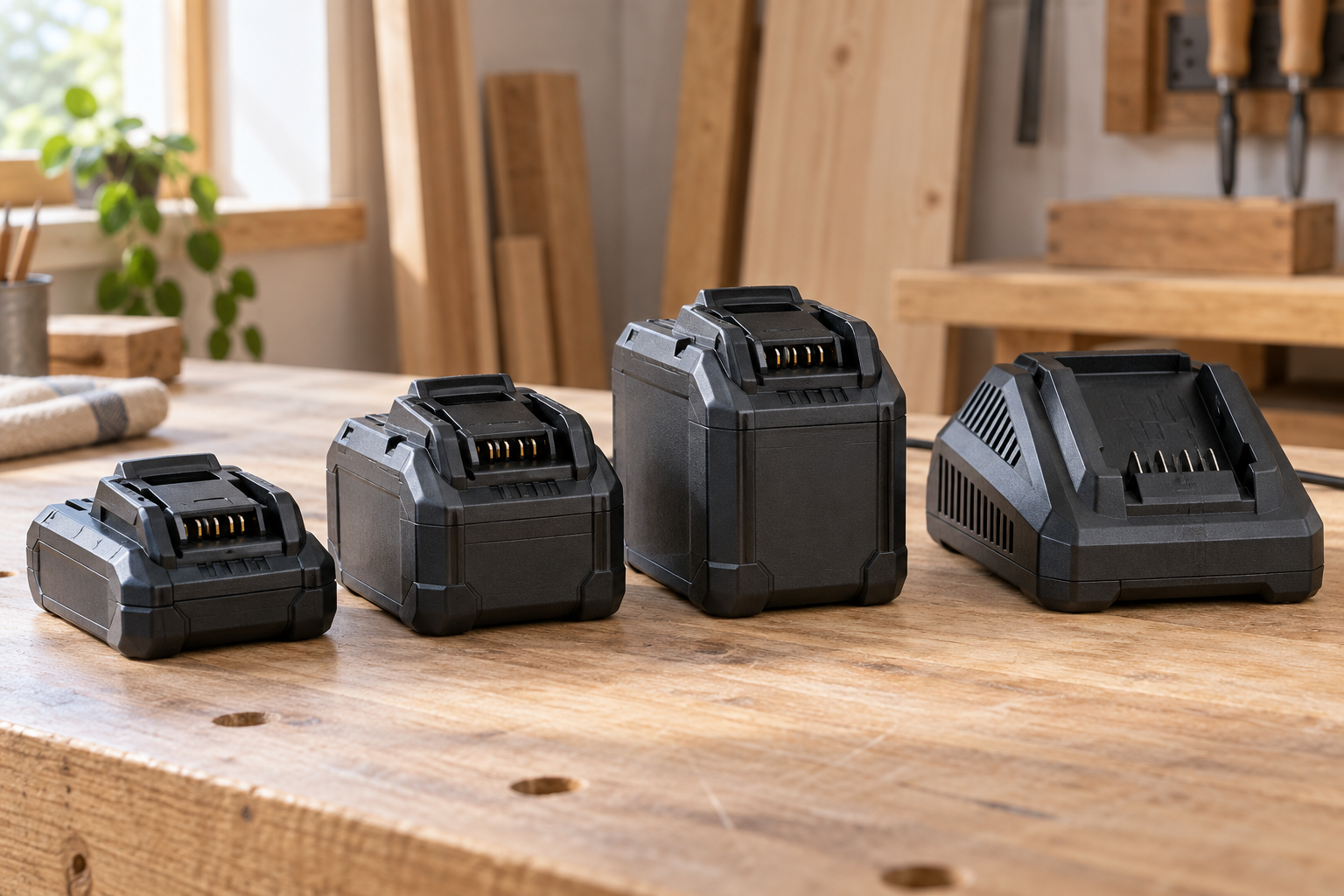
Battery capacity is measured in amp-hours (Ah). A 5.0Ah battery stores roughly twice the energy of a 2.5Ah battery at the same voltage. In practice, runtime is not perfectly proportional because pressure, temperature, grease viscosity, and trigger time change the load. Still, battery size is the best quick estimate available.
| Battery size | Best use | Practical trade-off |
|---|---|---|
| 2.0–2.5Ah | Occasional vehicle service and light equipment | Lightest option, but may need a spare during a long job |
| 4.0–5.0Ah | Routine farm, trailer, and shop maintenance | Good balance of runtime, weight, and cost |
| 6.0Ah and larger | Fleet, construction, and all-day maintenance | Longest runtime, but adds weight and can make the gun tiring |
Do not expect a grease gun to run continuously for hours on one battery. The motor operates only while the trigger is pressed, and a fitting may take several seconds or several dozen strokes depending on the application. A compact battery can service a handful of fittings comfortably, while a 4.0Ah or 5.0Ah pack is a safer choice for multiple machines.
Cold weather reduces available battery capacity and makes grease thicker. A battery that is adequate in a warm shop may feel weak outdoors in winter. Store spare packs indoors and let a cold battery warm before charging it. If your work is remote, two medium batteries are often more useful than one oversized pack because one can charge while the other is working.
Match the gun to your battery platform
The best battery is usually the one you already own. Buying into a new platform for a single grease gun means paying for a charger and spare batteries, which can erase the price advantage of a bare tool. If you already use cordless drills, impact wrenches, or lights from a platform, check whether its grease gun is sold as a tool-only version.
Stay within the manufacturer’s approved battery range. Do not use an adapter simply to fit a different brand’s pack unless you accept that it may void the warranty, interfere with low-voltage protection, or create a poor mechanical connection. Batteries are not interchangeable just because their nominal voltage appears similar.
If you own no compatible equipment, compare the complete system cost: tool, 4.0Ah or 5.0Ah battery, charger, and a replacement battery several years later. A cheaper grease gun kit can be a sensible purchase for occasional trailer or lawn-tractor maintenance. For daily work, a platform with readily available batteries, fast chargers, and local service support is usually worth more than a lower initial price. Browse cordless grease gun kits by complete kit price rather than bare-tool price.
Flow rate and grease compatibility
Pressure is only half the decision. A gun with strong pressure but a very low delivery rate will be frustrating on fittings that accept a large amount of grease. Look for a published delivery rate in ounces per minute, but treat it as a comparison figure rather than a guarantee. Flow drops when grease is cold, when the hose is long, and when the fitting offers resistance.
Most guns use standard grease cartridges, but loading systems differ. A bulk-fill option can save money for high-volume users, while cartridges are cleaner and easier for occasional maintenance. Check whether the tool supports the grease type you use, such as lithium or synthetic grease, and do not mix incompatible greases without confirming compatibility.
A blocked fitting can cause a false diagnosis. If the gun stalls, first check that the cartridge is installed correctly, the follower rod is released, and the hose is not kinked. Then inspect the coupler and fitting. Repeatedly forcing a gun against a blocked fitting can overheat the motor, drain the battery, or split a weak hose.
A practical buying choice
Choose a 2.0Ah or 2.5Ah battery if you grease one vehicle occasionally and value low weight. Choose a 4.0Ah or 5.0Ah pack for routine equipment maintenance; it is the most useful middle ground for most owners. Choose 6.0Ah or larger only when the extra runtime outweighs hand and arm fatigue.
For difficult fittings, prioritize a genuine high-pressure mode, a pressure rating of at least about 8,000 psi, a reinforced hose, and a reliable coupler. For ordinary fittings, a high-volume two-speed gun may finish the job faster than a maximum-pressure model. If you need an additional battery, compare 5.0Ah battery and charger kits within your existing platform.
Finally, consider weight with the battery installed. A grease gun that is powerful but awkward becomes a poor choice when you must hold it overhead or reach between axles. The right combination is enough pressure for your fittings, enough runtime for one work session, and a battery platform you can support with chargers and spare packs.
Related guides
- Longest Lasting Lawn Mower Battery: AGM vs Lithium vs Flooded Lifespan and Cost per Season
- Duralast Gold Lawn Mower Battery Review: U1 Fit, CCA and When to Pay for AGM
- Greenworks Pro 80V 21-Inch Mower Review: Runtime Math, Push vs Self-Propelled and Yard Fit
- Bosch High Pressure Washer Gun Replacement: Fittings, Adapters and What Fits Your Model