What's inside
As an Amazon Associate I earn from qualifying purchases. This post may contain affiliate links at no extra cost to you.
What a cooling fan does—and what it doesn’t
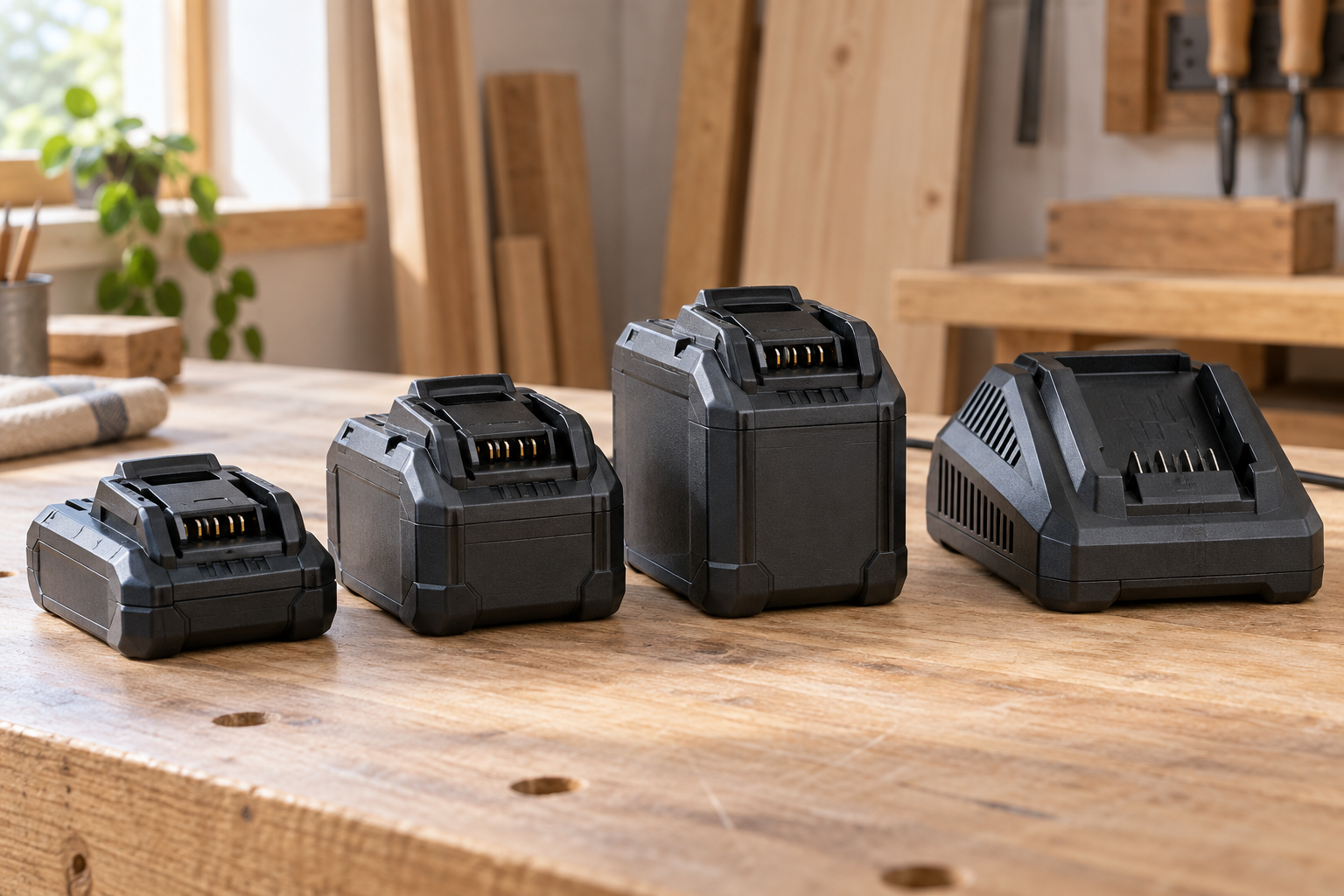
A charger fan moves air across the battery and charger components to manage heat during charging. That matters most when you’re cycling several packs through a charger all day, charging warm batteries after heavy work, or using a rapid charger. Heat can make a charger pause or slow charging to protect the battery. A fan may help the charger shed heat, but it doesn’t guarantee faster charging: the battery’s temperature, charge level, and the charger’s control system also determine how long a cycle takes.
Don’t assume every charger with visible vents has a fan, or that a fan-equipped model will cool the battery directly. Some fans cool internal components; some chargers also direct airflow around the pack. Check the manufacturer’s description for active cooling and follow its instructions for charging warm batteries. A fan is not a substitute for letting an overheated pack cool before charging.
As an Amazon Associate we earn from qualifying purchases at no extra cost to you.



Who should pay for active cooling?
For a homeowner charging one or two batteries after weekend projects, a standard charger is often adequate. The pack may have hours to cool before the next job, and the extra cost or noise of a rapid, fan-cooled charger may deliver little practical benefit. A basic charger can also be a better choice where it will sit in a dusty room or vehicle, because fan intakes can collect debris and need clear airflow.
Active cooling makes more sense for contractors, shop users, and anyone rotating multiple packs through the same platform. If a charger is running repeatedly through a workday, airflow can help manage heat and reduce thermal pauses. The trade-off is that fan noise and maintenance become part of ownership. A fan can also fail; if the charger starts making a grinding noise, smells hot, or repeatedly stops charging, discontinue use and check the manufacturer’s service guidance rather than opening the charger.
Compare fan-cooled cordless tool chargers within your battery platform. Battery compatibility matters more than a charger’s advertised speed: a charger for one brand or voltage family generally won’t charge another brand���s packs.
Charger types at a glance
| Type | Best for | Trade-offs | Check before buying |
|---|---|---|---|
| Standard charger | Occasional use and overnight charging | Longer waits between packs; may slow down if conditions are hot | Exact battery-platform compatibility and charging time |
| Rapid charger with active cooling | Frequent pack rotation and busy workdays | More fan noise; can cost more; still may pause for a hot battery | Whether cooling is active, charge times for your pack size, and ventilation clearance |
| Multi-port charger | Users with several packs and limited outlets or bench space | Ports may charge sequentially rather than simultaneously | How it divides charging power and whether it has a fan |
These categories aren’t a substitute for checking the manual. Charge times vary by battery capacity and charger, and a “rapid” label alone doesn’t tell you how quickly a particular pack will charge. Look for published times for the batteries you own, not just the smallest pack in the product line.
What to check before buying
Match the platform. Confirm the charger is listed for your exact battery family. Some brands have separate systems for different voltages or product lines. Don’t rely on the battery’s appearance or a retailer’s broad “fits brand” label.
Compare realistic charge times. A larger-capacity pack takes longer than a compact one. If you own several batteries, consider whether you need one faster charger or a second charger. Two standard chargers can be more useful than one rapid charger if you have multiple outlets and can charge packs in parallel.
Plan the location. Use a dry, stable surface with clearance around intake and exhaust vents. Avoid covering the charger, placing it on sawdust, or charging in direct sun. Dust can clog openings and restrict airflow. If the charger has a removable filter or cleaning instructions, follow those; don’t poke tools into vents or use compressed air unless the manual permits it.
Consider noise and power. A fan is another moving part and may be distracting in a small indoor workspace. A multi-port unit may also draw more power when several batteries are charging. Follow the charger’s electrical requirements and avoid overloading a circuit with other high-draw equipment.
Use a fan-cooled charger well
After a demanding cut or drill session, give a hot battery time to cool before charging if the manufacturer calls for it or the charger indicates the pack is too warm. Don’t try to defeat a temperature warning by moving the pack into a refrigerator or freezer; condensation and extreme temperatures can damage it. Keep contacts clean and dry, and inspect the pack for cracked housing, swelling, or other damage. Don’t charge a damaged battery.
Set the charger where its fan can breathe, and don’t assume a running fan means the battery is charging normally. Watch the status lights and check the manual for their meaning. If charging repeatedly stops in a cool, ventilated area, test with a known-good compatible battery if available. A failing pack, dirty contacts, or a charger fault can produce symptoms that resemble overheating.
A practical buying choice
For daily use, start by comparing rapid chargers with active battery cooling that are explicitly compatible with your platform. Choose one with published charge times for your pack size, clear airflow requirements, and an easy-to-understand status display. If the maker doesn’t specify active cooling, don���t infer it from the vents.
For occasional DIY charging, keep the money unless a faster turnaround solves a real problem. A compatible standard charger, used in a clean, ventilated place and paired with a spare battery, is often the simpler and quieter setup. The best fan-cooled charger is not automatically the fastest or most durable one; it’s the compatible charger that keeps your battery rotation moving without being asked to work outside its temperature and ventilation limits.
FAQ
Who should pay for active cooling?
Related guides
- Longest Lasting Lawn Mower Battery: AGM vs Lithium vs Flooded Lifespan and Cost per Season
- Duralast Gold Lawn Mower Battery Review: U1 Fit, CCA and When to Pay for AGM
- Greenworks Pro 80V 21-Inch Mower Review: Runtime Math, Push vs Self-Propelled and Yard Fit
- Bosch High Pressure Washer Gun Replacement: Fittings, Adapters and What Fits Your Model