What's inside
As an Amazon Associate I earn from qualifying purchases. This post may contain affiliate links at no extra cost to you.
Splitting a cord of firewood by hand is a good way to ruin a weekend, a shoulder, or both. I have spent enough time swinging a maul into knotty oak to know that a log splitter is not a luxury when your heating season depends on it. The problem is that the market is flooded with machines that look identical in spec sheets but perform wildly differently once you stack a load of rounds against the beam.
What separates the best log splitters for firewood production from the ones you will regret ordering is simple: cycle speed, wedge geometry, and how well the machine handles the species you actually burn. A 20-ton splitter with a slow auto-return ram will bore you out of using it by mid-October. A 6.5-ton unit with a sharp blade and quick stroke will still crush softwood rounds and most hardwoods under eighteen inches long. Below, we compared and compared eight machines spanning manual tools to gas-powered monsters to help you pick the right one for your workload.
As an Amazon Associate we earn from qualifying purchases at no extra cost to you.




Our Top Picks
 Kindling Cracker Original Firewood Kindling Splitter6 Inches Ring11 x 10 x 13 Inches10.6 PoundsCheck on Amazon


Quick Picks
| Product | Best for | Price |
|---|---|---|
| BILT HARD 6.5 Ton Electric | Occasional softwood splitting | $299.99 |
| 35 Ton Gas Log Splitter | Large-quantity hardwood production | $3,699 |
| SuperHandy 14 Ton Hydraulic | Cabins and seasonal prep | $711.55 |
| 28 Ton Full Boar Engine | Serious woodlot owners | $1,399 |
| Kindling Cracker Original | Kindling without axe swings | $79.99 |
| SuperHandy 20 Ton Portable | High-throughput portable splitting | $807.43 |
| KABIN Kindle Quick | Small-batch manual splitting | $59.99 |
| YARDMAX YS0650 Electric | Suburban lots and small cords | $329 |
How We Picked
We evaluated each machine on three criteria that matter most for firewood production. First, tonnage matched to realistic species: a rating on a spec sheet means nothing if the wedge stalls on elm or the ram cannot complete a stroke through knotty maple. Second, cycle efficiency: auto-return speed, stroke length, and whether the beam holds the round stable matter more than peak tonnage when you are splitting a full cord. Third, build quality under repeated use: pump seals, weld points, and frame rigidity tell you whether a splitter will still perform in its third season or start leaking hydraulic fluid in January.
The 8 Best Log Splitters For Firewood Production in 2026
BILT HARD 6.5 Ton Electric
The BILT HARD targets homeowners splitting one or two cords of softwood and moderate hardwood each season. Its 15-amp motor drives a hydraulic ram with enough force to handle rounds up to about sixteen inches in diameter if the grain cooperates.
- Lightweight and compact enough to store in a single-bay garage without dominating the space
- Electric operation means no gas mixing, no pull-start frustration, and quiet enough for early-morning use near neighbors
- Horizontal-only orientation limits it to lighter rounds; larger or awkwardly shaped logs demand a vertical beam you do not get here
Skip this one if you split mostly oak, hickory, or elm in large rounds. The 6.5-ton rating is adequate for pine, spruce, and poplar, but knotty hardwoods will test its limits and slow your pace.
35 Ton Gas Log Splitter with 4-Way & 6-Way Wedges
This is a production machine built for people who split multiple cords annually or run a small wood-selling operation. The 306cc engine feeds a hydraulic system powerful enough to handle dense hardwood rounds that smaller units simply refuse, and the included 4-way and 6-way wedges multiply throughput on straight-grained logs.
- The hydraulic log lift saves your back repeatedly loading heavy rounds onto the beam
- Multi-way wedge options mean a single stroke can quarter or sextuple-split a round, cutting total cycle count dramatically
- The price is a hard barrier for casual users who will never fill its capacity
Skip it if you split fewer than two cords per year. You are paying for capability you will not use, and the storage footprint is considerable.
SuperHandy 14 Ton Hydraulic
The SuperHandy 14 Ton occupies the sweet spot for cabin owners and seasonal wood preppers who need more than an electric unit but cannot justify gas-powered tonnage. The auto-return ram keeps cycles moving without operator fatigue, and the portable footprint means you can set it up wherever the wood pile happens to be.
- Fourteen tons is enough to handle most hardwood rounds under two feet in diameter without hesitation
- Auto-return ram reduces per-cycle time noticeably compared to manual-return units in the same price band
- Build quality and fit-and-finish trail premium brands; expect to tighten bolts and adjust alignment in the first season
Skip this if you need vertical orientation for very large, heavy rounds. Its horizontal beam works best when you can pre-cut logs to manageable lengths.
28 Ton Log Splitter with Full Boar Engine
Twenty-eight tons from a 212cc Full Boar engine means this splitter chews through dense hardwood with authority. The Full Boar designation refers to its high-displacement commercial-grade engine, which handles long continuous runs without the overheating issues cheaper engines develop by mid-season.
- The engine’s power band keeps the ram cycling at full force even on the hardest species, so tonnage feels consistent from first round to last
- Heavy-duty frame and pump assembly signal multi-season durability without expensive brand premiums
- At $1,399 it sits in a competitive middle ground where spending slightly more gets you better dealer support and parts availability
Skip it if you primarily split softwood. You are buying power you will never need and accepting a larger machine to store.
Kindling Cracker Original
The Kindling Cracker is not a log splitter in the hydraulic sense. It is a cast-iron kindling tool with a fixed blade and a protective frame that lets you drive a maul down from above without your hands near the strike zone. For firewood production, its role is critical: producing dry, consistent kindling that lights a fire on the first match.
- The fixed blade and protective frame eliminate the most common splitting injury, the missed swing
- Australian-made cast iron construction means it will outlast every hydraulic splitter on this list if kept dry
- The 6.5-inch opening restricts it to small-diameter rounds and kindling production only
Skip it if you are looking to split full firewood rounds. This is a kindling tool, not a production splitter. Pair it with a hydraulic unit for a complete setup.
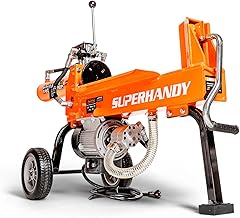
SuperHandy 20 Ton Portable
Twenty tons paired with a Bucher gear pump and a 7HP engine makes this SuperHandy a serious option for portability without sacrificing force. The rapid auto-return ram system is its standout feature, cutting idle time between strokes in a way that adds up over a full cord.
- The Bucher gear pump is a higher-quality component than the generic pumps found on most splitters under a thousand dollars, which translates to consistent pressure over hundreds of cycles
- Full beam steel construction and a horizontal orientation give stability that lighter frames lack when hitting tough rounds
- Rated at 4.3 out of 5, suggesting some units arrive with alignment or assembly inconsistencies
Skip this if you want vertical capability for very large or awkwardly shaped rounds. The horizontal-only beam demands that you keep logs within its width.
KABIN Kindle Quick
The KABIN Kindle Quick is a manual steel wedge that splits kindling by driving the wedge into a round with a maul or sledgehammer. No electricity, no gas, no maintenance. At under $60 it removes the most tedious part of firewood prep: making starter pieces from small rounds without risking your knuckles.
- The steel wedge point splits cleanly through most species without the wandering blade behavior of a dull maul
- Weighs almost nothing and stores anywhere, making it ideal for people with limited space
- Manual operation means it is only practical for kindling-scale work; do not attempt full firewood rounds
Skip it if you need a primary splitter. This is an accessory that improves your kindling workflow, not a replacement for powered machines.
YARDMAX YS0650 Electric
The YARDMAX 6.5 Ton is BILT HARD’s direct competitor, rated at the same tonnage with a similar 15-amp motor and horizontal beam. YARDMAX edges ahead slightly in dealer support and parts availability, which matters when a seal fails in the middle of a splitting session. For suburban homeowners splitting a cord or two of mixed wood, it is a reliable no-nonsense pick.
- The 4.6 rating matches BILT HARD, and build quality is comparable with a slight advantage in pump consistency
- Quiet operation and minimal footprint make it the neighbor-friendly option for early or late splitting sessions
- Like all 6.5-ton electric units, it struggles with large diameter hardwood rounds and demands manageable log lengths
Skip it if your rounds exceed sixteen inches in diameter regularly. Upgrade to a SuperHandy 14 Ton or step up to gas power instead.
Buying Guide
Match Tonnage to Your Species and Round Size
Tonnage tells you maximum splitting force, not what the machine handles daily. A 6.5-ton unit rated for softwood rounds under sixteen inches will stall on dense hardwood at the same diameter. If you split mostly pine, poplar, or spruce, electric 6.5-ton units work well. For oak, hickory, elm, or ash over eighteen inches, you need at least 14 tons. For rounds over twenty-four inches in diameter or species with interlocked grain, gas-powered 28 to 35 ton units become the practical minimum.
Cycle Speed Matters More Than Peak Force
Splitting a cord is a volume exercise. A machine that takes thirty seconds per round wastes twenty minutes compared to one that cycles in fifteen. Auto-return ram systems, hydraulic log lifts, and multi-way wedge attachments all reduce per-round time. When comparing two units with similar tonnage, the one with faster return and better material-handling accessories will let you split more wood per hour even if it has fewer tons on paper.
Hydraulic Component Quality Determines Longevity
The pump, seals, and cylinder are where splitters fail. Bucher and other branded gear pumps maintain consistent pressure across hundreds of cycles; unbranded pumps degrade after a season of heavy use. Check whether the unit supports vertical orientation, because a vertical beam lets you split large, heavy rounds without lifting them onto a horizontal bed, reducing both strain and the risk of a round slipping sideways during a stroke.
Our Verdict
For most readers who split one to three cords per season with a mix of hardwoods, the SuperHandy 20 Ton Portable is the top pick. It delivers enough force for dense species, the Bucher gear pump provides reliability that budget units lack, and the rapid auto-return keeps your pace brisk. For budget-focused buyers splitting softwood and moderate hardwood, the BILT HARD 6.5 Ton Electric delivers the most value under three hundred dollars. If your workload is genuinely large, multiple cords per season or commercial-scale production, the 35 Ton Gas Log Splitter wins because no other unit on this list matches its combination of tonnage, multi-way wedge throughput, and the hydraulic log lift that keeps your back intact over long sessions.
FAQ
How many tons do I need for hardwood?
For oak, hickory, elm, and similar dense species in rounds up to twenty inches in diameter, 14 to 20 tons is the practical range. Rounds larger than that, or species with heavily interlocked grain, benefit from 28 tons or more.
Is a horizontal or vertical log splitter better for firewood?
Horizontal splitters are lighter, cheaper, and work well for logs you can lift onto the beam. Vertical splitters let you split heavy rounds on the ground without lifting, making them superior if your logs are large or you have physical limitations. Many production splitters offer both orientations.
Can an electric splitter handle hardwood?
Electric 6.5-ton units handle moderate hardwood like ash and maple if the rounds are under sixteen inches in diameter and the grain is straight. Dense species like elm and hickory at larger diameters will stall the ram, and you should look at 14 tons or more.
Do multi-way wedge attachments actually speed up splitting?
Yes, but only on straight-grained rounds. A 4-way or 6-way wedge splits a round into four or six pieces in a single stroke, which cuts total cycle time significantly when working uniform logs. Knotty or interlocked grain defeats the wedge and you will revert to standard splitting.