Our Top Picks
 CRAFTSMAN 6 Gallon 150 PSI Oil-Free Pancake AirMedium15.8 x 16.4 x 17 inches30.8 poundsCheck on Amazon

What's inside
As an Amazon Associate I earn from qualifying purchases. This post may contain affiliate links at no extra cost to you.
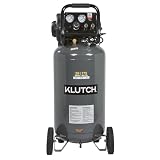
For most home garages, the best air compressor in this group is the Klutch 20-Gallon, a 2 HP, 120-volt unit rated at 175 PSI and 4.2 SCFM at 90 PSI. That combination gives enough tank and airflow for tire inflation, brad and finish nailers, blow guns and short bursts from an impact wrench, while still running on a standard household circuit. A garage air compressor is a pump, a motor and a storage tank that supplies compressed air to tools through a hose, and the two numbers that matter most are SCFM at 90 PSI and tank size. The other five picks cover smaller, quieter or more portable needs.
This guide ranks six listed compressors, shows how to match airflow to your tools, and flags the specs to confirm on each product page.
Quick List
- Klutch 20-Gallon – best overall for a garage that needs a bigger tank on household power
- RyanTek 15-Gallon Quiet – best for a quieter vertical unit with twin-cylinder airflow
- CRAFTSMAN 6-Gallon Pancake – best for portable nailing, inflation and basic shop jobs
- ECOMAX 6-Gallon Pancake Kit – best for buyers who want a 6-gallon pancake with accessories included
- CRAFTSMAN 2-Gallon Portable – best for light inflation and small brad-nail projects
- DEWALT Trim Compressor – best for trim carpentry where a quiet, high-pressure compact unit matters
Which One Is Right for You?
| If you… | Choose |
|---|---|
| want one compressor for tires, nailers and occasional air tools | Klutch 20-Gallon |
| work near living space and care about noise | RyanTek 15-Gallon Quiet |
| need a carry-around compressor for decks, fences and garage jobs | CRAFTSMAN 6-Gallon Pancake |
| want a pancake compressor with a starter accessory kit | ECOMAX 6-Gallon Pancake Kit |
| mainly fill tires and ball inflation and use an occasional brad nailer | CRAFTSMAN 2-Gallon Portable |
| install trim and crown molding and want a compact, quiet unit | DEWALT Trim Compressor |
If you plan to run an impact wrench, a die grinder or a sander, start with the largest tank and the highest SCFM that your circuit can support. If your use is mostly inflation and nailing, a smaller pancake or trim compressor is easier to store and move. Read the electrical and safety notes in the buying section before plugging in any large unit.
All 6 Picks in Detail
1. Klutch 20-Gallon – Best Overall for a Home Garage
As an Amazon Associate we earn from qualifying purchases at no extra cost to you.

The Klutch 20-Gallon is a vertical, 120-volt compressor with a 2 HP motor, 175 PSI maximum pressure and 4.2 SCFM at 90 PSI, according to the listing. The vertical tank reduces the footprint, and the retailer’s description mentions an oil-less pump, thermal overload protection and rubber foot stabilizers. It is the largest tank in this group, which means longer intervals between motor starts when you are running air tools in bursts.
- Tank: 20 gallons, vertical design
- Motor: 2 HP, 120 V
- Pressure: 175 PSI max
- Airflow: 4.2 SCFM at 90 PSI, per the listing name
- Pump: oil-less per retailer description; confirm weight and noise on the product page
Pros:
- Large tank keeps tools running longer between pump cycles
- Vertical shape saves floor space
- Thermal overload protection guards the motor
Cons:
- Heavy and bulky compared with pancake units
- Oil-less pumps are generally louder than many belt-drive units
Who it suits: DIYers who want a permanent garage setup for tires, nailers and short air-tool jobs. Place it on a level floor with space around it for cooling, and plug it into a suitable circuit. Compared with the RyanTek, it has a bigger tank and higher listed pressure, while the RyanTek lists more airflow per gallon and a lower noise claim. Because the Klutch is a heavy unit, plan where it will live before it arrives: a spot near an outlet, away from the car door swing and clear of the wall so air can reach the pump. The wheels and handle make repositioning possible, but you will not want to lift it onto a bench. Add a quality regulator and a hose of the length you need, since the listing does not promise a complete hose kit.
2. RyanTek 15-Gallon Quiet – Best for Lower Noise in a Vertical Package
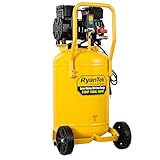
The RyanTek is a 15-gallon vertical compressor with a 2 HP twin-cylinder oil-free pump, rated at 4.5 CFM at 90 PSI and a quiet 66 dB, per the listing name. It is marketed for inflation, nail guns, auto repair and painting. The 66 dB figure is the maker’s claim, so confirm how and where it was measured on the product page.
- Tank: 15 gallons, vertical
- Motor: 2 HP, twin-cylinder oil-free pump
- Airflow: 4.5 CFM at 90 PSI, per the listing
- Noise: 66 dB claimed; confirm the measurement distance
- Max pressure: confirm on the listing
Pros:
- Higher listed CFM than the larger Klutch
- Low noise claim helps in attached garages
- Vertical design keeps the footprint small
Cons:
- Smaller tank than the 20-gallon Klutch
- Maker noise claims are not independent measurements
Who it suits: owners of attached garages or basements who want a quieter compressor for regular use. Check the pressure rating against your tools, since some tools need more than a lower maximum allows. Against the Klutch, it is likely to feel less loud, while the Klutch has a larger tank and a higher stated maximum pressure. A practical check on any quiet claim is to compare the stated distance and the stated load: sound figures given at a few feet and at low tank pressure will feel different in a closed garage than figures given at four meters. If you can, place the RyanTek on a rubber mat, keep the drain valve accessible and leave the cooling vents unblocked.
3. CRAFTSMAN 6-Gallon Pancake – Best for Portable Nailing and Inflation

The CRAFTSMAN CMXECXA02106410 is a 6-gallon, oil-free pancake compressor rated at 150 PSI and 2.6 SCFM at 90 PSI, with dual couplers so two people or two tools can connect. The flat tank design makes it stable and easy to carry, and it is a common choice for nailing, stapling and tire inflation. Listings differ on noise and weight, so confirm on the page.
- Tank: 6 gallons, pancake design
- Pressure: 150 PSI max
- Airflow: 2.6 SCFM at 90 PSI
- Couplers: dual quick couplers, per the listing
- Pump: oil-free; confirm weight and sound level
Pros:
- Portable and stable on the floor
- Dual couplers add flexibility
- Well suited to nailers and inflation
Cons:
- Not enough airflow for sustained high-demand tools
- Pancake pumps can be loud
Who it suits: homeowners who move between the garage, deck and driveway. Match it to nailers, staplers and inflation tasks and avoid long runs of sanders or grinders. Compared with the ECOMAX, it has a name-brand label and a clearly stated airflow, while the ECOMAX comes with an accessory kit. For nailing a deck rail or a fence panel, a 6-gallon pancake is plenty because the nailer uses air in tiny bursts and the tank refills between shots. If you hear the pump kick in after every few nails, that is normal behavior for a small tank, and it is a reminder to use the regulator to keep the pressure no higher than the tool needs.
4. ECOMAX 6-Gallon Pancake Kit – Best for Starter Buyers Who Want Accessories

The ECOMAX is a 6-gallon, 150 PSI oil-free pancake compressor sold with a 10-piece accessory kit. Kits like this typically include a hose, a blow gun, fittings and a tire gauge, which makes it a ready-to-use bundle for a first compressor. The listing name does not state airflow, and the brand sells variants with different ratings, so confirm the SCFM and HP on the product page.
- Tank: 6 gallons, pancake design
- Pressure: 150 PSI max, per the listing name
- Kit: 10-piece accessory kit included; confirm contents
- Airflow: not stated in the listing name; confirm on the page
- Pump: oil-free
Pros:
- Accessories come in the box
- Same tank size as the CRAFTSMAN pancake
Cons:
- Key airflow spec needs checking
- Kit quality varies; replace weak fittings if needed
Who it suits: first-time buyers who need a hose and fittings immediately. Check the hose length and whether it has the connection style you need. Against the CRAFTSMAN pancake, it adds a kit, while the CRAFTSMAN states its airflow clearly in the listing name. Many starter kits include a hose, a blow gun, a tire chuck and a gauge; check the lengths and thread types, and replace any item that leaks at the fitting with thread-seal tape. Having the right coupler style for your tools avoids frustration when you connect the hose for the first time.
5. CRAFTSMAN 2-Gallon Portable – Best for Light Inflation and Small Projects
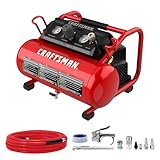
This CRAFTSMAN is a 2-gallon, 1/3 HP, oil-free portable compressor rated up to 125 PSI and sold with a 10-piece accessory kit. It is light and compact, and it suits tire and sports inflation, small brad-nail jobs and quick touch-up tasks. It is also the least powerful unit here, so it is better understood as a light-duty option than a full garage workhorse.
- Tank: 2 gallons
- Motor: 1/3 HP
- Pressure: 125 PSI max
- Kit: 10-piece accessory kit, per the listing
- Airflow: confirm on the product page; expect it to be low
Pros:
- Light enough to carry in one hand
- Fits on a shelf
Cons:
- Small tank and low airflow limit it to short tasks
- Not suited to impact wrenches or sanders
Who it suits: people who need air for tires, bikes and the occasional brad nailer. Compared with the 6-gallon pancake models, it is lighter and smaller but will cycle on more often. If you expect to use air tools regularly, step up to a larger model. Its small size is also an advantage in a car trunk or an apartment closet, where a bigger unit would not fit, and a low motor rating means it can run on circuits that would struggle with a 2 HP motor. Keep expectations modest and treat it as a convenient inflator that can also drive a small brad nailer.
6. DEWALT Trim Compressor – Best for Finish Carpentry

The DEWALT DWFP55130 is a compact trim compressor with a 200 PSI maximum and a design that DEWALT promotes as quiet. Retailers list a tank of roughly 2.5 gallons, 3.0 SCFM at 90 PSI and a sound level around 71.5 dBA, but confirm on the product page. It is aimed at trim carpenters who want a higher-pressure compact unit, rather than a general garage unit.
- Pressure: 200 PSI max, per the listing name
- Tank: about 2.5 gallons per retailer descriptions; confirm
- Airflow: about 3.0 SCFM at 90 PSI per maker information; confirm
- Noise: about 71.5 dBA per the manual; confirm
- Pump: oil-free
Pros:
- Quiet operation for indoor trim work
- Compact and relatively light
Cons:
- Small tank can cycle often during sustained use
- Not intended for high-demand air tools
Who it suits: remodelers and finish carpenters who nail baseboard and trim. Against the 6-gallon pancake models, it offers a quieter profile and higher maximum pressure, while the pancakes have more tank volume. Trim nailers and brad nailers use small bursts of air, so a compact tank generally works if you accept that the pump will cycle. The higher maximum pressure is mostly about filling the tank so the regulator has headroom, since most trim tools operate at around 70 to 120 PSI according to their own labels. Check your nailer’s operating range before choosing a pressure setting.
Specs Compared
| Product | Tank | Motor | Max PSI | Airflow @ 90 PSI | Notes |
|---|---|---|---|---|---|
| Klutch 20-Gallon | 20 gal, vertical | 2 HP, 120 V | 175 | 4.2 SCFM | Oil-less pump per retailer |
| RyanTek 15-Gallon Quiet | 15 gal, vertical | 2 HP | Confirm on listing | 4.5 CFM | Twin cylinder, oil-free, 66 dB claimed |
| CRAFTSMAN 6-Gallon Pancake | 6 gal | Confirm on listing | 150 | 2.6 SCFM | Dual couplers, oil-free |
| ECOMAX 6-Gallon Pancake Kit | 6 gal | Confirm on listing | 150 | Confirm on listing | 10-piece accessory kit |
| CRAFTSMAN 2-Gallon Portable | 2 gal | 1/3 HP | 125 | Confirm on listing | 10-piece accessory kit, oil-free |
| DEWALT Trim Compressor | About 2.5 gal; confirm | Confirm on listing | 200 | About 3.0 SCFM; confirm | Quiet trim unit |
How We Chose These
This guide is based on research, not on shop trials. We read each listing name and description, compared the stated tank sizes, pressure ratings and airflow figures, and checked manufacturer and retailer specification pages where they were available. We covered a range of formats: large vertical, quiet vertical, pancake, hot-dog and trim compressors, so you can match the unit to your space and tools. Where listings disagree on weight, noise or horsepower, we say to confirm the figure on the product page and the nameplate. We do not publish our own noise or airflow measurements.
What to Look For
SCFM at 90 PSI matters more than horsepower
Horsepower on a compressor label can be misleading, because different makers calculate it differently. The figure that tells you what a compressor can run is SCFM at 90 PSI, which is the volume of air delivered at the pressure most tools use. Check each tool’s label for its required SCFM and choose a compressor that delivers at least that amount, with about 50 percent margin for tools used continuously. Published requirements commonly sit around a fraction of one SCFM for finish nailers, a few SCFM for impact wrenches in short bursts and several SCFM or more for sanders and grinders.
Tank size and runtime
The tank stores air, so a bigger tank means longer use between pump cycles. A rough rule is usable air equals tank volume in cubic feet times the pressure drop divided by 14.7. A 20-gallon tank is about 2.7 cubic feet, so dropping from 175 to 90 PSI yields about 15 cubic feet of air. A tool using 4 SCFM would drain that in a few minutes without the pump helping, which is why continuous tools need high SCFM and not just a big tank. A 6-gallon pancake holds only about a fifth as much usable air.
Oil-free versus oil-lubricated
Every unit in this guide is described as oil-free, which means no oil changes and easy storage on its side or at an angle. Oil-free pumps tend to be louder and shorter-lived than lubricated belt-drive pumps, but they suit homeowners who use air in short sessions. If you plan to run tools for hours each week, consider an oil-lubricated model, which is outside this list.
Power and electrical safety
A 2 HP, 120-volt compressor can draw a high current, often in the range of 12 to 15 amps, so it should be on a circuit that can support it, ideally one that is not shared with other large loads. Avoid long, thin extension cords, which can overheat and starve the motor; if you must use one, use a short, heavy-gauge cord rated for the load. If the breaker trips on startup, stop and have the circuit checked.
Safety basics for every compressor
Drain the tank after each use, since moisture collects and corrodes it from the inside. Wear eye protection and hearing protection, because these units can be loud in an enclosed garage. Never exceed the pressure ratings of your hose, tool or regulator, and never point compressed air at skin. Do not spray flammable finishes near the compressor, which can spark. Unplug the unit before servicing it, and replace damaged hoses and fittings.
Hoses, couplers and regulators
The compressor is only part of the system. A 25-foot hose is a practical length for most garages, and a larger inside diameter such as 3/8 inch passes more air than 1/4 inch over distance. Match the coupler style on your tools to the compressor’s outlets; mixing styles leads to leaks. Set the regulator to the pressure printed on your tool, not to the tank maximum, and keep the hose off hot surfaces. Replace cracked hoses at once, and use a safety-rated whip hose for any connection that sees pressure.
Placement, temperature and storage
Oil-free pumps can struggle to start in a cold garage, so move the unit somewhere warmer or let it warm up if your climate is cold. Keep the compressor off bare wood floors that could carry vibration, and give it room so the motor and pump can shed heat. Store it drained and with the pressure released, and cover it if the garage is dusty. If you will keep it in a damp space, a quick check of the tank for surface rust each season is worthwhile.
Worked example: choosing for a mixed garage
Suppose you want to inflate tires, run a brad nailer and occasionally loosen lug nuts with a half-inch impact wrench. The nailer needs little air, and the impact wrench needs several SCFM only in short bursts. A 15 to 20 gallon unit with about 4 SCFM at 90 PSI handles that routine comfortably, while a 6-gallon pancake would manage the nailer and tires but make you pause between lug nuts. Use the tool label to confirm each number before you buy.
Questions
What size air compressor do I need for a home garage?
For tires, nailers and blow guns, a 6-gallon pancake is usually enough. If you want to run an impact wrench or other air tools, look for a 15 to 20 gallon unit with about 4 SCFM at 90 PSI or more.
Can I run a 2 HP compressor on a normal outlet?
Many 2 HP, 120-volt compressors are designed for standard household power, but they draw a significant current. Put them on a suitable circuit, avoid sharing it with other large loads and check the manufacturer’s instructions.
Are oil-free compressors good enough for a garage?
Yes for occasional and moderate use, since they need less maintenance. They are usually louder and may not last as long under heavy daily use as lubricated models.
How often should I drain the tank?
After each use is the common recommendation. Draining prevents rust and keeps moisture out of the air lines.
Why does the listed SCFM matter more than horsepower?
SCFM tells you how much air the compressor delivers at working pressure, which is what a tool needs. Horsepower ratings can be calculated in different ways and do not directly show airflow.
Is the 2-gallon CRAFTSMAN enough for an impact wrench?
It is unlikely to be the right fit. The small tank and low airflow limit it to inflation and light nailing, so choose a larger unit for tools that use air continuously.
Update History
- October 20, 2026 – Initial publication; product set drawn from current catalog listings.
- Check the product page for current specifications and availability before buying.
Sources
- Manufacturer and retailer product pages for Klutch, CRAFTSMAN, DEWALT and ECOMAX compressors
- Retailer listing titles and specification fields, including the RyanTek listing
- Manufacturer instruction manuals where published, for noise and airflow figures